
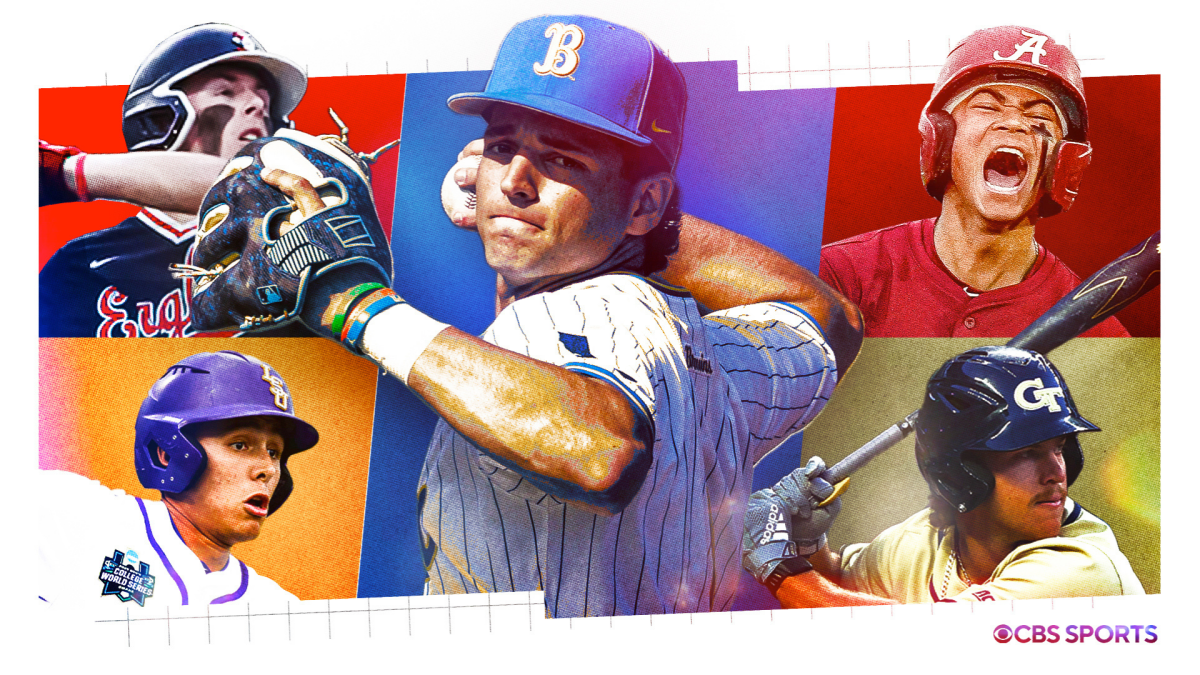
Friday marks the beginning of the college baseball regular season. As is tradition around these parts, that means it’s time for CBS Sports to preview the upcoming draft by ranking the top 30 prospects in the class.
The rankings below were composed after conversations with scouts, analysts, and player-development specialists, as well as firsthand statistical and video analysis. Do note that there are more than 30 capable players in any given class, meaning that it’s not an insult if a player isn’t listed below. Besides, players have plenty of time to change the perception of their game.
MLB Draft candidates: Five college baseball programs to watch in 2026 as NCAA season kicks off
R.J. Anderson
Major League Baseball’s amateur draft had, in recent years, coincided with the start of the All-Star Game festivities. This year, though, MLB has moved up the draft’s start to the Saturday before those events (July 11). The Chicago White Sox, by virtue of winning the lottery, will make the No. 1 pick for the third time in franchise history, having previously selected catcher Danny Goodwin (who didn’t sign with the club) and Hall of Fame slugger Harold Baines.
With all that out of the way, let’s get to the rankings.
1. Roch Cholowsky, SS, UCLA
With the caveat that a lot can change before July, Cholowsky is the industry’s preseason favorite to headline the class. It’s easy to understand why: he offers a high floor thanks to a well-rounded game that could include five average or better tools at maturation. He’s a surefire shortstop who hit .353/.480/.710 last season with 23 home runs and seven stolen bases, all the while walking more than he struck out (even during conference play). Cholowsky is also an instinctual player; during last season’s Big Ten tournament, he turned a push bunt through a vacated side of the infield into a double. The White Sox were believed to have chased him when he was a draft-eligible prepster. Come July, they just might catch him.
2. Grady Emerson, SS, Fort Worth Christian HS (TX)
If the White Sox decide over the coming months to go in a different direction with the No. 1 pick, the top alternative is Emerson. He’s a legitimate defensive shortstop who will have no problem staying at the position for the long haul. Emerson arguably boasts a higher ceiling than Cholowsky does, a dynamic you can credit to his potential for future plus grades in both the hit and power tools. If there is a negative here, it’s that Emerson will require more baking time than Cholowsky. He has a commitment to play baseball at Texas, but it seems highly unlikely that he’ll reach campus.
3. AJ Gracia, OF, Virginia
Gracia, an offseason transfer from Duke, is a well-rounded batter who hit .299/.445/.559 with 29 home runs in 120 games for the Blue Devils. He has a loose lefty swing and feels for both contact and the zone alike. Evaluators believe there’s more power in his bat than his good-not-great exit velocities suggest, though unlocking that next level may require him employing a more aggressive approach. Gracia has seen his share of action in center field, but he’s likely to end up in right field as a pro, putting more of an impetus on him maximizing his offensive impact.
4. Jackson Flora, RHP, UC Santa Barbara
The Gauchos graduated a top-five pick last summer in right-hander Tyler Bremner. They may soon produce another if Flora meets expectations. He’s a physical right-hander who last season posted a 3.60 ERA and a 5.06 strikeout-to-walk ratio in a personal-high 75 innings. Flora has two plus or better offerings, his fastball and sweeping slider, and one scout considered him a better prospect than Bremner was this time last year. Evaluators would like to see Flora flesh out the rest of his arsenal ahead of draft night given that he threw those aforementioned pitches more than 90% of the time in 2025.
5. Jacob Lombard, SS, Gulliver Prep HS (FL)
Last year’s draft had several legacy shortstop products near the top of the board, including Eli Willits and Ethan Holliday. This year has Lombard, whose father George is the Tigers bench coach and whose older brother George Jr. is on the cusp of debuting with the Yankees less than three years after being selected 26th overall. Jacob, for his part, has a good chance to go much higher than that this summer. He’s believed to have more power than George Jr. did at this point in their developments. (Alas, George Jr. was considered the better defender with the smoother swing.) The key for Jacob this spring will be easing concerns that scouts have about the swing-and-miss tendencies with his game.
6. Tyler Spangler, SS, De La Salle HS (CA)
Every team is looking for their own version of Corey Seager and Gunnar Henderson. A team might envision Spangler filling that role for them. He’s a tall, lean lefty hitter with a chance to grow into plus offensive capacity as he packs on muscle. The trade-off is that his improved physicality could eventually force him off shortstop and over to third base. Spangler is committed to play ball at Stanford, but it’s hard to envision him ever suiting up for the Cardinal.
7. Drew Burress, OF, Georgia Tech
Burress was one of the most impressive freshmen in the country in 2024, when he homered 25 times and posted a 1.333 OPS. He wasn’t able to match that output last year (in five additional trips to the plate he managed 19 home runs and a 1.162 OPS), but he remains an intriguing prospect. Burress’ exit velocities are good, not great, yet he’s adept at lifting and pulling the ball and should continue to outslug his 5-foot-9 listed height. The bigger concerns here entail his right-handed nature (nothing he can do about that) and a passive approach at the dish that may not port well to the pro ranks.
8. Sawyer Strosnider, OF, TCU
Strosnider recovered from a slow start to his freshman campaign to hit .350/.420/.650 with 11 home runs and 10 stolen bases for the Horned Frogs. Scouts believe there’s even more in his tank. Strosnider has impressive quick-twitch athleticism, resulting in good speed and a fast bat that should enable him to slug more as he matures. He’s also shown a feel for contact, though he could stand to improve his swing decisions since he’s prone to expanding the zone. Provided Strosnider demonstrates more usability of his tools this season, particularly when he’s facing a left-handed pitcher, but there’s a real chance he sails up preference lists over the coming months.
9. Chris Hacopian, SS, Texas A&M
Hacopian transferred from Maryland to Texas A&M over the offseason after battering the Big Ten to the tune of a .339/.465/.643 slash line within conference play. His bat should play just fine thanks to his combination of contact, power, and discipline. The main question facing Hacopian concerns his long-term position. He’s not a true shortstop and he spent the Cape Cod League splitting time between the infield corners. It’s possible he ends up at second base and/or in left field by the time he reaches the majors, putting more pressure on his offense transferring in whole to wood.
10. Carson Bolemon, LHP, Southside Christian HS (SC)
Bolemon will celebrate his 19th birthday in April, putting him on the older side for a prep prospect. That’s the bad news. The good news is that his development after turning pro will hinge more on him adding innings than anything skill-related. He has an impressive mix of feel and stuff, with a riding fastball that earns up to double-plus grades. He also possesses two high-quality breaking balls and acceptable control. Bolemon is committed to Wake Forest, but he’s highly unlikely to reach campus.
11. Gio Rojas, LHP, Stoneman Douglas HS (FL)
The usual caveats about selecting prep arms early applies here, but you can understand why a team will chance it with Rojas this summer. He has a loose, whippy arm action that allows him to chuck his fastball into the upper-90s. His slider also projects as at least a plus offering, giving him a high ceiling. He’s committed to Miami. Barring something unforeseen, don’t expect him to ever suit up for the Hurricanes.
12. Eric Becker, SS, Virginia
Becker has been an offensive force across two seasons at Virginia, leveraging his left-handed swing and feel for quality contact to hit .366/.459/.637 with 17 home runs and nine stolen bases in 95 games. He’s smooth enough at shortstop to envision him remaining playable there into his professional career, though he has experience at second and third base as well. If there is a negative here, it’s that Becker’s strikeout-to-walk ratio is on the uglier side for a first-round prospect. In ACC play last season, for instance, he punched out more than 2.3 times as often as he walked. Some improvement there in his platform season would be welcomed.
13. Tyler Bell, SS, Kentucky
Bell was selected by the Rays in the second round of the 2024 Draft, but he chose instead to join the Wildcats. He’s since batted .296/.385/.522 with 10 home runs and 11 stolen bases as an athletic, switch-hitting freshman shortstop. There are no doubts he’ll stick at the six for the long term. Offensively, he’s shown plenty of promise, too. He has legit thump and minds the zone, albeit perhaps too well since his passive approach fueled an uncomfortable 3.61 strikeout-to-walk ratio within conference play. Bell has all the tools to make a big leap this spring and, if he does, he’ll surely go higher than he did in 2024.
14. Chris Rembert, 2B, Auburn
“Right-handed collegiate infielder destined for the keystone or the outfield” is rarely the most exciting profile. Then again, Rembert used one simple trick last spring to earn himself a first-round projection: hitting .376/.485/.615 with six home runs and nearly as many walks as strikeouts as a freshman in SEC play. Rembert possesses legit thump despite a flatter swing plane and he could move into the top half of the first round if he can convince scouts he’s more likely than not to remain on the infield.
15. Rocco Maniscalco, SS, Oxford HS (AL)
Maniscalco hails from the same school that produced Marlins infield prospect Carter Johnson. He has three main factors working in his favor, beginning with his projectable frame and his claim to being the best shortstop defender in the class. There’s also the matter of him not celebrating his 17th birthday until May. It’s a promising indicator whenever a player this young is displaying competency. As such, don’t be surprised if Maniscalco continues to move up boards ahead of July.
16. Ace Reese, 3B, Mississippi State
Reese solidified himself as a first-round prospect last season, when he hit 402/.475/.869 with 15 home runs in 30 SEC conference games. (He also posted an in-zone contact rate around 90% for the year.) To think, he put up those numbers while dealing with a toe injury that required offseason surgery. The main questions Reese must answer this spring entail his quantified strength (his high-end exit velocities weren’t as impressive as you would think based on his home run total) and his long-term defensive home (he’s considered a “maybe” to stick at third base). Depending on how Reese answers, he could find himself coming off the board in the top half of the first round.
17. Vahn Lackey, C, Georgia Tech
The Yellow Jackets have produced four first-round catchers in the program’s history, including Jason Varitek, Matt Wieters, and Joey Bart. Lackey may become the fifth. As a sophomore, he hit .360/.433/.465 in ACC conference play with a pair of home runs and eight stolen bases on 11 attempts. Lackey has more power than the home run total suggests. He has more speed than the average catcher too, something he showed off by hitting an inside-the-park homer against California. Another strong showing could make Lackey the first catcher selected.
18. Tegan Kuhns, RHP, Tennessee
Kuhns’ freshman season may not have played out as well as he would’ve desired (he posted a 5.40 ERA in 15 appearances split between the rotation and the bullpen), but he turned in arguably the best collective pitching performance in the Cape Cod League. Across three starts and 13 ⅓ innings, he notched a 1.35 ERA and 20 strikeouts per walk. Kuhns checks all the boxes scouts want in a starter — strength, spin, and strike-throwing ability — suggesting he could end up much higher come July.
19. Ryder Helfrick, C, Arkansas
There’s a natural comparison to make between Helfrick and the aforementioned Lackey. The short version is that Helfrick’s game features more power than Lackey’s, but it comes at the cost of having more hit-tool concerns. He struck out more than 22% of the time last season, though that mark did come down during conference play. There are no questions about Helfrick’s defensive ability, meaning that any improvements with his bat-to-ball skills could enable him to overtake Lackey between now and draft night.
20. Cameron Flukey, RHP, Coastal Carolina
The Chanticleers have never produced first-round picks in consecutive drafts, but that could change as soon as this summer after catcher Caden Bodine went No. 30 last year to the Orioles (he was subsequently traded to the Rays). Flukey enters the spring regarded as one of the top arms in the class following a season that saw him manage a 3.19 ERA and a 4.92 strikeout-to-walk ratio across 101 innings, all the while throwing strikes with an arsenal led by a rising mid-90s fastball. Organizations that are more analytics-forward could dock Flukey because he doesn’t win battles within the zone at an elite rate (this was also a concern for Tyler Bremner entering last spring) and because he lacks a high capacity for spin. What he offers is still enough to earn a first-round projection, with a chance to go even higher than this rank suggests.
21. Gabe Gaeckle, RHP, Arkansas
The Razorbacks produced one electric, 6-foot-tall right-hander last summer when Gage Wood was chosen 26th by the Phillies. Gaeckle is viewed as being behind Wood at this stage in their development, but he has a chance to solidify himself as a first-round pick in a similar vein before names start being read. Gaeckle delivers a rising mid-90s fastball and a nasty slider (among other offerings) from a low release height. He could stand to throw more strikes, as he’s issued four walks per nine innings in his collegiate career. If he makes any gains in that respect, he stands a chance of going earlier than Wood did.
22. Blake Bowen, OF, JSerra HS (CA)
Bowen is one to monitor. He’s an athletic outfielder who earns at least plus grades for his raw power, his arm strength, and his running speed. The usability of those tools has been under question, with the main concern being that his hit tool would be untenable. He’s shown enough on the showcase circuit to inspire cautious optimism. If Bowen can sustain those vibes heading into July, he’s going to find himself going higher than this ranking suggests.
23. Logan Schmidt, LHP, Ganesha HS (CA)
Schmidt is one of three talented prep southpaws in this class, alongside Gio Rojas and Carson Bolemon. Although he’s perceived as having the lowest ceiling of the trio, he’s still a quality prospect in his own right. Schmidt is already capable of touching into the upper-90s with his heater, but the shape could require further refinement as a professional. Realistically, he might settle in as a mid-rotation starter with a quartet of solid-average or better pitches. If so, that’s a perfectly solid outcome.
24. Justin Lebron, SS, Alabama
Lebron is going to be a polarizing prospect. He has his merits, like hitting .316/.421/.636 last season with 18 home runs and 17 stolen bases for an SEC program, and being more than athletic enough to remain at short for the long haul. At the same time, his game features more swing-and-miss-related concerns than Jace LaViolette’s did last year. To wit, Lebron punched out in 32% of his trips to the plate during conference. He’ll need to show improved bat-to-ball skills this spring if he wants to avoid being this summer’s version of Casey Martin or Wehiwa Aloy (both of whom slipped down boards during their own platform years).
25. Derek Curiel, OF, LSU
Curiel is a tough player to place. He hit .296/.385/.440 in SEC play as a freshman, showing off ample bat-to-ball skills in the process. At the same time, scouts have concerns about his lack of strength, especially since it’s unlikely he’ll be a team’s first choice in center field. Curiel, to his credit, is believed to have more barrel awareness than former LSU outfielder Daniel Cabrera (a second-round pick who has since washed out of pro ball). He could go much higher than this rank suggests if he shows any improvement in his sophomore season.
26. Tommy LaPour, RHP, TCU
LaPour is a physical right-hander who doesn’t receive the greatest marks for athleticism or pitch shapes. He does have plenty working in his favor all the same, including a combined 32 starts over the last two seasons of 3.62 ERA ball. LaPour has been clocked up to 101 mph with his fastball, a pitch he complements with a full complement of secondary offerings (two breaking balls and a changeup). LaPour also threw more strikes last season, making it easier to buy him as a starter heading forward.
27. Liam Peterson, RHP, Florida
Peterson is a physical right-hander who has been on the national radar dating back to his days as a two-way prepster. He needs a strong showing this season to solidify himself as a first-round pick. Although he possesses good velocity and has shown promise with his rising fastball and gyro slider, his results haven’t impressed throughout his collegiate career. Last year, he posted a 4.28 ERA and a 3.00 strikeout-to-walk ratio across 16 appearances, and those marks were markedly worse in SEC play (5.86 ERA, 2.20 SO/BB). Teams tend to use conference play, particularly SEC conference play, as the equivalent of the burning blade challenge. As such, another rough go at it for Peterson will cause him to slide down boards.
28. Kaden Waechter, RHP, Jesuit HS (FL)
Waechter’s father Doug pitched in parts of six big-league seasons. Kaden has the chance to accomplish the same feat thanks to an athletic, fast arm and a physical frame. Waechter needs to do a better job of harnessing his fastball, which sits in the low-to-mid-90s, and he’ll need further refinement to forge a plus breaking ball. The risks associated with taking a prep right-hander early could force him into the latter stages of the first round, if not all the way into the compensatory phase. On the bright side: Doug didn’t go until the third round, suggesting that Kaden should walk away with family bragging rights.
29. Logan Hughes, OF, Texas Tech
It’s a good thing Hughes can really hit, because that’s about all he can do. After transferring from Stetson, he batted .376/.436/.760 with 23 extra-base hits in 30 conference games. All the while, he showcased the ability to make steady and quality contact from the left side. Otherwise? Hughes isn’t particularly athletic, with heavy feet limiting him to a left field or first base future. That puts more pressure on his bat porting to wood and could cause him to slip into the second round or beyond.
30. Daniel Cuvet, 3B, Miami
The last couple of spots on these lists are always reserved for either a personal favorite or an upside swing. Cuvet is the latter. He’s a well-constructed right-handed hitter with massive raw strength, the kind that earns plus-plus grades and results in exit velocities nearing 115 mph. Cuvet has done well to show some contact skills, keeping his strikeout rate under 19%, even in conference play. He is overaggressive at the dish and there are few guarantees he’s going to remain at third base for long. But Cuvet has the kind of upside that could see him move up boards with the right kind of spring.
require.config({“baseUrl”:”https://sportsfly.cbsistatic.com/fly-427/bundles/sportsmediajs/js-build”,”config”:{“version”:{“fly/components/accordion”:”1.0″,”fly/components/alert”:”1.0″,”fly/components/base”:”1.0″,”fly/components/carousel”:”1.0″,”fly/components/dropdown”:”1.0″,”fly/components/fixate”:”1.0″,”fly/components/form-validate”:”1.0″,”fly/components/image-gallery”:”1.0″,”fly/components/iframe-messenger”:”1.0″,”fly/components/load-more”:”1.0″,”fly/components/load-more-article”:”1.0″,”fly/components/load-more-scroll”:”1.0″,”fly/components/loading”:”1.0″,”fly/components/modal”:”1.0″,”fly/components/modal-iframe”:”1.0″,”fly/components/network-bar”:”1.0″,”fly/components/poll”:”1.0″,”fly/components/search-player”:”1.0″,”fly/components/social-button”:”1.0″,”fly/components/social-counts”:”1.0″,”fly/components/social-links”:”1.0″,”fly/components/tabs”:”1.0″,”fly/components/video”:”1.0″,”fly/libs/easy-xdm”:”2.4.17.1″,”fly/libs/jquery.cookie”:”1.2″,”fly/libs/jquery.throttle-debounce”:”1.1″,”fly/libs/jquery.widget”:”1.9.2″,”fly/libs/omniture.s-code”:”1.0″,”fly/utils/jquery-mobile-init”:”1.0″,”fly/libs/jquery.mobile”:”1.3.2″,”fly/libs/backbone”:”1.0.0″,”fly/libs/underscore”:”1.5.1″,”fly/libs/jquery.easing”:”1.3″,”fly/managers/ad”:”2.0″,”fly/managers/components”:”1.0″,”fly/managers/cookie”:”1.0″,”fly/managers/debug”:”1.0″,”fly/managers/geo”:”1.0″,”fly/managers/gpt”:”4.3″,”fly/managers/history”:”2.0″,”fly/managers/madison”:”1.0″,”fly/managers/social-authentication”:”1.0″,”fly/utils/data-prefix”:”1.0″,”fly/utils/data-selector”:”1.0″,”fly/utils/function-natives”:”1.0″,”fly/utils/guid”:”1.0″,”fly/utils/log”:”1.0″,”fly/utils/object-helper”:”1.0″,”fly/utils/string-helper”:”1.0″,”fly/utils/string-vars”:”1.0″,”fly/utils/url-helper”:”1.0″,”libs/jshashtable”:”2.1″,”libs/select2″:”3.5.1″,”libs/jsonp”:”2.4.0″,”libs/jquery/mobile”:”1.4.5″,”libs/modernizr.custom”:”2.6.2″,”libs/velocity”:”1.2.2″,”libs/dataTables”:”1.10.6″,”libs/dataTables.fixedColumns”:”3.0.4″,”libs/dataTables.fixedHeader”:”2.1.2″,”libs/dateformat”:”1.0.3″,”libs/waypoints/infinite”:”3.1.1″,”libs/waypoints/inview”:”3.1.1″,”libs/waypoints/jquery.waypoints”:”3.1.1″,”libs/waypoints/sticky”:”3.1.1″,”libs/jquery/dotdotdot”:”1.6.1″,”libs/jquery/flexslider”:”2.1″,”libs/jquery/lazyload”:”1.9.3″,”libs/jquery/maskedinput”:”1.3.1″,”libs/jquery/marquee”:”1.3.1″,”libs/jquery/numberformatter”:”1.2.3″,”libs/jquery/placeholder”:”0.2.4″,”libs/jquery/scrollbar”:”0.1.6″,”libs/jquery/tablesorter”:”2.0.5″,”libs/jquery/touchswipe”:”1.6.18″,”libs/jquery/ui/jquery.ui.core”:”1.11.4″,”libs/jquery/ui/jquery.ui.draggable”:”1.11.4″,”libs/jquery/ui/jquery.ui.mouse”:”1.11.4″,”libs/jquery/ui/jquery.ui.position”:”1.11.4″,”libs/jquery/ui/jquery.ui.slider”:”1.11.4″,”libs/jquery/ui/jquery.ui.sortable”:”1.11.4″,”libs/jquery/ui/jquery.ui.touch-punch”:”0.2.3″,”libs/jquery/ui/jquery.ui.autocomplete”:”1.11.4″,”libs/jquery/ui/jquery.ui.accordion”:”1.11.4″,”libs/jquery/ui/jquery.ui.tabs”:”1.11.4″,”libs/jquery/ui/jquery.ui.menu”:”1.11.4″,”libs/jquery/ui/jquery.ui.dialog”:”1.11.4″,”libs/jquery/ui/jquery.ui.resizable”:”1.11.4″,”libs/jquery/ui/jquery.ui.button”:”1.11.4″,”libs/jquery/ui/jquery.ui.tooltip”:”1.11.4″,”libs/jquery/ui/jquery.ui.effects”:”1.11.4″,”libs/jquery/ui/jquery.ui.datepicker”:”1.11.4″}},”shim”:{“liveconnection/managers/connection”:{“deps”:[“liveconnection/libs/sockjs-0.3.4″]},”liveconnection/libs/sockjs-0.3.4”:{“exports”:”SockJS”},”libs/setValueFromArray”:{“exports”:”set”},”libs/getValueFromArray”:{“exports”:”get”},”fly/libs/jquery.mobile-1.3.2″:[“version!fly/utils/jquery-mobile-init”],”libs/backbone.marionette”:{“deps”:[“jquery”,”version!fly/libs/underscore”,”version!fly/libs/backbone”],”exports”:”Marionette”},”fly/libs/underscore-1.5.1″:{“exports”:”_”},”fly/libs/backbone-1.0.0″:{“deps”:[“version!fly/libs/underscore”,”jquery”],”exports”:”Backbone”},”libs/jquery/ui/jquery.ui.tabs-1.11.4″:[“jquery”,”version!libs/jquery/ui/jquery.ui.core”,”version!fly/libs/jquery.widget”],”libs/jquery/flexslider-2.1″:[“jquery”],”libs/dataTables.fixedColumns-3.0.4″:[“jquery”,”version!libs/dataTables”],”libs/dataTables.fixedHeader-2.1.2″:[“jquery”,”version!libs/dataTables”],”https://sports.cbsimg.net/js/CBSi/app/VideoPlayer/AdobePass-min.js”:[“https://sports.cbsimg.net/js/CBSi/util/Utils-min.js”]},”map”:{“*”:{“adobe-pass”:”https://sports.cbsimg.net/js/CBSi/app/VideoPlayer/AdobePass-min.js”,”facebook”:”https://connect.facebook.net/en_US/sdk.js”,”facebook-debug”:”https://connect.facebook.net/en_US/all/debug.js”,”google”:”https://apis.google.com/js/plusone.js”,”google-csa”:”https://www.google.com/adsense/search/async-ads.js”,”google-javascript-api”:”https://www.google.com/jsapi”,”google-client-api”:”https://accounts.google.com/gsi/client”,”gpt”:”https://securepubads.g.doubleclick.net/tag/js/gpt.js”,”hlsjs”:”https://cdnjs.cloudflare.com/ajax/libs/hls.js/1.0.7/hls.js”,”recaptcha”:”https://www.google.com/recaptcha/api.js?onload=loadRecaptcha&render=explicit”,”recaptcha_ajax”:”https://www.google.com/recaptcha/api/js/recaptcha_ajax.js”,”supreme-golf”:”https://sgapps-staging.supremegolf.com/search/assets/js/bundle.js”,”taboola”:”https://cdn.taboola.com/libtrc/cbsinteractive-cbssports/loader.js”,”twitter”:”https://platform.twitter.com/widgets.js”,”video-avia”:”https://sports.cbsimg.net/fly/js/avia-js/2.48.0/player/avia.min.js”,”video-avia-ui”:”https://sports.cbsimg.net/fly/js/avia-js/2.48.0/plugins/ui/avia.ui.min.js”,”video-avia-gam”:”https://sports.cbsimg.net/fly/js/avia-js/2.48.0/plugins/gam/avia.gam.min.js”,”video-avia-hls”:”https://sports.cbsimg.net/fly/js/avia-js/2.48.0/plugins/hls/avia.hls.min.js”,”video-avia-playlist”:”https://sports.cbsimg.net/fly/js/avia-js/2.48.0/plugins/playlist/avia.playlist.min.js”,”video-ima3″:”https://imasdk.googleapis.com/js/sdkloader/ima3.js”,”video-ima3-dai”:”https://imasdk.googleapis.com/js/sdkloader/ima3_dai.js”,”video-utils”:”https://sports.cbsimg.net/js/CBSi/util/Utils-min.js”,”video-vast-tracking”:”https://sports.cbsimg.net/fly/js/sb55/vast-js/vtg-vast-client.js”}},”waitSeconds”:300});
