

The modern NHL is a league of attrition, but for the New York Islanders, the 2025-26 campaign is quickly becoming a masterclass in crisis management. We aren’t just seeing new pairings; we are seeing a fundamental restructuring of the team’s defensive identity on the fly.
The loss of Alexander Romanov was the domino that tipped the scales. When the organization announced he underwent shoulder surgery and would miss five to six months, the collective groan from Long Island was audible. Romanov wasn’t just a body on the back end; he was a stabilizer. His absence has forced head coach Patrick Roy into a period of incessant “tinkering,” trying to find a reliable mix of personnel in a system that demands precision.
Right now, the Islanders are trying to solve a complex jigsaw puzzle where the most important pieces are missing, and the ones left in the box don’t quite fit the gaps.
The Right-Handed Peg in a Left-Handed Hole
The most glaring issue since Romanov went down is the lack of natural fits on the left side. In a league where splitting the ice evenly is critical for breakout efficiency, playing defensemen on their off-side is always a gamble. It’s a gamble Roy has been forced to take with Adam Boqvist.
Boqvist, a natural right-shot defenseman, has been tasked with anchoring the left side of the third pairing alongside Scott Mayfield. On paper, it gets a talented puck-mover into the lineup. On the ice, the results have been mixed. Roy himself called it a “work in progress,” which is coach-speak for “it’s not working, but we don’t have a choice” (from ‘Islanders continue tinkering with blue line personnel,’ New York Post, 12/18/25).
The issues are obvious. Fielding a puck on your backhand while trying to hold the offensive blue line or pivot to retrieve a dump-in changes the geometry of the game. It slows down the transition by a fraction of a second — an eternity in today’s NHL. In the eight games Boqvist has played there, we’ve seen flashes of his offensive upside, but the defensive zone exits have been an adventure.
The Waiver Wire Tightrope
If the solution isn’t Boqvist, why not look to the farm? This is where the business side of hockey collides with the on-ice product. Rookie Travis Mitchell stepped in recently and, by most metrics, played solid hockey. Averaging just over 11 minutes a game, he looked like a capable stopgap who understood Roy’s system.
Related – Kiefer Sherwood’s Hat Trick Powers Canucks Past Islanders
But roster management isn’t just about who plays best; it’s about asset management. The Islanders were essentially forced to loan Mitchell back to Bridgeport because playing his 10th NHL game would have stripped him of his waiver-exemption status. In a season where depth is already razor-thin, losing a competent defenseman on waivers for nothing is a non-starter.
This leaves the team cycling through options like Marshall Warren, who was recalled for the second time this season. Warren showed promise with two assists in his debut earlier this year, but right now, he’s largely sitting as an extra defenseman while the coaching staff gives the Boqvist experiment a longer leash. Meanwhile, Isaiah George — another potential call-up — was sidelined by his own recovery from an upper-body injury, delaying his NHL readiness. The pipeline is there, but it’s clogged by logistics and timing.
Heavy Lifting for the Core
The instability on the bottom pairings has a trickle-down effect (or rather, a pile-up effect) on the top of the roster. The burden falling on veterans Adam Pelech and Ryan Pulock is immense. They are eating minutes and facing the toughest matchups every single night to shelter the patchwork pairings below them.
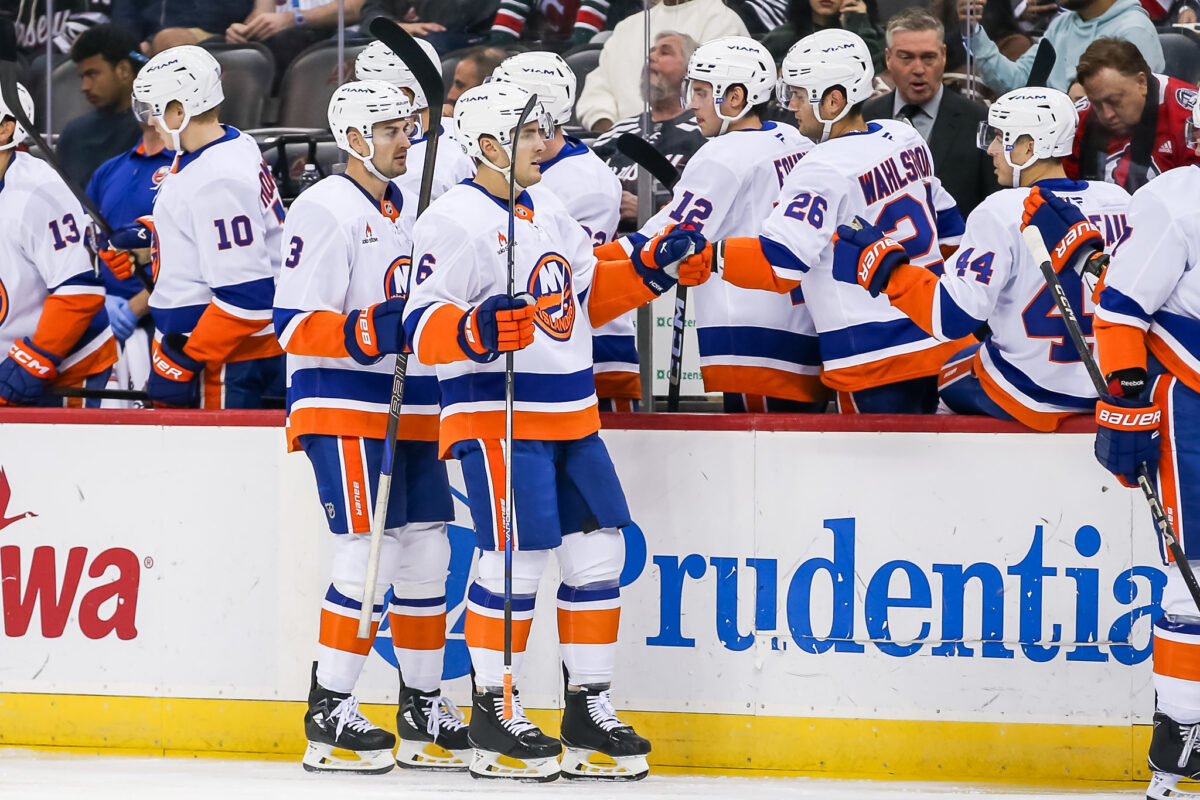
However, the silver lining in this cloudy season continues to be Matthew Schaefer. The number-one overall pick has been thrown into the deep end, and remarkably, he’s swimming. It is rare for a rookie defenseman to carry this level of responsibility, but Schaefer’s poise suggests he’s a foundational piece for the next decade. That said, relying on a teenager to stabilize a depleted blue line is a strategy born of necessity, not preference.
The Value of Bo Horvat
We can’t talk about the defensive struggles without acknowledging the crater left in the forward group. Defense isn’t played in a vacuum; it relies on forward support, faceoff wins, and sustained offensive zone pressure.
The injury list reads like a parody of a disaster movie: Kyle Palmieri (knee), Pierre Engvall (ankle), Ethan Bear, and goaltender Semyon Varlamov are all on injured reserve (IR). But the loss of Bo Horvat is the breaker.
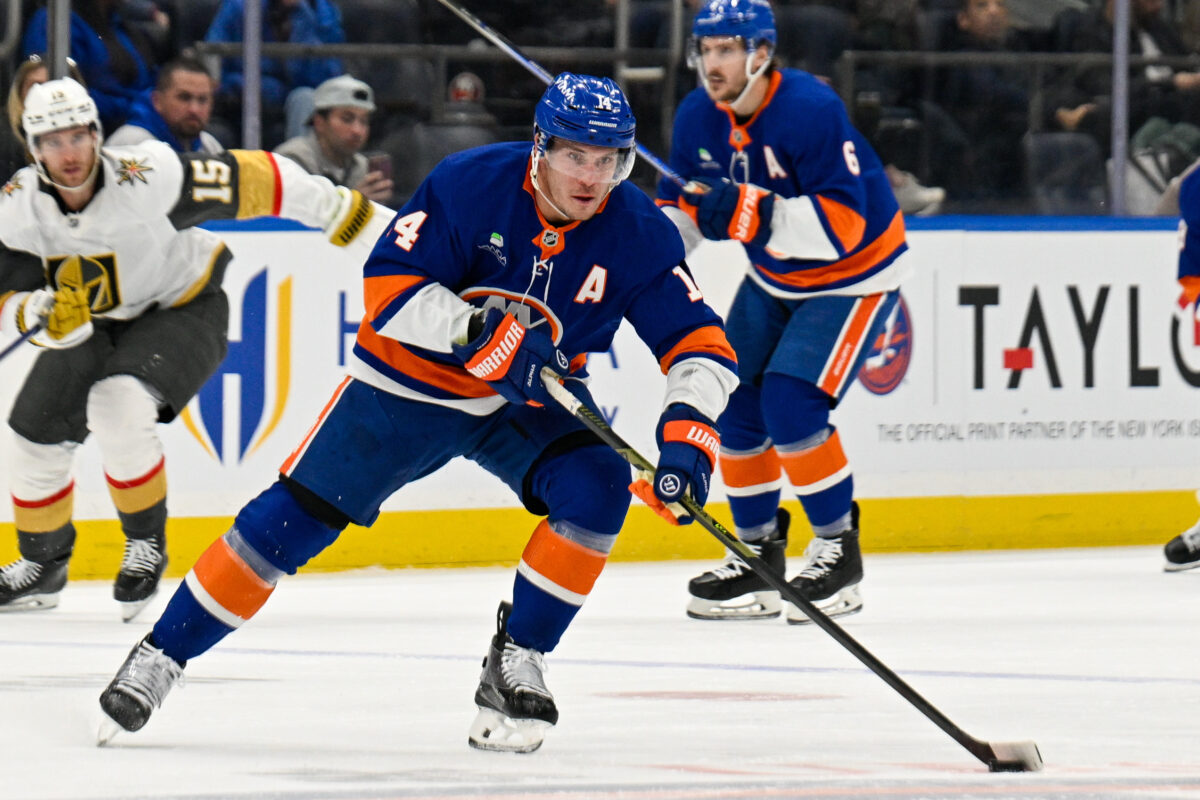
Horvat is statistically the team’s most irreplaceable forward. To put it in perspective without getting bogged down in spreadsheets: Horvat’s individual value is nearly triple the combined “Wins Above Replacement” (WAR) of the other injured Islanders. When you lose a player who drives play at that level, you aren’t just losing scoring; you’re losing possession time. Less possession means more time spent defending, which exposes the weakened blue line even further. It is a vicious cycle.
Roy’s Ultimatum: Defense First
Roy knows he can’t magically heal shoulders or knees. What he can control is the buy-in. The message coming out of the locker room is clear: if you want to play, you defend.
This was highlighted recently in a video session with 20-year-old center Calum Ritchie. Despite Ritchie’s offensive potential, Roy was explicit, telling the youngster that “playing well in his own zone” is his “ticket” to staying in the lineup. It’s a return to foundational hockey. When you lack the talent to outscore your mistakes, you have to eliminate the mistakes.
Related – Ilya Sorokin Has Reshaped the Islanders’ Season
Roy is trying to insulate his volatile roster by simplifying the game. If the third pairing can’t move the puck fluently on their off-hand, the forwards need to come back deeper. If the transition game is stalling, the neutral zone structure has to be tighter.
The Road Ahead
The next month will define the Islanders’ season. They are operating with a defensive corps that is unsettled and a forward group missing its engine. The coaching staff is doing what they can to mask the deficiencies, but there are only so many ways you can rearrange the pieces of a puzzle when the picture doesn’t match the box.
For now, expect the tinkering to continue. The Islanders are looking for stability in a season that has offered very little of it.
AI tools were used to support the creation or distribution of this content, however, it has been carefully edited and fact-checked by a member of The Hockey Writers editorial team. For more information on our use of AI, please visit our Editorial Standards page.

