
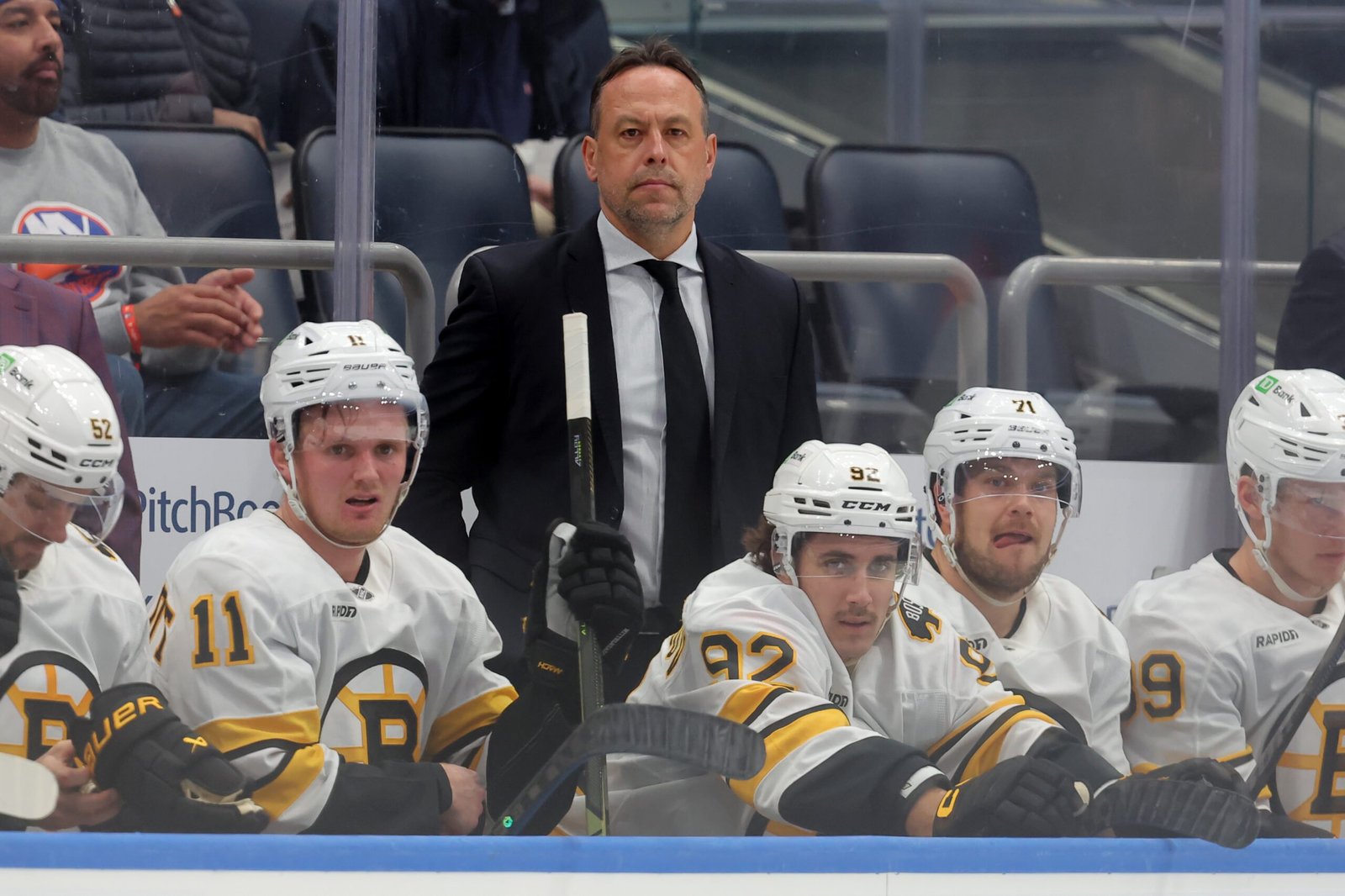
The Atlantic Division is arguably the most competitive in the NHL this season. Every single team in the division has a winning record, with the difference between second place and fifth place separated by just three points. For this reason, the Boston Bruins are going to need to bring their A-game coming out of the NHL’s break during the 2026 Olympic Games in Italy. That’s easier said than done, but it’s a necessity if the team wants to prove this isn’t a retooling year. It’s a season where they can still make postseason noise. With the standings this tight, every point coming out of the Olympic break carries playoff weight.
This season has been the tale of two Bruins teams. For some stretches of the season, they’ve looked resilient and borderline unbeatable. In other stretches, the weaknesses on their roster have been glaringly obvious. Because of that inconsistency, the team is going to need to identify their strengths and lean into them more consistently.
With that said, here are three keys to the rest of the season for the Bruins to maximize their chances of making the postseason.
Swayman and Korpisalo Must Perform at Their Best
When the Bruins are at their best, their goaltending unit can outright steal games for the team when push comes to shove. This season, both Jeremy Swayman and Joonas Korpisalo have been solid at points, but neither has necessarily looked worth their price points as a franchise goaltender (Swayman) and a solid backup (Korpisalo).
With the team paying Swayman $8.25 million this season and Korpisalo $3 million, it’s clear that they’re banking on both goalies being capable of starting on any given night and giving the Bruins enough of an opportunity to win. While both have proven capable, it’s been the consistency that’s ailed the Bruins at times.
Related: Ranking the NHL’s 32 Starting Goalies – Midseason Update
In the case of Swayman, the raw numbers don’t tell the full story. On paper, paying a goalie upwards of $8 million annually should yield better results than Swayman’s 2.89 goals-against average and .903 save percentage. His 7.3 goals saved above average (GSAA) and 16.2 goals saved above expected suggest he’s been better than his surface stats indicate. The Bruins need that version of him every night down the stretch.
For Korpisalo, the story has been a bit different. The 31-year-old entered the Olympic break with a 3.15 goals-against average and .893 save percentage, as well as a -1.9 GSAA and -1.5 goals saved above expected. Again, Korpisalo has had moments, but he’ll need to be more consistent if the Bruins are going to trust him to share the net with Swayman and keep their starting netminder relatively fresh down the stretch.
Consistent Play Up and Down the Bruins Lineup
For the most part, this season the Bruins have found scoring from a variety of players. Eight players on the team have at least 10 goals, with two more players sitting at nine goals apiece at the time of this writing. When injuries have reared their ugly head this season, the Bruins have found success with a next-player-up mentality and it’s enabled them to remain competitive regardless of who is missing from action.
The Bruins have been fortunate to get value out of players, whether they’re lining up in the top six or being inserted elsewhere in the lineup. This season alone, players like Alex Steeves, Fraser Minten, Casey Mittelstadt, Marat Khusnutdinov, Viktor Arvidsson and more have performed whether they’ve been in a top-six role or somewhere in the bottom-six.

On the defensive side of the puck, the Bruins have had to use 11 different defenders this season due to injuries. Ideally, the Bruins can settle on a consistent top six on defense with one or two reliable options ready to step in as seventh and eighth options. Unfortunately, injuries have made this difficult. As it stands, the next-player-up mentality has allowed different players to make their mark this season, regardless of who’s been missing from the lineup.
Bruins Must Win Special Teams Battles
For better or for worse, special teams will win and lose teams games down the stretch and in the postseason. Currently, the Bruins rank third in the NHL in power play percentage, converting on an impressive 26.3% of their opportunities up a player. This also ranks them first in the Eastern Conference, ahead of the Pittsburgh Penguins, who sit fourth at 25.9%. They also rank first in the Atlantic Division, ahead of the Montreal Canadiens, who have converted on 23.9% of their power plays.
When given the opportunity, the Bruins have capitalized on penalties as well as any team in the NHL. This is a valuable skill that the team should not lose sight of moving forward.
It’s the other side of the special teams coin that’s plagued the Bruins for much of this season. The Bruins are guilty of taking far too many penalties this season, and even worse, they’ve been one of the worst teams in the NHL at killing off these penalties during the 2025-26 season. Entering the break, the Bruins rank 28th in the NHL in penalty kill percentage, successfully killing off just 76.3% of their penalties taken. The Bruins need to do better when down a player if they stand a legitimate chance of making the playoffs and winning in the postseason.

