
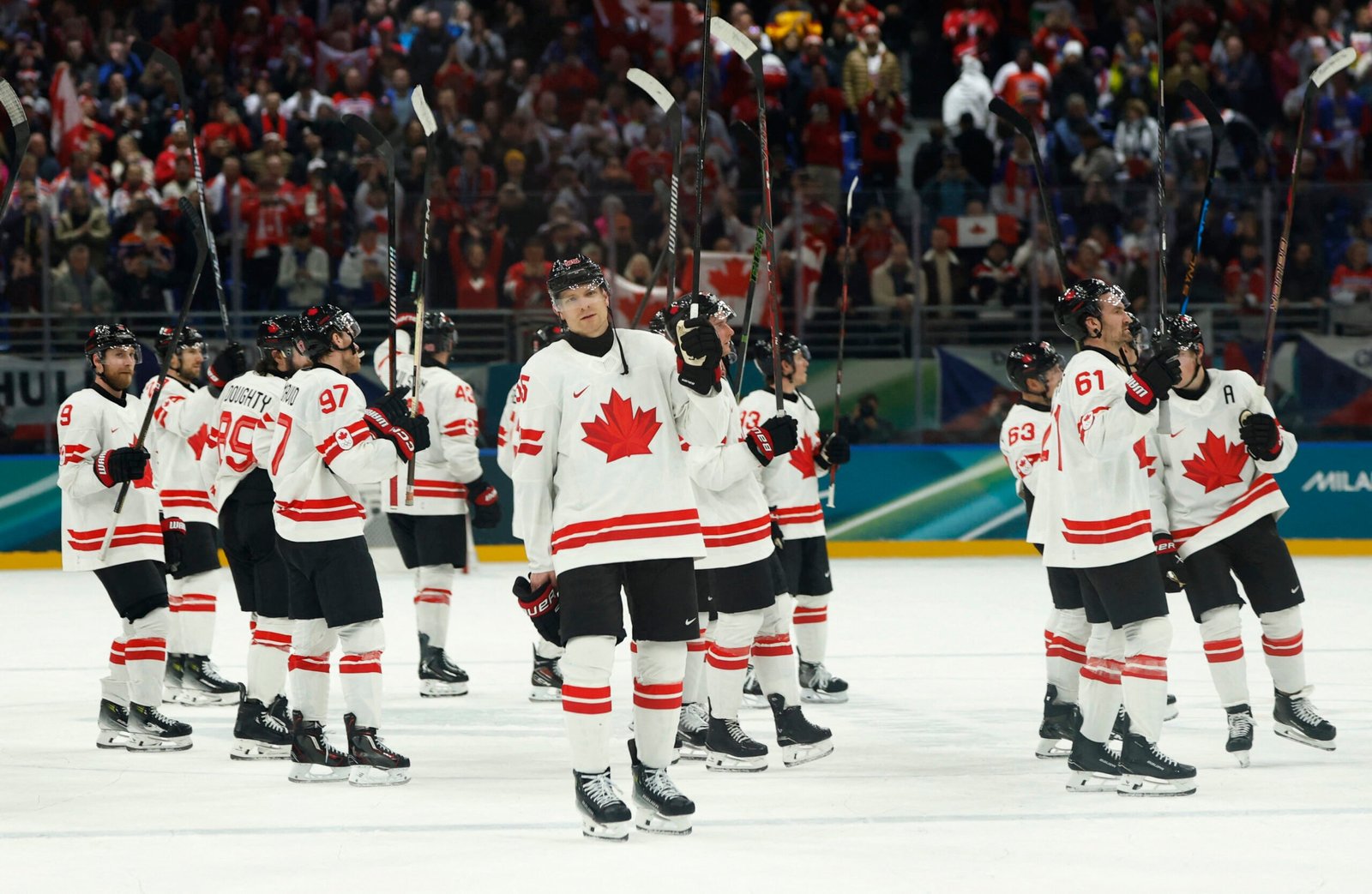
The Pittsburgh Penguins have long been synonymous with international excellence, and the early days of the Winter Olympics once again highlighted how deeply the organization is woven into the global hockey fabric. From franchise icon Sidney Crosby leading Team Canada to goaltender Arturs Silovs stepping into action for Latvia, Penguins players and affiliates found themselves in key moments on the sport’s biggest stage.
Related: Guide to the 2026 Winter Olympics Men’s Hockey Tournament
While the Penguins are navigating their own NHL season, the Olympic performances of their players offered a reminder of the pedigree still running through the organization.
Crosby Opens With a Statement for Canada
There may be no player more closely associated with Olympic hockey than Crosby, and his return to the Games brought immediate impact.
Crosby opened his third Olympic appearance in vintage fashion, collecting two assists in Canada’s dominant 5–0 win over Czechia. Serving once again as the emotional engine of Team Canada, Crosby displayed the vision and composure that have defined his international career. He played a key role in Canada’s puck movement, consistently driving possession and creating space for his linemates.
His chemistry with Canada’s top forwards was evident early. On one sequence, Crosby feathered a precise touch pass to Mitch Marner, who quickly moved the puck to Mark Stone for a goal that showcased Canada’s layered offensive attack. Later, Crosby helped orchestrate a power-play sequence that ended with Connor McDavid finishing on the back door — a play that perfectly illustrated Crosby’s continued ability to manipulate defenders and open lanes.
Beyond the box score, Crosby’s leadership loomed large. Canadian head coach Jon Cooper praised his captain’s presence, emphasizing how Crosby continues to elevate everyone around him. For a Canadian roster loaded with stars, Crosby remains the standard-bearer — a player younger teammates grew up idolizing and now share a locker room with.
At 38, Crosby is both the oldest player on Canada’s roster and its heartbeat. His Olympic résumé already includes golden moments that define eras, and his latest performance suggests he still thrives when the stakes rise.
Silovs Sees Olympic Ice for Latvia
While Crosby headlines the Penguins’ Olympic story, Silovs quietly added a milestone of his own.
Silovs did not start Latvia’s matchup against the United States, with Elvis Merzlikins getting the nod, but he entered to begin the third period with Latvia trailing 4–1. The 24-year-old netminder surrendered one goal — coming on a Team USA power play — during his 20 minutes of action.
Though the scoreboard leaned heavily in the Americans’ favor, Silovs’ appearance marked his first Olympic action, a significant moment in his international career. He has represented Latvia before on the world stage, but stepping into an Olympic game carries a different weight. Even in a difficult situation, being tasked with stabilizing a game against one of the tournament favorites is a vote of confidence from the Latvian coaching staff.
For the Penguins organization, Silovs’ Olympic experience is valuable development. Goaltenders often mature through exposure to high-pressure environments, and few settings compare to Olympic hockey. Facing elite shooters under global scrutiny accelerates growth in ways the regular season cannot replicate.
Latvia may not be expected to medal, but for players like Silovs, every Olympic minute contributes to long-term progression — both individually and for the national program.
Penguins’ International Legacy Continues
The Penguins’ Olympic footprint extends beyond individual stat lines. Pittsburgh has built a reputation over decades as a hub for international stars, and this tournament reinforces that identity.
Crosby’s presence alone connects the current Penguins era to the golden age of Canadian Olympic hockey. His 2010 and 2014 heroics remain etched in the sport’s memory, and his return serves as a bridge between generations. Younger players now watch him in the same awe fans once did, seeing firsthand how elite habits translate to international dominance.
Silovs represents the other side of the equation: emerging talent gaining experience. The Penguins have increasingly invested in global scouting and development, and seeing prospects compete at the Olympics validates that strategy. Even limited minutes on this stage can shape a player’s trajectory.
For Pittsburgh fans, these performances provide a midseason reminder that the organization’s reach extends far beyond the NHL standings. Penguins players aren’t just participants — they’re central figures in the global hockey conversation.
What It Means for Pittsburgh
Olympic tournaments often serve as a measuring stick. For veterans like Crosby, success reinforces legacy. For younger players like Silovs, participation builds one.
Crosby’s strong start signals that his competitive fire remains undiminished. When he returns to NHL play, that rhythm and confidence often carry over. Historically, international tournaments have sharpened his game rather than fatigued him, and Penguins supporters have reason to believe this time will be no different.
For Silovs, the benefit is developmental. Handling Olympic pressure prepares him for future high-leverage moments, whether in Pittsburgh or elsewhere. Goaltending is as much mental as technical, and experiences like this accelerate readiness.
More broadly, the Penguins’ Olympic representation underscores the franchise’s enduring relevance. Even as the NHL evolves and new contenders rise, Pittsburgh continues to produce and attract players trusted to perform on hockey’s biggest stage.
A Global Stage, A Familiar Standard
The Olympics compress careers into moments. Every shift carries amplified significance, every save or assist replayed worldwide. Penguins players stepped into that spotlight and upheld the standard associated with the crest.
Crosby reminded the hockey world why his name is synonymous with international excellence. Silovs began writing his Olympic chapter, gaining experience that could shape his future. Together, they represent different points on the same continuum: the Penguins’ ongoing connection to the sport’s global elite.
As the tournament unfolds, Pittsburgh’s fingerprints remain visible — not just in highlights, but in the leadership, poise, and skill their players bring to the ice. For a franchise defined by championships and icons, the Olympic stage feels less like foreign territory and more like home.

