
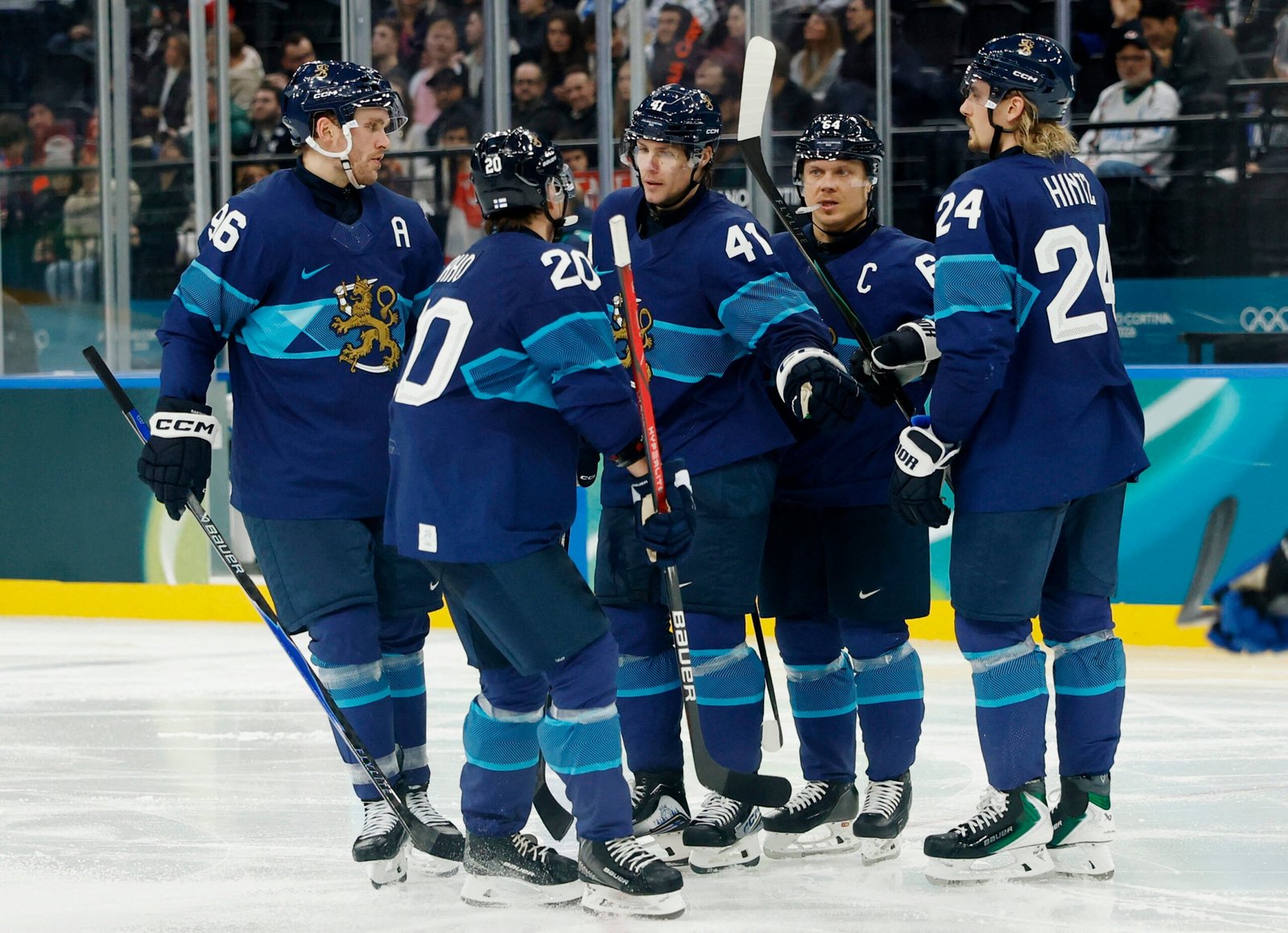
Finland closed group play by doing exactly what the standings demanded, an 11-0 win over Italy that doubled as a goal-differential play and a systems check. Finland finished with 61 shots, a men’s Olympic tournament record, in a game that never drifted into coasting despite the scoreline.
This was not a “get the win and leave” game. Finland played it like a bracket game, because it effectively was one. The group math required three points and a large margin, with goal differential deciding the best second-place team. That context was laid before the puck dropped, and then during the third period, Finland had essentially locked up the direct quarterfinal route as the score climbed.
That urgency showed in the way Finland managed the puck. They did not chase highlight plays through the middle when the first look was covered. They cycled, reset at the points, and kept pressure in the offensive zone long enough to force fatigue mistakes. The shot record itself tells part of the story, but the more important detail is how Finland got there. The volume was not a flurry of low-percentage bombs. It was a steady series of controlled possessions, layered shots, and quick recoveries that kept Italy pinned.
The third period is where teams often leak discipline in these matchups. Finland did the opposite. Even with a comfortable lead, they kept hunting the next shift. Finland chased the Olympic record of Sweden’s 60 shots on goal and then made the record their own by getting to 61. It read like a team that understood what the tournament could ask later: a tiebreaker, a confidence rep, and a chance to hardwire their habits.
The Power Play Finally Showed Up
Finland’s special teams had carried baggage earlier in the tournament, especially the top power play. Italy is not the opponent you use as proof of future success, but it is still useful to see a unit execute the right sequence: win structure, move the puck with pace, and get a shot through.
There was a moment early in the third period when Finland went to the man advantage, and Miro Heiskanen scored from the point, with Mikko Rantanen picking up an assist. It was an important breakthrough for the top unit, which had been searching.
What matters is the template. In tournament games against NHL penalty kills, Finland will not live off seam passes every night. It will need point shots that arrive with traffic, plus quick retrieval routes that keep the puck inside the zone. Heiskanen’s point release is part of that solution because it forces the penalty kill to respect the top and opens the half-wall again on the next possession.
It was also a useful rep for Rantanen in a tournament where the top names have felt slightly out of sync at times. A clean power-play touch that leads to a goal tends to settle a unit quickly, even when the opponent is overmatched.
Again, Depth Scoring Was the Actual Story
An 11-0 final can trick you into writing a star-driven recap. This one was driven by the middle of the lineup and the shift-to-shift details.
Related: 3 Takeaways From Finland’s 4-1 Win Over Sweden At The 2026 Milan Olympics
You can see from the score sheet alone that the scoring is coming from throughout the roster, with multiple goals built off the kinds of plays Finland will actually need in elimination games: offensive-zone faceoff wins, net-front presence, and second-chance execution.
Now, since Finland defeated Italy in regulation, it becomes a three-way tie for Group B between Finland, Sweden, and Slovakia. This leads to tiebreaker rules going into effect, which my friend Robert Tiffin covered in his article on this game, and I recommend you read! But long story short, Finland ended their group stage in second behind Slovakia.
Finland Returns in the Quarterfinals
Finland’s next game will be at the Olympic Quarterfinals, and the opponent is still being decided as the rest of the teams finish the group stage.

