
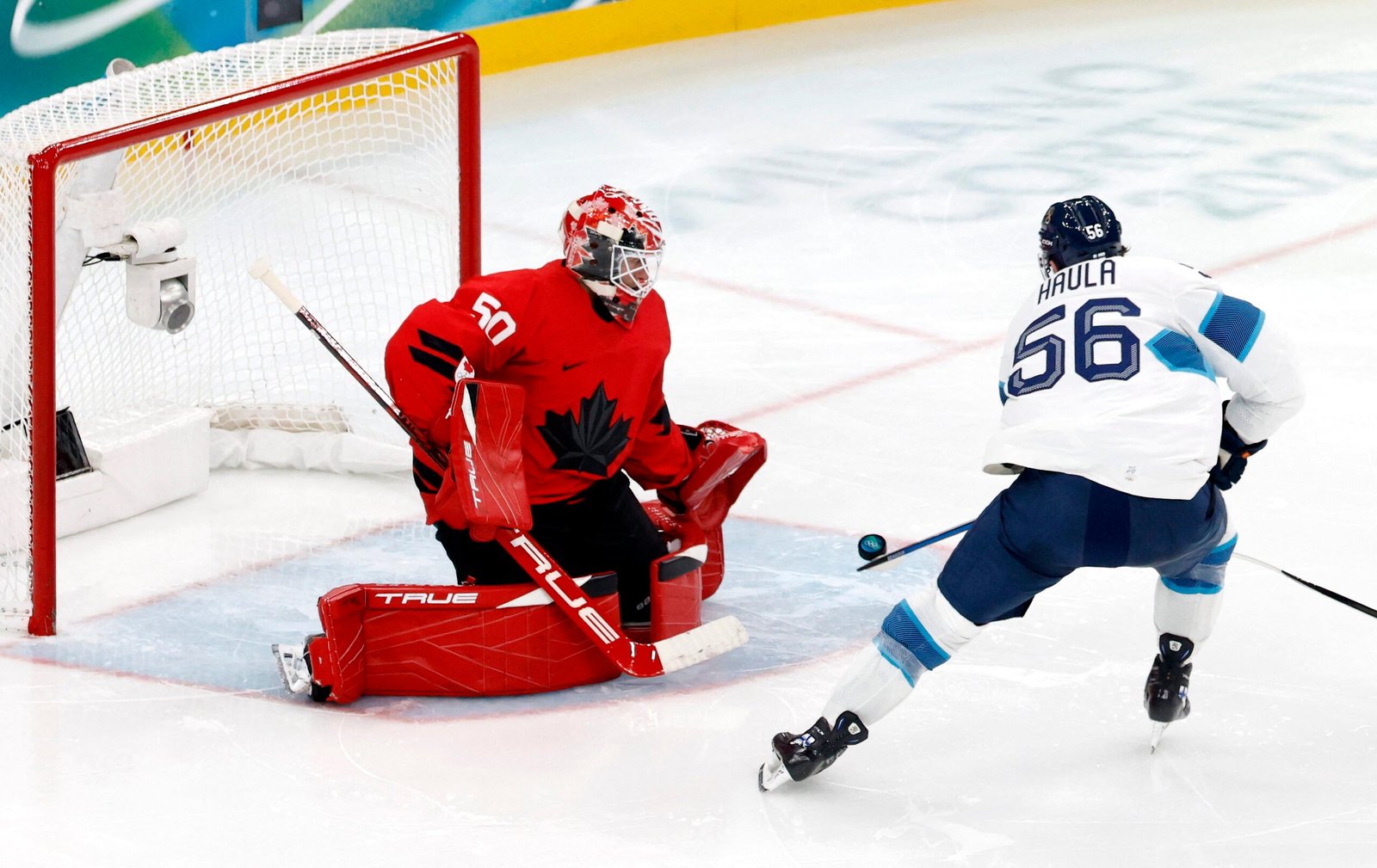
On Sunday, Feb. 22, Canada and the United States faced off in the gold medal game. Both teams hoped to earn the ultimate Olympic hockey prize and bragging rights.
Related: Guide to the 2026 Winter Olympics Women’s Hockey Tournament
Canada faced adversity before the puck dropped, with team captain Sidney Crosby not dressed due to injury.
An early Team USA goal allowed them to lean into their game plan, to play a trap-style defence. Canada battled hard to try to crack open the high slot, but the US squad was far too determined to allow it to happen. The game went to overtime because of goaltending, as Canada missed several golden opportunities in the third period. In the end, Team USA got its third-ever gold medal in a 2-1 overtime win.
Special Teams Battles
Canada’s power play was the most prolific in the tournament, converting at an elite rate (around 43.7% on the man advantage), regularly creating high-danger scoring chances, and consistently punishing opponents for infractions with players like Connor McDavid and Nathan MacKinnon driving the puck movement and finishing opportunities.
In contrast, Team USA’s penalty kill was a standout defensive unit through the Olympic tournament. The Americans entered the latter stages having not surrendered a single power-play (PP) goal, and that continued, even after Canada had a 5-on-3 PP in the second period. To that point, they posted a perfect penalty kill (17-for-17) and frustrated some of the strongest power plays they’ve faced, including Canada’s.
This defensive awareness on the penalty kill has been an extension of their defense-first structure, and don’t forget the goaltending from Connor Hellebuyck, allowing the U.S. to neutralize opponents’ advantages and shift play back to even strength.
The Rope-a-Dope
Team USA looked content to let Canada carry the puck, control possession, and rack up shot attempts, a classic rope-a-dope approach reminiscent of Muhammad Ali’s strategy against George Foreman. Rather than chasing Canada’s high-skill forwards all over the ice, the USA sagged into a layered, trap-style defensive coverage. They focused on protecting the middle of the ice and absorbed any pressure along the perimeter.
Canada won the territorial battle for long stretches, but the U.S. dictated where the majority of those chances came from—steering play wide, blocking lanes, and trusting their structure instead of trading rushes. It’s a calculated gamble: bend without breaking, frustrate the opponent, and wait for impatience to creep in. In the end, rely on Hellebuyck.
The payoff came in transition. Canada overextended early in the game as Matt Boldy took advantage.
They relied on a quick-strike mentality, turning defensive stops into a handful of odd-man rushes before Canada could reset. It’s less about volume and more about timing: soak up momentum, survive the storm, then land a clean punch. Against a team that thrives on rhythm and puck control, the rope-a-dope style disrupts flow and shifts the psychological battle. If Canada pressed too hard trying to break through, the U.S. was more than willing to capitalize on the smallest mistake and have the talent available to make it decisive.
Canada Leaned into Their Strength
Canada had to try to avoid falling into the physicality trap. One team wanted to turn it into a back-alley fight; the other wanted to keep the puck moving. Canada’s game plan was built around imposing pace, possession, and sustained offensive-zone pressure. They wanted the puck on their sticks as much as possible, using speed through the neutral zone to back defenders off and create controlled entries rather than dump-and-chase hockey.
Once set up, Canada leaned heavily on cycling down low, activating defensemen at the blue line, and forcing opponents to defend for long shifts. The objective is attrition: wear teams down physically and mentally until coverage breaks, seams open, and elite skill can take over. Yet Team USA was built specifically to counter this style, which used faceoff dominance to help counter the possession play.
Canada was able to set itself up in the offensive zone for long periods, but it was an offensive zone faceoff that led directly to Cale Makar tying the game.
Canada controlled the majority of the game, but one mistake, overcommitting on the attack during overtime, led to their downfall. They will have nightmares about Hellebuyck’s save on Devon Toews, but this result was one where the better team lost to the lesser team that played their game plan to perfection. Despite what trolls say online, the game is still Canada’s game, one shared with the world.

