
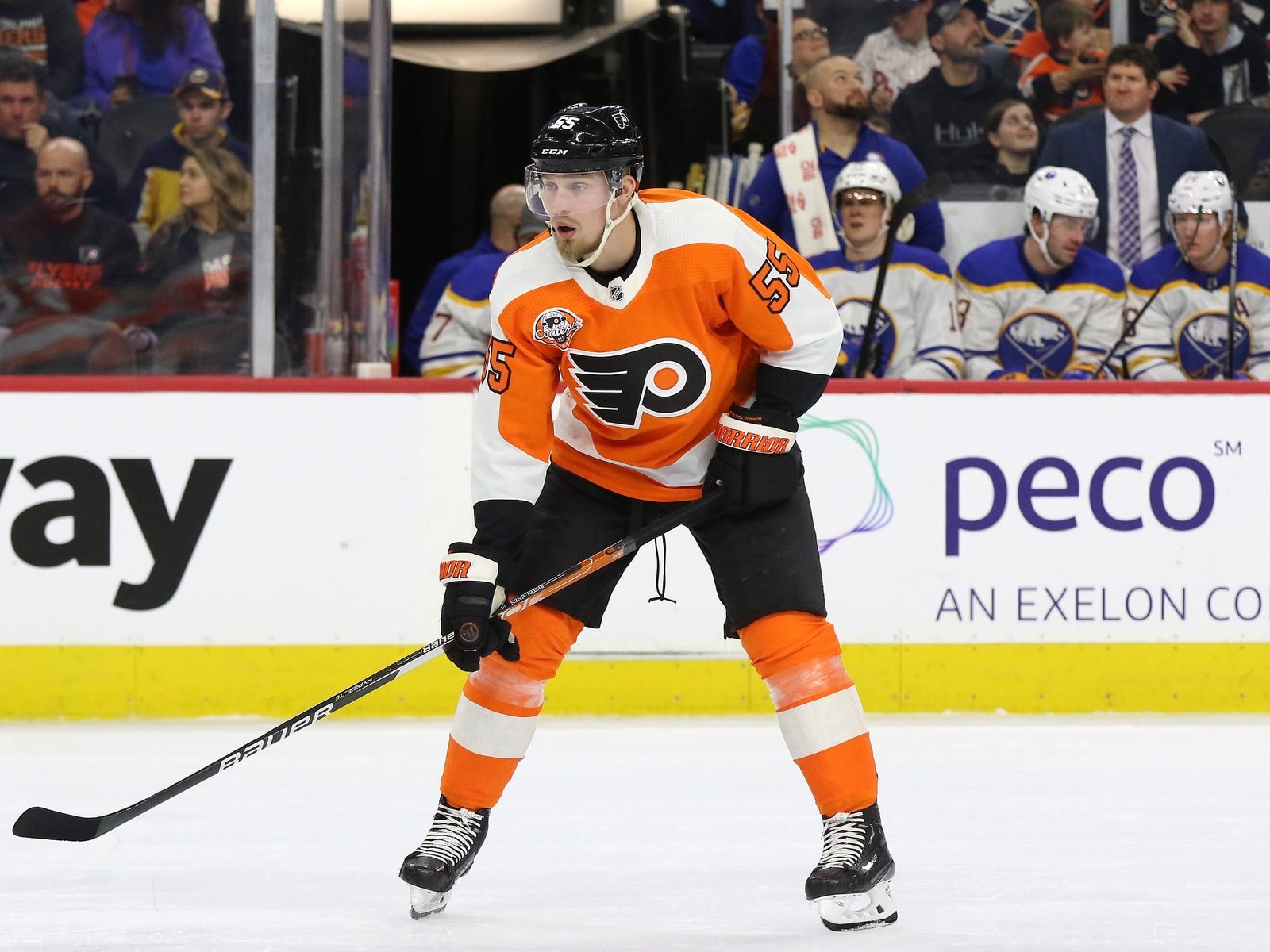
Rasmus Ristolainen returned from Milan with a bronze medal, a renewed reputation, and every reason to expect a trade. He had played some of the best hockey of his Philadelphia Flyers tenure, logged big minutes against the best players in the world, and physically dominated on a stage that contending teams watch closely. The 2026 deadline arrived on March 6. The Finn was still in Philadelphia when it passed.
The story of why is not a single reason. It is four problems that arrived at the same time and made a deal that looked inevitable into one that never got done.
Briere Set the Price and Did Not Move
Danny Briere made his position clear before and after the deadline. He wanted a first-round pick and a prospect for Ristolainen, a return modeled on what the Boston Bruins received from the Toronto Maple Leafs for Brandon Carlo last season. The Flyers were open to other configurations, but a second-round pick was the best offer that reportedly came in, and Philadelphia declined without hesitation.
Briere pushed back on the idea that he was ever actively shopping his defenseman in the first place. He called the trade speculation a media circus and was direct that Ristolainen is an important part of the defense and still under contract for next season. His question was simple: Where do you find a 6-foot-4, physical, right-shot top-four defenseman? There are not many.
That is not spin. It is an accurate read of the market for that specific profile. The problem was that the market this year decided it did not need to pay first-round pick prices to find one.
The Market Was Flooded
Elliotte Friedman identified the core issue before the deadline: it was not that teams disliked Ristolainen; it was that there were simply too many right-shot defensemen available. Any team that did not want to meet Philadelphia’s price had somewhere else to go.
Related: Sabres’ Ristolainen Gaining Trade Talk Momentum
Players including Tyler Myers, Connor Murphy, Timothy Liljegren, John Carlson, and Justin Faulk all moved at the deadline, most at price points well below what the Flyers were seeking.
Ristolainen is a better player than most of that group. The Olympic performance made that case clear. But in a buyer’s market, being better does not automatically command a premium price when alternatives exist at a discount. Teams that needed a right-side defenseman found one without opening their first-round pick drawer. The Flyers’ leverage, which looked strong heading into the week, eroded as the market filled up around them.
Two Triceps Tears Are Hard to Ignore
Ristolainen’s medical history is the factor that did not show up in the rumor coverage but almost certainly showed up in every team’s internal evaluation. He has ruptured his triceps tendon twice in Philadelphia, missed significant time in each of the past two seasons, and played only 23 games before the Olympic break this season.
Related: Sabres’ Ristolainen: The Swirl Continues
His Milan performance was genuinely impressive. He hit Connor McDavid cleanly, played heavy minutes in the semifinal against Canada, and earned his bronze medal without reservation. But a contending team committing a first-round pick and a prospect is making a bet that lasts through a playoff run.
That version of the Ristolainen medical file asks for a lot of confidence from a front office that does not know him the way Philadelphia does. Enough teams looked at those two injuries on the same tendon and decided the price needed to reflect the risk. The Flyers disagreed. The gap stayed open.
Philadelphia Did Not Have to Sell
This is where the Ristolainen situation differs from other deadline non-trades. The Flyers had no urgency. Ristolainen carries a $5.1 million cap hit with one year remaining in 2026-27, meaning Philadelphia can hold him through next season and revisit the decision at the 2027 deadline with a fully expiring contract.
Briere’s reasoning for keeping him was also forward-looking. After acquiring David Jiricek from the Minnesota Wild and with Oliver Bonk developing in the American Hockey League (AHL), the organization sees Ristolainen as a stabilizing presence that lets both young right-shot defensemen develop on their own timeline without being forced into roles before they are ready.
Trading him now would have created a void the Flyers could only fill at a cost. Keeping him creates a mentorship structure and preserves organizational patience for two players who could anchor the right side for the next decade.
The path forward is already mapped. If Philadelphia is in the playoff race next March, Ristolainen becomes their own rental, a veteran piece the team keeps for itself down the stretch. If they are out of it, a second-round pick on an expiring deal becomes the realistic return. Either scenario works for a franchise that is building rather than chasing.
For Ristolainen, the situation is more personal. He has never played a playoff game in the NHL. He said in Milan that the bigger the stage, the better he performs, and the Olympics backed that claim. A summer trade, with more cap flexibility around the league and teams planning ahead rather than reacting, gives him a better shot at landing with a contender than the compressed deadline market did. He already appears on multiple post-deadline offseason trade boards as a top-five target.

