
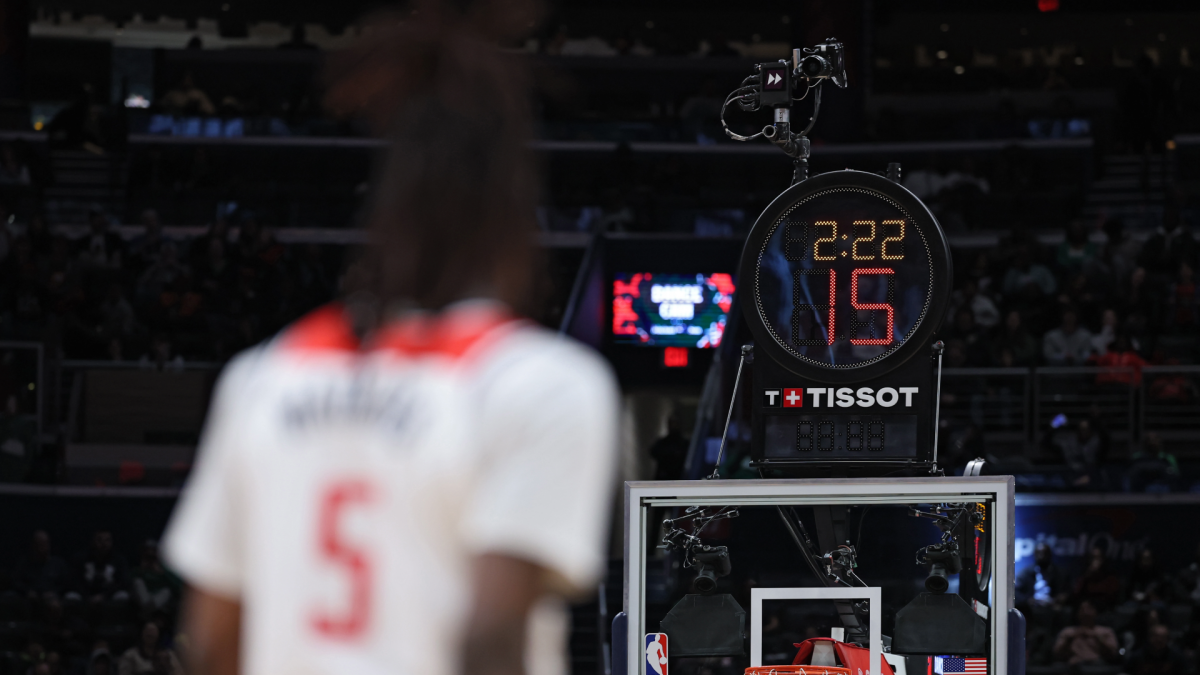
The NBA season is too long, at least according to several critics (myself included!). Golden State Warriors coach Steve Kerr has been pushing the NBA to play fewer than 82 games for years now, and Indiana Pacers coach Rick Carlisle recently joined him on that front. The topic has become increasingly popular among prominent media figures, with The Ringer’s Bill Simmons raising the topic while addressing the NBA’s proposed lottery changes Friday.
Simmons’ tweet caught the eye of former Dallas Mavericks governor (and present minority owner) Mark Cuban, who proposed an alternative: rather than playing fewer games, shorten the length of NBA games from 48 minutes down to 40, which would match the FIBA, WNBA and NCAA formats.
The theoretical appeal of shortening the schedule is minimizing injury risk and load management to ensure that stars are available as often as possible. Fewer games means more rest between games and fewer opportunities to get hurt. A standard NBA regular season sees teams play 3,936 total minutes. A 72-game season with 48-minute games, as Simmons proposed, would see teams playing 3,456 minutes per regular season. An 82-game schedule with 40-minute games would see teams playing 3,280 minutes per season. Shortening games would reduce the amount of basketball teams play, so there would be a theoretical workload reduction in that approach.
Cuban argued that there would be other benefits. “If you looking at tv and streaming ratings, the less the actual playing time for a televised game, the bigger the ratings,” he continued. “Ie, the less time fans have to focus on a game, the more they enjoy watching it on tv.” He also cited the NFL as an example of this phenomenon. Though games regularly take three hours or more to fully broadcast, studies have shown there is only about 11 minutes of game action. The NFL is by far the nation’s most popular professional sport.
Cuban later suggested that shortening games could increase parity and minimize tanking. Upsets are more common in smaller sample sizes. Simply put, it’s easier for an inferior team to outplay a superior team for 40 minutes than it is for 48 minutes. A common complaint about the NBA postseason is that upsets are too rare. This is a possible remedy.
There is obvious merit to these ideas. Baseball is in the middle of something of a renaissance brought about in part by shortening games through rule changes. In 2020, Major League Baseball instituted a rule that forced pitchers to remain in the game either for three batters or through the end of the half-inning, whichever comes first, and in 2023, it introduced a pitch clock aimed at keeping games on schedule. Cutting out the dead time inherently sped up the games. There are theoretical financial detriments to these changes. Fewer pitching changes mean fewer commercial breaks. Shorter games make baseball slightly less valuable to broadcasters eager to fill as much time through live sports rights as possible. But the improvement to the quality of the fan experience has seemingly dwarfed such concerns.
The hope would be that shortening games could have a similar impact on basketball. As FIBA, the WNBA and the NCAA already play 40-minute games, there are existing business models the NBA could try to replicate. The NBA has even tinkered with the idea itself. In 2014, the Nets and Celtics played a 44-minute preseason game. NBA Summer League already plays 40-minute games. The NBA has also shortened seasons, but only when circumstances have forced the issue through either labor strife or a global pandemic. Shortening games is certainly the more realistic of the two options, sidestepping a number of logistical problems with cutting games like arena leases and broadcast deals.
All in all, it’s not a crazy concept. There’s just one pretty significant problem that would have to be addressed before becoming viable: the management of playing time. NBA games are 48 minutes, but the best players don’t play 48 minutes. They don’t even play 40 anymore. The league leader in minutes per game this season, Tyrese Maxey, plays 38.3. In other words, the best players would still probably play the same or almost as much. Cutting playing time out of every game wouldn’t really affect them. It would affect their backups.
That might not sound significant. Fans want to see the stars. But the NBA is an ecosystem that relies on some measure of balance. The league can’t unilaterally shorten games. It would need approval from the NBPA. And why would the NBPA ever agree to a system that renders a meaningful percentage of its membership obsolete? The 48-minute game forces teams to actually use most of their players. A 40-minute game would come down to five starters and maybe a backup or two.
The ramifications of a change like that are much bigger than simply keeping lesser players off the floor. Think about player development. How many great players started their careers as low-minute backups either because their teams were too good to play them more or because they were a late draft pick? How about roster building? The NBA has largely moved away from superteams because the modern style of play demands depth and versatility, but a team with three superstars is suddenly a lot more viable if it only needs to put three other players on the court every night. A change like this artificially increases the importance of the best players. Would the NBA have to change its max contract structure? If so, what would that mean for the role players who did see the floor? Would teams tank even harder to try to secure the best incoming prospects?
Maybe the league could find a remedy here by enforcing some sort of playing time limit on individual players. It’d be hard to draw that line at a specific number of minutes in a game because of how imprecise stoppages are in basketball. Perhaps players could only play in three out of the four quarters? The danger there would be that broadcasters would struggle to sell ads during the periods stars tend to sit out, which is less predictable now than it would be in a system like that. It would also encourage players to play very long, consecutive stretches, which creates more injury risk.
It’s also not clear how beneficial a change like this would really be as far as keeping players healthy and minimizing load management. The games that pose the greatest risk and lead to the most load management are back-to-backs. Shortening games wouldn’t change how games are scheduled, so back-to-backs would seemingly remain on schedules without further intervention. And while the NBA would obviously prefer it if nobody got hurt, an injured star is inarguably more detrimental than an injured reserve. If stars are playing similar minutes, their availability would be similarly imperiled by 82 40-minute games.
There are clear benefits here. Cuban’s point about viewing habits and ratings is especially important. Fans tend to love how much faster FIBA games typically move, and whether it’s through a shorter game or rule changes related to reviews or end-game strategy, this should be something the NBA looks to address in some form or another. Some of the problems related to roster management could be addressed through further changes. If the kinks could indeed be worked out, a 40-minute game probably would be a net improvement even if it didn’t fix everything that those in favor of a shorter schedule want addressed.
require.config({“baseUrl”:”https://sportsfly.cbsistatic.com/fly-510/bundles/sportsmediajs/js-build”,”config”:{“version”:{“fly/components/accordion”:”1.0″,”fly/components/alert”:”1.0″,”fly/components/base”:”1.0″,”fly/components/carousel”:”1.0″,”fly/components/dropdown”:”1.0″,”fly/components/fixate”:”1.0″,”fly/components/form-validate”:”1.0″,”fly/components/image-gallery”:”1.0″,”fly/components/iframe-messenger”:”1.0″,”fly/components/load-more”:”1.0″,”fly/components/load-more-article”:”1.0″,”fly/components/load-more-scroll”:”1.0″,”fly/components/loading”:”1.0″,”fly/components/modal”:”1.0″,”fly/components/modal-iframe”:”1.0″,”fly/components/network-bar”:”1.0″,”fly/components/poll”:”1.0″,”fly/components/search-player”:”1.0″,”fly/components/social-button”:”1.0″,”fly/components/social-counts”:”1.0″,”fly/components/social-links”:”1.0″,”fly/components/tabs”:”1.0″,”fly/components/video”:”1.0″,”fly/libs/easy-xdm”:”2.4.17.1″,”fly/libs/jquery.cookie”:”1.2″,”fly/libs/jquery.throttle-debounce”:”1.1″,”fly/libs/jquery.widget”:”1.9.2″,”fly/libs/omniture.s-code”:”1.0″,”fly/utils/jquery-mobile-init”:”1.0″,”fly/libs/jquery.mobile”:”1.3.2″,”fly/libs/backbone”:”1.0.0″,”fly/libs/underscore”:”1.5.1″,”fly/libs/jquery.easing”:”1.3″,”fly/managers/ad”:”2.0″,”fly/managers/components”:”1.0″,”fly/managers/cookie”:”1.0″,”fly/managers/debug”:”1.0″,”fly/managers/geo”:”1.0″,”fly/managers/gpt”:”4.3″,”fly/managers/history”:”2.0″,”fly/managers/madison”:”1.0″,”fly/managers/social-authentication”:”1.0″,”fly/utils/data-prefix”:”1.0″,”fly/utils/data-selector”:”1.0″,”fly/utils/function-natives”:”1.0″,”fly/utils/guid”:”1.0″,”fly/utils/log”:”1.0″,”fly/utils/object-helper”:”1.0″,”fly/utils/string-helper”:”1.0″,”fly/utils/string-vars”:”1.0″,”fly/utils/url-helper”:”1.0″,”libs/jshashtable”:”2.1″,”libs/select2″:”3.5.1″,”libs/jsonp”:”2.4.0″,”libs/jquery/mobile”:”1.4.5″,”libs/modernizr.custom”:”2.6.2″,”libs/velocity”:”1.2.2″,”libs/dataTables”:”1.10.6″,”libs/dataTables.fixedColumns”:”3.0.4″,”libs/dataTables.fixedHeader”:”2.1.2″,”libs/dateformat”:”1.0.3″,”libs/waypoints/infinite”:”3.1.1″,”libs/waypoints/inview”:”3.1.1″,”libs/waypoints/jquery.waypoints”:”3.1.1″,”libs/waypoints/sticky”:”3.1.1″,”libs/jquery/dotdotdot”:”1.6.1″,”libs/jquery/flexslider”:”2.1″,”libs/jquery/lazyload”:”1.9.3″,”libs/jquery/maskedinput”:”1.3.1″,”libs/jquery/marquee”:”1.3.1″,”libs/jquery/numberformatter”:”1.2.3″,”libs/jquery/placeholder”:”0.2.4″,”libs/jquery/scrollbar”:”0.1.6″,”libs/jquery/tablesorter”:”2.0.5″,”libs/jquery/touchswipe”:”1.6.18″,”libs/jquery/ui/jquery.ui.core”:”1.11.4″,”libs/jquery/ui/jquery.ui.draggable”:”1.11.4″,”libs/jquery/ui/jquery.ui.mouse”:”1.11.4″,”libs/jquery/ui/jquery.ui.position”:”1.11.4″,”libs/jquery/ui/jquery.ui.slider”:”1.11.4″,”libs/jquery/ui/jquery.ui.sortable”:”1.11.4″,”libs/jquery/ui/jquery.ui.touch-punch”:”0.2.3″,”libs/jquery/ui/jquery.ui.autocomplete”:”1.11.4″,”libs/jquery/ui/jquery.ui.accordion”:”1.11.4″,”libs/jquery/ui/jquery.ui.tabs”:”1.11.4″,”libs/jquery/ui/jquery.ui.menu”:”1.11.4″,”libs/jquery/ui/jquery.ui.dialog”:”1.11.4″,”libs/jquery/ui/jquery.ui.resizable”:”1.11.4″,”libs/jquery/ui/jquery.ui.button”:”1.11.4″,”libs/jquery/ui/jquery.ui.tooltip”:”1.11.4″,”libs/jquery/ui/jquery.ui.effects”:”1.11.4″,”libs/jquery/ui/jquery.ui.datepicker”:”1.11.4″}},”shim”:{“liveconnection/managers/connection”:{“deps”:[“liveconnection/libs/sockjs-0.3.4″]},”liveconnection/libs/sockjs-0.3.4”:{“exports”:”SockJS”},”libs/setValueFromArray”:{“exports”:”set”},”libs/getValueFromArray”:{“exports”:”get”},”fly/libs/jquery.mobile-1.3.2″:[“version!fly/utils/jquery-mobile-init”],”libs/backbone.marionette”:{“deps”:[“jquery”,”version!fly/libs/underscore”,”version!fly/libs/backbone”],”exports”:”Marionette”},”fly/libs/underscore-1.5.1″:{“exports”:”_”},”fly/libs/backbone-1.0.0″:{“deps”:[“version!fly/libs/underscore”,”jquery”],”exports”:”Backbone”},”libs/jquery/ui/jquery.ui.tabs-1.11.4″:[“jquery”,”version!libs/jquery/ui/jquery.ui.core”,”version!fly/libs/jquery.widget”],”libs/jquery/flexslider-2.1″:[“jquery”],”libs/dataTables.fixedColumns-3.0.4″:[“jquery”,”version!libs/dataTables”],”libs/dataTables.fixedHeader-2.1.2″:[“jquery”,”version!libs/dataTables”],”https://sports.cbsimg.net/js/CBSi/app/VideoPlayer/AdobePass-min.js”:[“https://sports.cbsimg.net/js/CBSi/util/Utils-min.js”]},”map”:{“*”:{“adobe-pass”:”https://sports.cbsimg.net/js/CBSi/app/VideoPlayer/AdobePass-min.js”,”facebook”:”https://connect.facebook.net/en_US/sdk.js”,”facebook-debug”:”https://connect.facebook.net/en_US/all/debug.js”,”google”:”https://apis.google.com/js/plusone.js”,”google-csa”:”https://www.google.com/adsense/search/async-ads.js”,”google-javascript-api”:”https://www.google.com/jsapi”,”google-client-api”:”https://accounts.google.com/gsi/client”,”gpt”:”https://securepubads.g.doubleclick.net/tag/js/gpt.js”,”hlsjs”:”https://cdnjs.cloudflare.com/ajax/libs/hls.js/1.0.7/hls.js”,”recaptcha”:”https://www.google.com/recaptcha/api.js?onload=loadRecaptcha&render=explicit”,”recaptcha_ajax”:”https://www.google.com/recaptcha/api/js/recaptcha_ajax.js”,”supreme-golf”:”https://sgapps-staging.supremegolf.com/search/assets/js/bundle.js”,”taboola”:”https://cdn.taboola.com/libtrc/cbsinteractive-cbssports/loader.js”,”twitter”:”https://platform.twitter.com/widgets.js”,”video-avia”:”https://sports.cbsimg.net/fly/js/avia-js/2.48.0/player/avia.min.js”,”video-avia-ui”:”https://sports.cbsimg.net/fly/js/avia-js/2.48.0/plugins/ui/avia.ui.min.js”,”video-avia-gam”:”https://sports.cbsimg.net/fly/js/avia-js/2.48.0/plugins/gam/avia.gam.min.js”,”video-avia-hls”:”https://sports.cbsimg.net/fly/js/avia-js/2.48.0/plugins/hls/avia.hls.min.js”,”video-avia-playlist”:”https://sports.cbsimg.net/fly/js/avia-js/2.48.0/plugins/playlist/avia.playlist.min.js”,”video-ima3″:”https://imasdk.googleapis.com/js/sdkloader/ima3.js”,”video-ima3-dai”:”https://imasdk.googleapis.com/js/sdkloader/ima3_dai.js”,”video-utils”:”https://sports.cbsimg.net/js/CBSi/util/Utils-min.js”,”video-vast-tracking”:”https://sports.cbsimg.net/fly/js/sb55/vast-js/vtg-vast-client.js”}},”waitSeconds”:300});
