
The Windsor Spitfires find themselves up 2-0 over the Guelph Storm in their 2025-26 Ontario Hockey League (OHL) first-round playoff series. However, as they head on the road this week, there will be a few keys to ensuring that success continues.
While the Spitfires came into the first-round series as the second seed in the Western Conference, and the Storm were the seventh seed, nothing is guaranteed. Just two seasons ago, the Spitfires were the top seed and lost in a historic first-round sweep to the eighth-seeded Kitchener Rangers. Odd things can happen, and as the club heads on the road to face the Storm for Games 3 and 4, they need to be at their best. Here are three keys to the road trip.
Defence, Defence, Defence
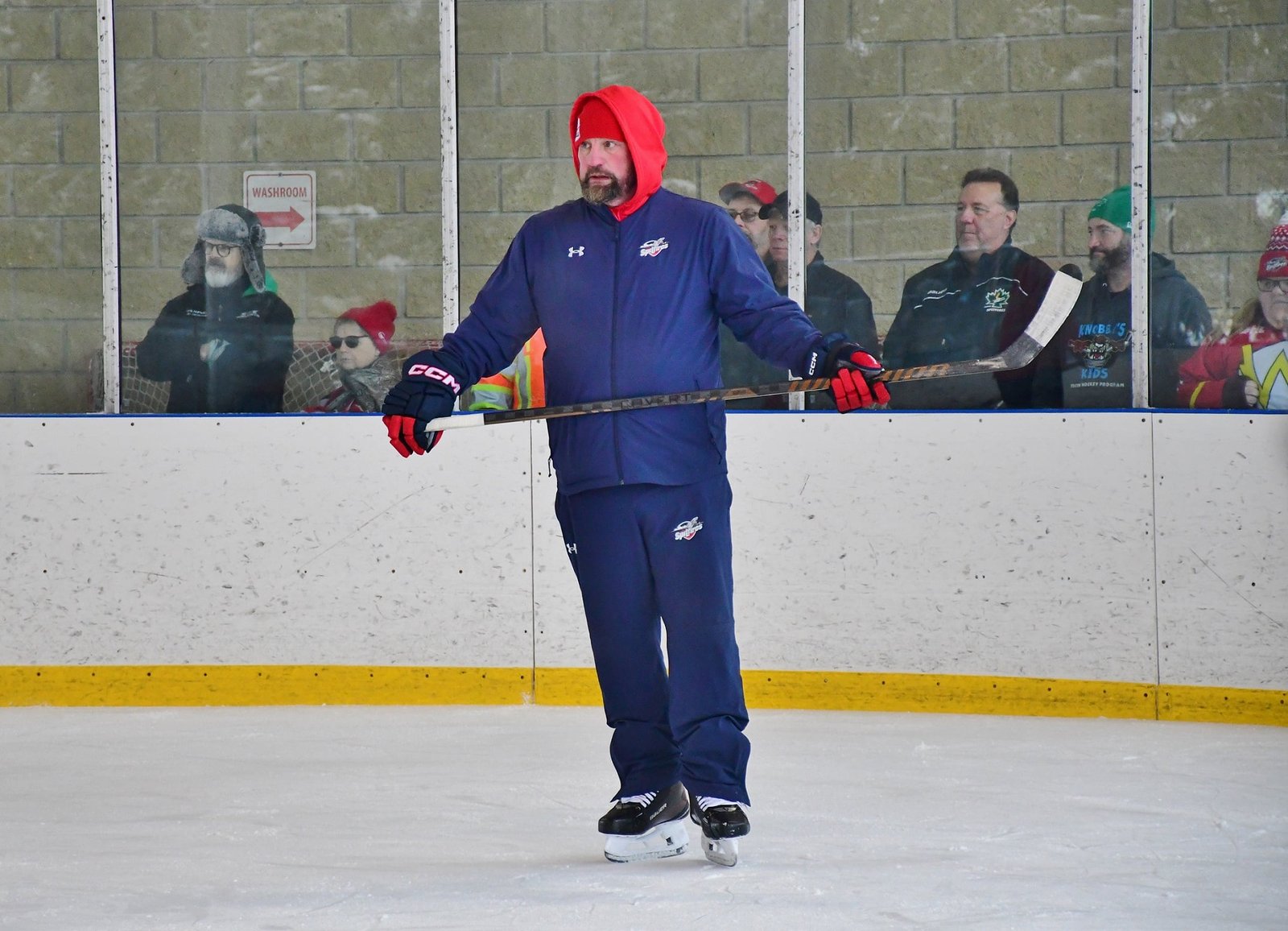
For two seasons, Spitfires’ head coach Greg Walters has been all about defence-first hockey. His approach is simple – take care of your own zone, get the puck back, and have fun offensively. It’s hard to argue with the results, as the club was second in the OHL in goals against this season with 173 through 68 games. They’ve also allowed just one goal in two games against the Storm. However, now they face their biggest playoff challenge so far.
The clubs met four times in the regular season with each team winning two games. The Storm won both games at home and outscored the Spitfires 13-9, including an 8-5 win. However, this is where it gets tricky. The games were in November, and the Storm sold multiple players prior to the January trade deadline, including forwards Jett Luchanko (Philadelphia Flyers) and Charlie Paquette. Both were good for at least a point per game. In their final 10 games before the playoffs, they scored just 29 goals, and 14 of those came in two home games against the Owen Sound Attack.
The Spitfires have done an outstanding job defensively so far. Veteran goaltender Joey Costanzo looks as confident as ever and, aside from a goal in Game 2, has shut the door. The question is – can he keep that going?
The Storm score in spurts and will be pressing the issue, especially in Game 3 on Tuesday. They don’t want to go down 3-0 in the series. If Walters’ club wants to end this series as quickly as possible, continuing their strong defensive play is essential.
Special Teams Must Be Special
The second key will be the special teams’ game. Finding success with, or without, a player or two could start making a big difference.
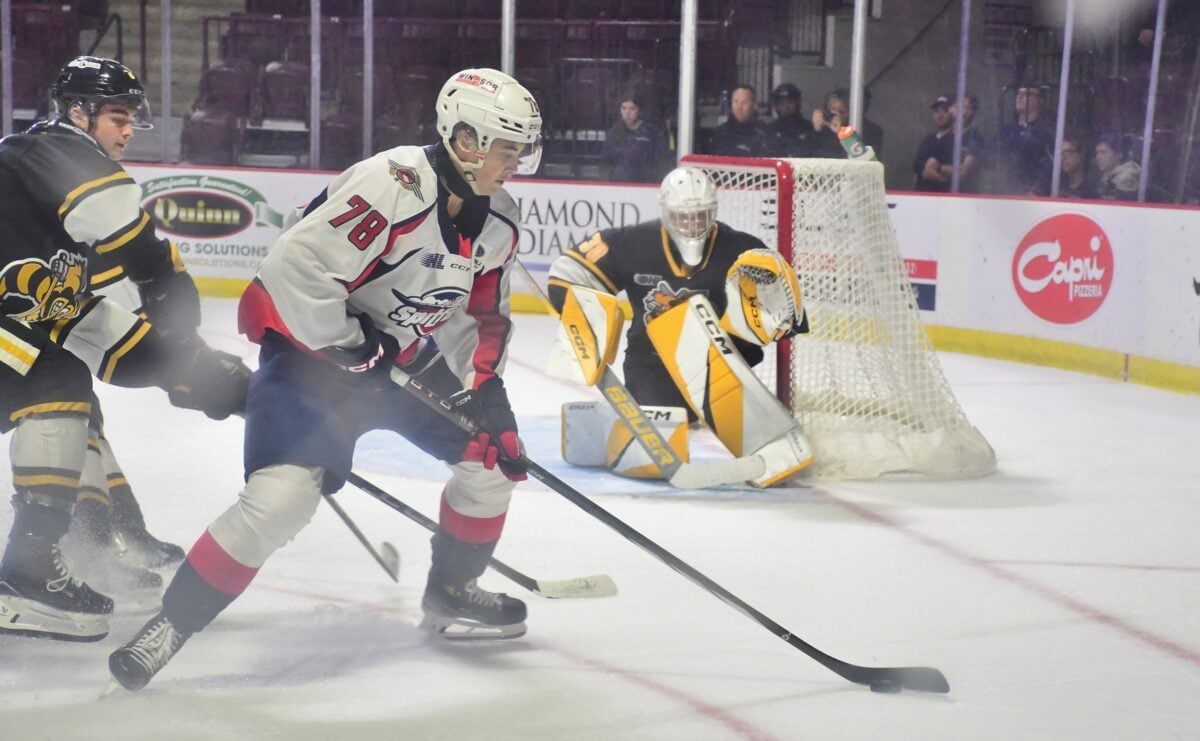
During the regular season, the Spitfires were second in the OHL on the power play at 28.4 percent (66-for-232) with nine shorthanded goals allowed. The Storm finished last at 16 percent (40-for-250) and had 14 shorthanded goals allowed. On the penalty kill, the Spitfires were tops in the league at 82.8 percent (181-of-221) and scored 11 times shorthanded. The Storm weren’t far behind them at 79.5 percent (171-of-215). However, they had the second-fewest shorthanded goals with just five.
In two playoff games, the Spitfires are three-for-10 on the power play, along with a pair of shorthanded goals, while the Storm have yet to score in seven chances and have nothing shorthanded.
On the power play, the Spitfires have players like captain Liam Greentree (New York Rangers), Jack Nesbitt (Flyers), and Nathan Villeneuve (Seattle Kraken), creating a high potential for success. After Saturday’s Game 2, Walters said assistant coach Casey Torres has done a great job with them.
“Casey does a great job with the power play,” he said. “There’s lots of movement with it and nothing you can really pre-scout against it. At the end of the day, it’s the 10 guys going out there and the boys are executing.”
Related: Windsor Spitfires Acquire Villeneuve & Pharand From Wolves in Blockbuster
With the penalty kill, the Spitfires have players like A.J. Spellacy (Chicago Blackhawks), Cole Davis, and Ethan Garden who have excelled in those situations. Their speed, grit, and non-stop motor have helped the club through some difficult situations.
On Saturday, Walters also pointed to assistant coach Kris Newbury and his ability to change things up if he sees that something else could work better.
“(Newbury) does a great job with our penalty kill, sending a couple of different looks,” Walters said. “It’s a game of chess out there. They’re looking at things to do and they change, then we change a little bit.”
Walters has been very vocal about staying out of the penalty box unless absolutely necessary. That includes benching veterans during the regular season if they took a penalty that could hurt the club. That seems to have generally worked. However, there are still times where they take penalties. Their seven power plays given up in Games 1 and 2 were the most they’ve allowed in back-to-back games since mid-February.
Special teams have played a big role in the series. If the Spitfires want wins in Games 3 and 4, finding ways to succeed in both areas is going to be essential.
“Next Man Up” Philosophy
Since Walters took over in July 2024, he’s had a “next man up” philosophy. That’s where anyone can play with anyone and, should an injury or suspension occur, the next man up slides into that lineup spot and they keep going. Losing players isn’t easy, but the team has refused to be phased by it.
Last season, the Spitfires got hit hard with injuries at the end of the season and into the playoffs. First, it was forward Ethan Belchetz, who was injured in the final regular season home game against the Sarnia Sting. That set off an incredible stretch that peaked with as many as eight regulars out in the second round against the Rangers.
This season, it hasn’t been quite as bad, but there are still some bad vibes that are starting to surface. Belchetz was injured in a non-game situation in early March, and he’s out for the foreseeable future. Villeneuve, Spellacy, and Davis were all hurt late in the season but have returned. In Game 1, defenceman-turned-forward Anthony Cristoforo tweaked something and missed the rest of the game. While he returned for Game 2, the club lost forward Beksultan Makysh after he collided with a Storm player and his legs bent awkwardly. He was helped off the ice, and his status is unknown.
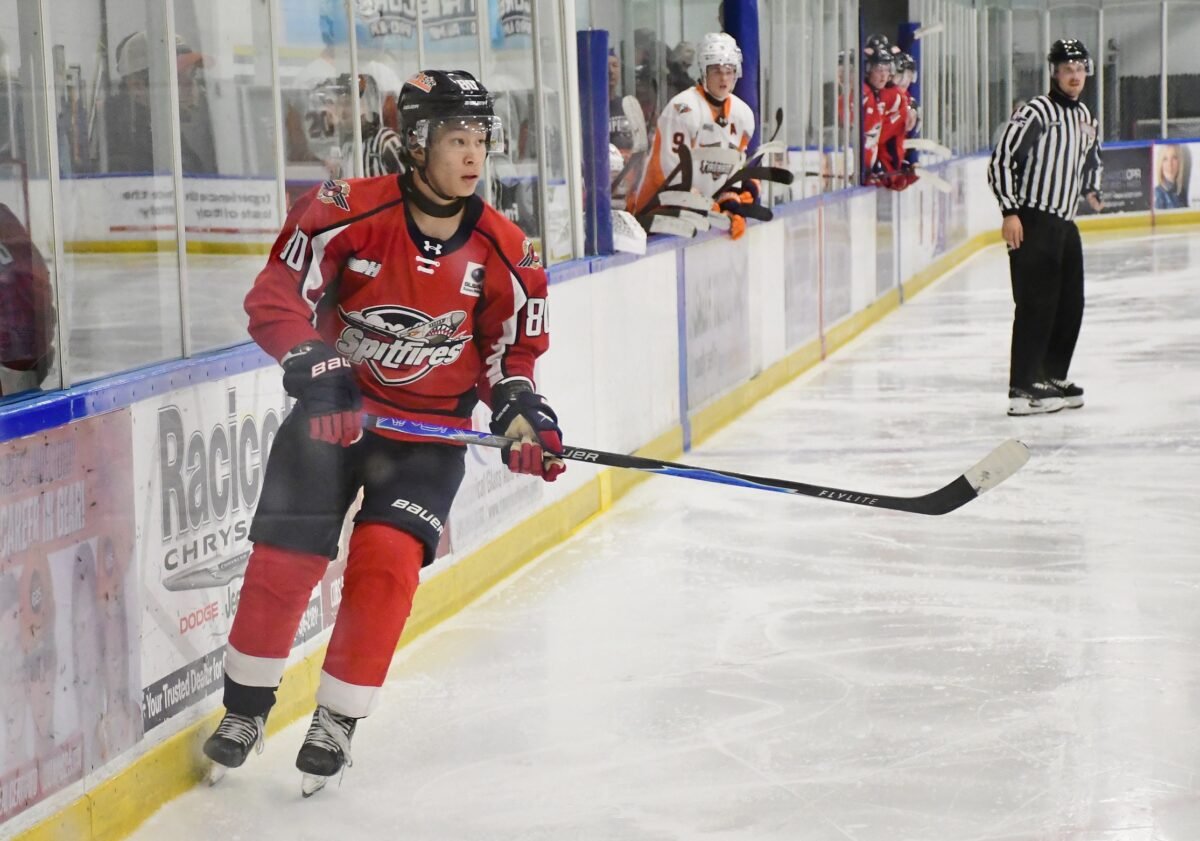
So what happens next? They could slide someone into Makysh’s spot and play with 11 forwards and seven defencemen. Walters has done that many times. They could also move defenceman Carson Woodall up to forward, which, again, has been done a few times. If they want a 12-man forward unit, the club could call up someone from Junior B to fit in the fourth line while someone slides into Makysh’s spot. There are plenty of options; it’s just a matter of which one works best in this situation.
Games 3 and 4 at the Sleeman Centre in Guelph won’t be easy for either club. The Storm are eager to get back with their faithful fans, while the Spitfires want to end this series as quickly as possible. If the Spitfires can get these three areas to work out, they have a chance to get their mission accomplished. Game 3 is Tuesday at 6:30 p.m., while Game 4 is Thursday at 7:07 p.m.

