
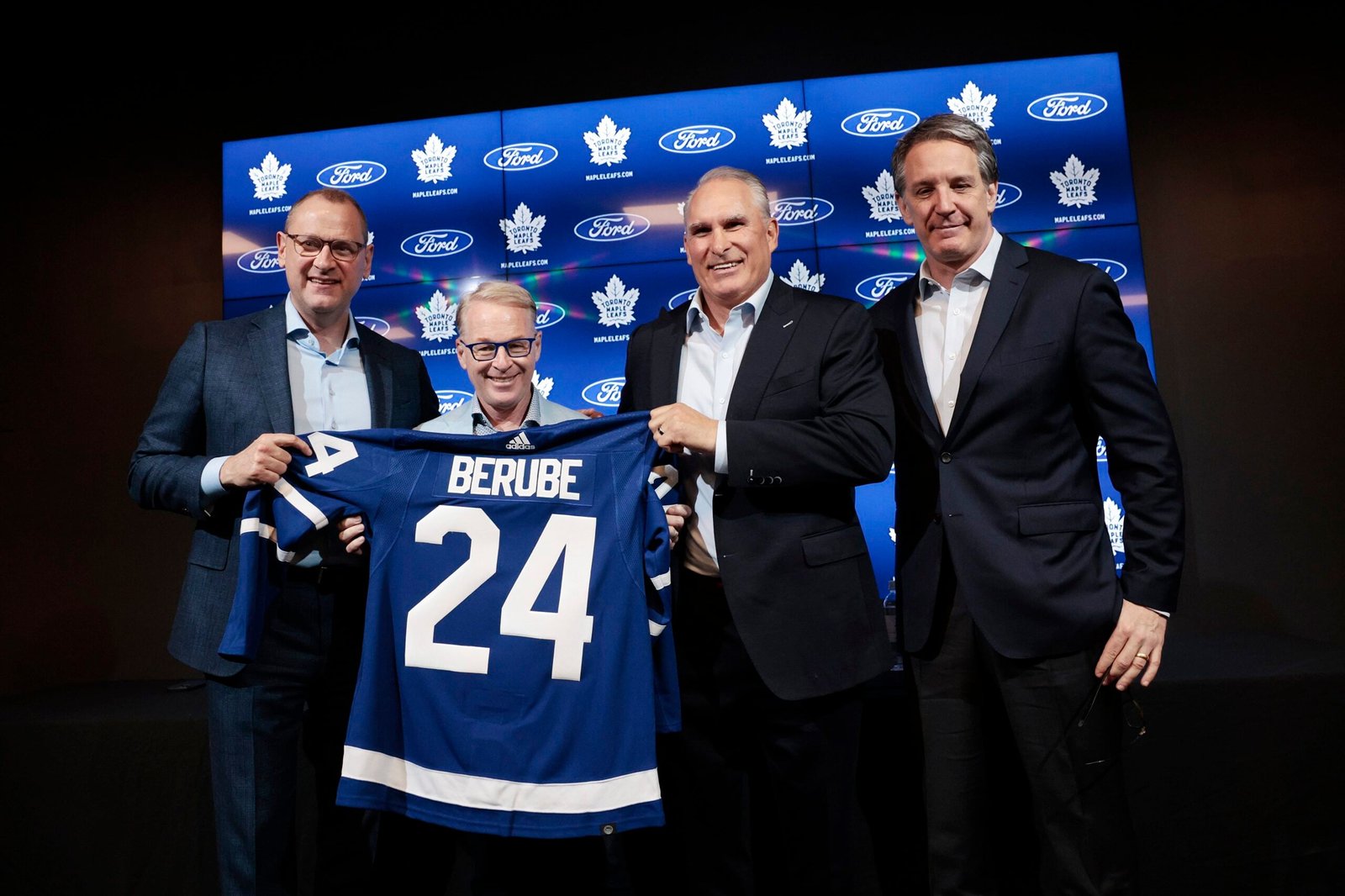
Toronto Maple Leafs President Keith Pelley’s decision to remove Brad Treliving as general manager before the season’s end did more than create headlines — it forced a decision into the open. Publicly, Pelley talks of continuity: the Matthews–Tavares–Nylander core is the foundation, and the next general manager’s job, on its face, will be to retool rather than raze. Yet the realities beneath that posture, including thin prospect depth, scarce draft currency, and a front office stitched together from different regimes, make “retool” a riskier proposition than it sounds.
Related: NHL Rumours: Oilers and Nurse, Spezza to Toronto, and the Pelley Plan
Pelley’s timing and tone have given the franchise a narrow window to make coherent choices. Do they pursue a painful rebuild now or attempt incremental fixes that may buy time and invite deeper decline?
Point 1 — Pelley Signals Continuity, but What Does That Actually Mean?
Pelley’s public line reads like an endorsement of the Shanahan-era decision to keep the core and seek modest upgrades rather than a wholesale teardown. That framing matters because it narrows the profile of candidates likely to get the job. The next GM will be judged by their ability to massage a veteran core, squeeze value from veterans, and find hidden assets on a tight timeline.
The problem is not the logic of continuity in principle; it’s the arithmetic. Continuity assumes you can top up talent, manage the cap, and replenish the pipeline without mortgaging the future. Given Toronto’s depleted farm and limited draft picks, that assumption deserves scrutiny.
Related: Former Maple Leaf Nic Petan’s Personal Story of Tragedy & Charity
Pelley may be buying time to see whether internal fixes are plausible. But his comments already signal a preference for evolution over revolution. And that preference will shape every hire and trade whisper from here on.
Point 2 — The Timing Was Tactical: Seek Candour, Start a Real Search
Treliving’s firing was not a stumble; it was a calculated gambit. By acting before the season’s end, Pelley loosened the organizational atmosphere. Staff who once felt constrained by loyalty or fear of rocking the boat can now speak with more candour. Scouts and front‑office voices can be canvassed while the season still unfolds.

Operationally, that’s smart: you learn more by asking in the moment than by staging a delayed, gilded handover. The optics also permitted Pelley to begin external conversations with candidates while preserving negotiating leverage.
Related: Brandon Pridham May Be the Maple Leafs’ Untapped Advantage
In short, the timing bought him information and time — two scarce commodities when a franchise needs an honest accounting.
Point 3 — The Hard Truth: The Pipeline Is Thin, and Choices Will Hurt
You can argue philosophy all you like, but the ledger is blunt: the Maple Leafs do not have the draft currency or a deep prospect pool that powered the last cycle of success. The 2014–16 haul that produced Morgan Rielly, William Nylander, Mitch Marner, and Auston Matthews was a generational stroke. That well has run dry.
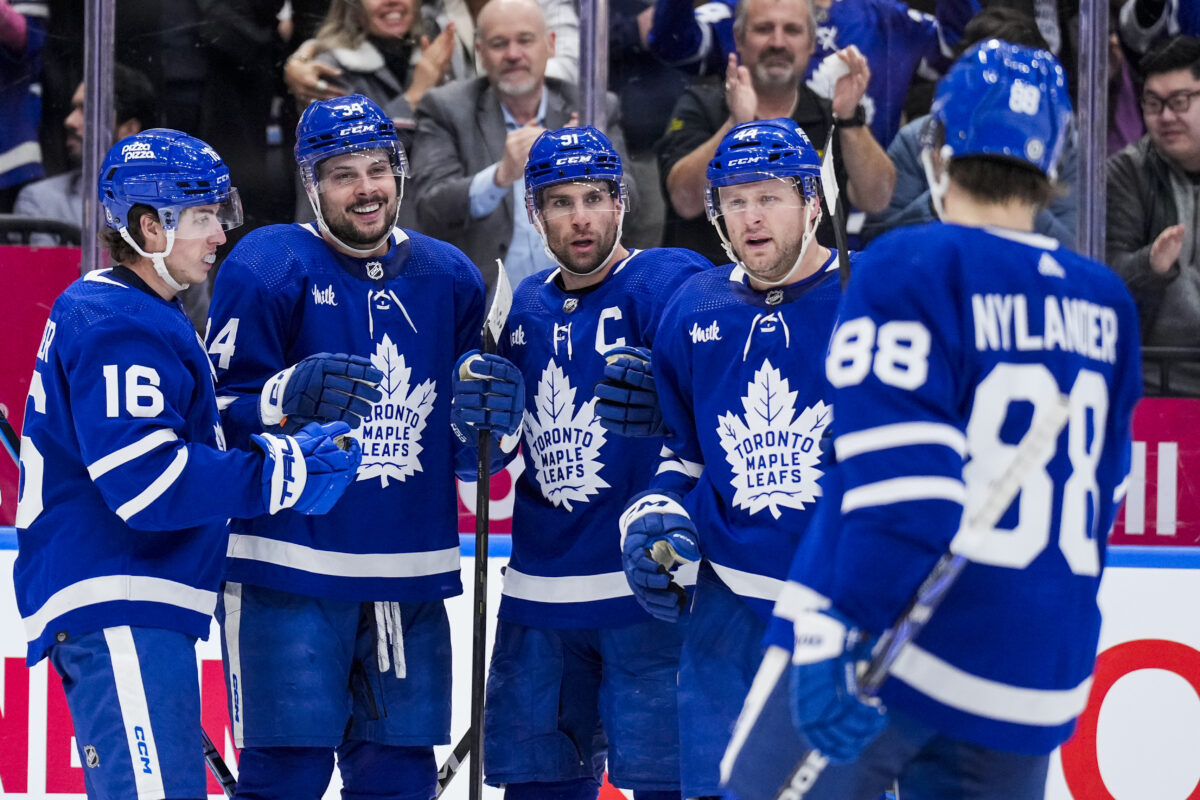
Whoever takes the job must confront the arithmetic of asset creation. They must trade veterans for picks, accept cap pain to create space, or endure years of so-so results to rebuild organically. Each option costs something vital — wins, payroll, or time. The franchise cannot credibly pursue continuity without first deciding how it will create the inputs continuity presumes.
The Bottom Line for the Maple Leafs
Pelley’s intervention has turned an internal problem into an explicit crossroads. The Maple Leafs face two stark routes: attempt a surgical retool of the current core with limited resources, or accept a painful rebuild designed to restore depth and flexibility. Neither path is comfortable, and neither promises quick salvation.
Related: NHL Rumours: Timing and Plans Surrounding Maple Leafs GM and Coaching Change
What matters now is clarity and movement. Prolonged equivocation — that is, pretending a middle way exists without the assets to sustain it — risks turning a manageable decline into a prolonged collapse. Pelley has opened a narrow window for truth-telling. The next steps will show whether ownership has the courage to choose a coherent strategy and the patience to see it through.

