
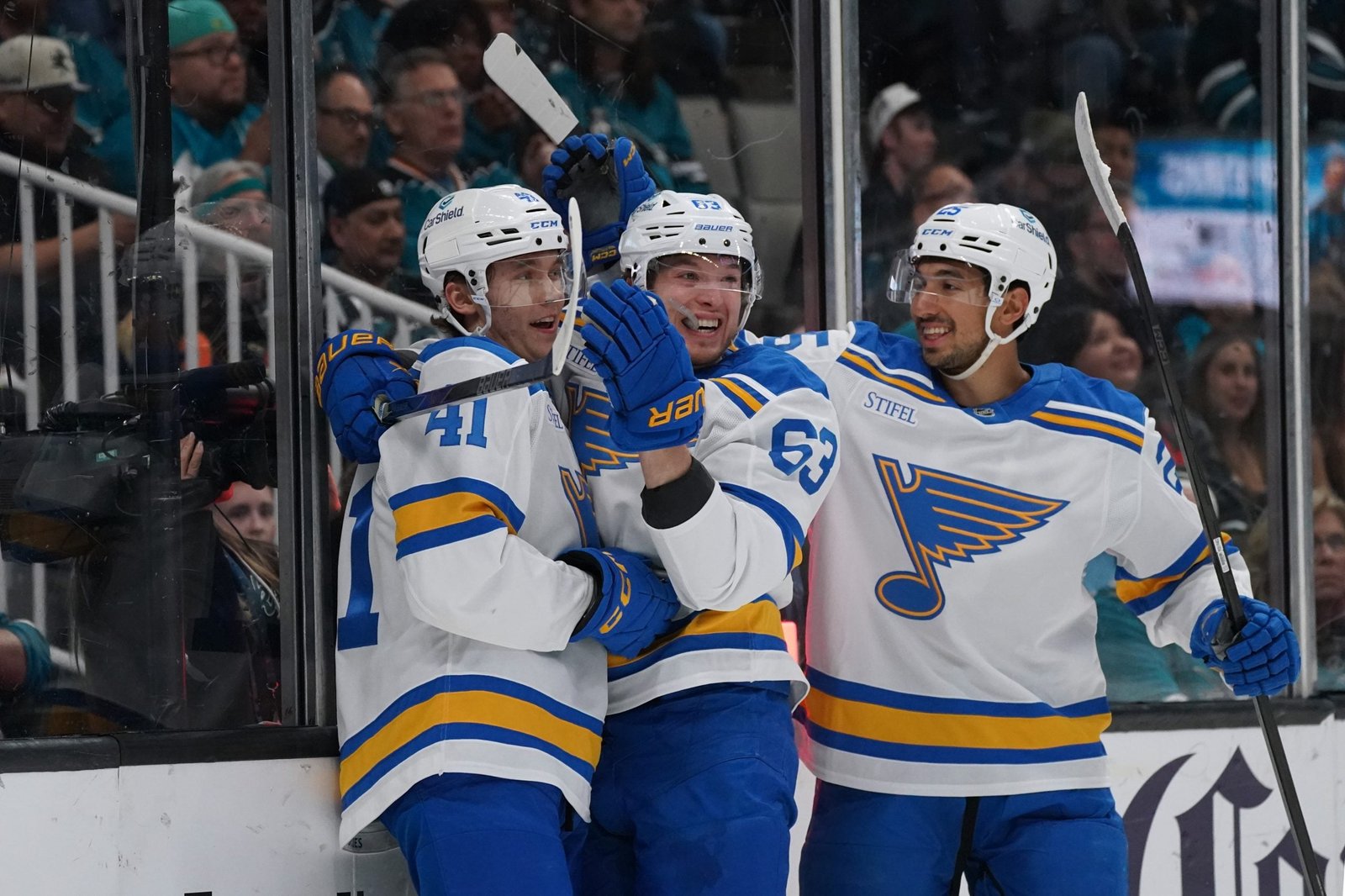
The St. Louis Blues enter the final month of the regular season with a pulse in the playoff race. While the odds may be against them to make the postseason, it is impressive that the team, despite selling at the trade deadline, has managed to remain in contention in the season’s final weeks.
For a team that made the playoffs last season, this season has been a disappointment. Injuries and ineffectiveness have played a role in the team’s current position. While last season suggested the retool was complete, this season has revealed that a full rebuild may be required. Despite this regression, the Blues have made key improvements: they have gained cap flexibility, identified a promising goaltender, and accelerated the development of young players.
Salary Cap
When general manager (GM) Doug Armstrong made the moves in the summer of 2018 to bring David Perron, Tyler Bozak, and Ryan O’Reilly to the Blues, it put the organization right up against the salary cap. Future signings such as Justin Faulk, Torey Krug, and Pavel Buchnevich have added to the cap. For many seasons, the Blues were seemingly stuck in what could be described as “salary-cap purgatory.”
However, the Blues have been able to lower their cap lately. They took a big step this season by trading away Faulk and Brayden Schenn’s contracts; furthermore, the salary cap continues to increase. The Blues will enter this summer with less money on their cap and a larger amount in which to spend. While the organization will likely not make any big splashes this summer, it is a sign that the team is no longer handcuffed by the salary cap.
Goaltender of the Future
Jordan Binnington is the best goaltender in Blues’ history, but his time as the starter seems to be over. Joel Hofer has emerged this season, taking over the starting role and playing some great hockey. At the time of writing this, Hofer has the second-most shutouts in the NHL with six.
Hofer showed glimpses of being a number-one goalie before, but this season has solidified his role. Now, the Blues have options with Binnington: trade him for assets, re-sign him as a backup, or keep him for depth in case Hofer struggles.
Options abound, and having them is the key takeaway. Last season only hinted that Hofer could be the goalie of the future. Now, his strong play solidifies this role and gives the Blues flexibility with Binnington.
Youth Has Played Meaningful Hockey
The Blues trading Schenn, Faulk, and Nick Bjugstad opened up minutes for younger players. Dalibor Dvorsky, Otto Stenberg, and Logan Mailloux have seen increased roles since the deadline. Theo Lindstein made his NHL debut shortly after the deadline and has played well. Jimmy Snuggerud, meanwhile, was the team’s most effective youngster in March, scoring seven goals and recording 15 points.
Related: Blues’ Standouts of the Week: Jimmy Snuggerud, Dylan Holloway, and a Win for Bobby Plager
This was the goal when the Blues decided to sell at the deadline: give young players more ice time for an early NHL evaluation. The youth have played a significant role in the team’s playoff push.
Some argue that the Blues’ March success cost them a top draft pick like Gavin McKenna. However, the experience young players gain in meaningful hockey outweighs the value of draft positioning.
Playing youth just for experience has value, but competing in games with playoff implications offers even greater developmental benefits that will serve the organization well in the long term.
Door Open for Trades This Summer
After last season, the Blues were not positioned to make any trades involving core players. While rumors circulated, particularly around Jordan Kyrou, the organization only made one significant trade last summer—dealing from their forward surplus to bring in a young defenseman. However, the absence of key player trades reflected a more conservative approach given the state of the roster and cap situation at the time.
That will not be the case this summer. There were active trade talks at the recent deadline involving players like Robert Thomas, and Colton Parayko was almost traded before refusing to waive his no-trade clause. With the team having already moved contracts and opened roles through prior trades, conversations this summer may be more serious. Eliminated teams looking to upgrade could contact soon-to-be-GM Alexander Steen about possible players to fill their needs, with recent trade activity setting the stage for potential moves.
Even if trade discussions happen, the Blues are not compelled to act. Unlike last summer, they are open to potential deals. If an appealing offer arises, they can make a move; if not, they can keep the current roster without risk.
Rose Among Thorns
Nothing about this season has gone as the Blues hoped, yet it might have been the one they needed to set up their future. While losing is never ideal, the Blues have committed to a new direction. They now have greater salary cap flexibility, a promising goalie, and a young core gaining valuable experience.
Is it as good as winning the Stanley Cup? Not at all, but it is at least a step in that direction.

