
The 2025-26 NHL regular season has been highly competitive, despite a weak Western Conference. But some teams are in better positions than others heading into the offseason. Which organizations face a bleak outlook heading into the summer and could risk prolonged mediocrity?
Vancouver Canucks
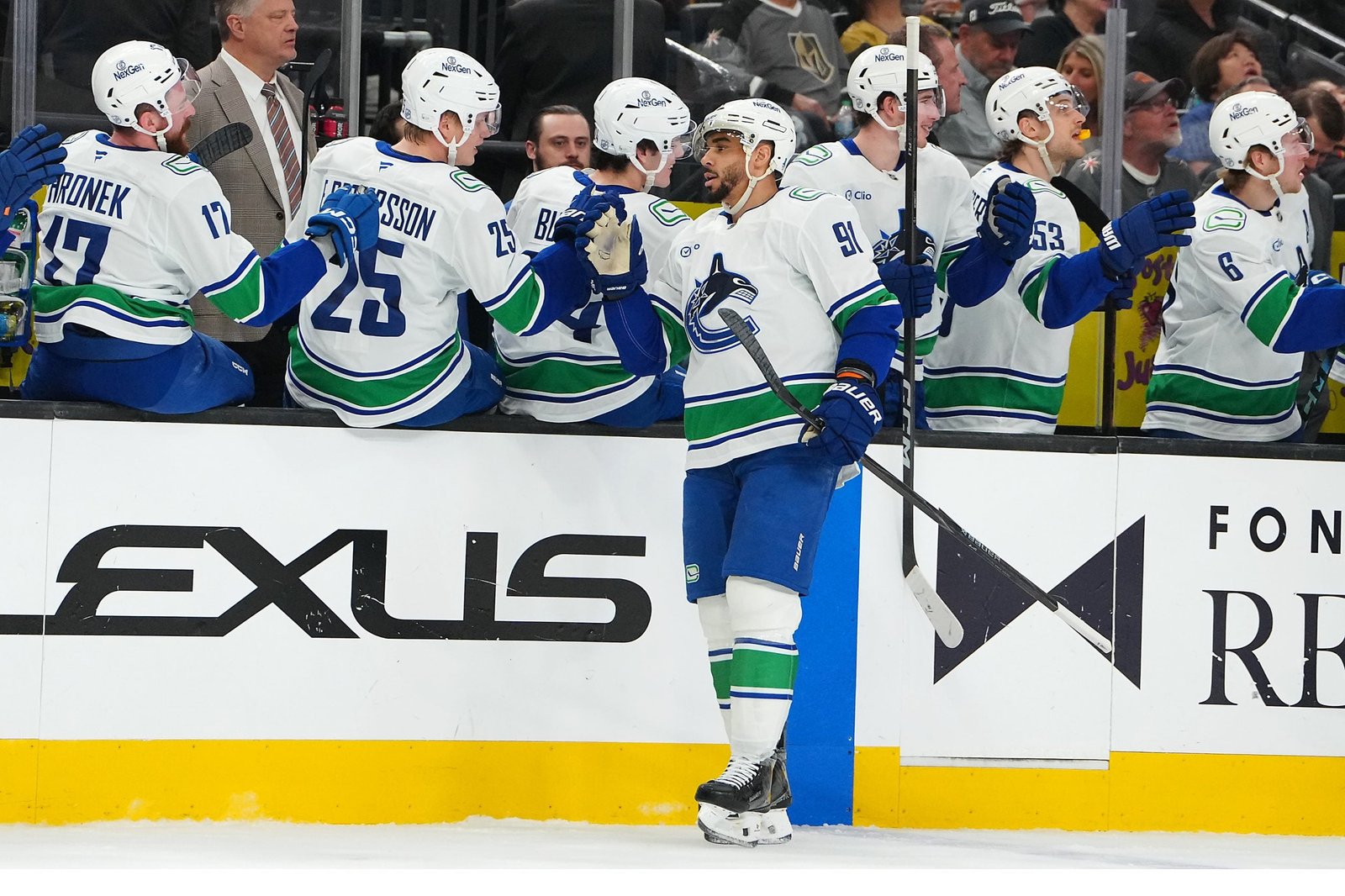
It’s been a trying season in Vancouver. It got off to a poor start, which led to the Canucks trading Quinn Hughes in December. That was a franchise-altering moment, marking a failed rebuild that began with former general manager Jim Benning. As such, they lead the next wave of NHL teams entering their rebuild phases.
The Canucks are in the driver’s seat to lock in the best odds for the first overall pick in the 2026 NHL Entry Draft. That’s a start, and winning the draft lottery would guarantee them a blue-chip prospect in Gavin McKenna or Ivar Stenberg. However, it may take some time before becoming competitive again.
Elias Pettersson would have been a solid building block once upon a time, but he’s failed to live up to a contract that pays him $11.5 million annually. There’s not much star talent to build around, but there are a couple of things working in the Canucks’ favor.
One) They have 10 selections in the 2026 NHL Draft, and they will enter the offseason with over $31 million in cap space. They also have a couple of decent prospects in Jonathan Lekkerimäki, Tom Willander, and Braeden Cootes. They might not be star-caliber prospects, but there are teams with worse farm systems than the Canucks.
Those prospects may have some promise, but they need more blue-chip talent. As we’ve seen with the San Jose Sharks and Chicago Blackhawks in recent years, it takes time to accumulate blue-chip talent through the draft. That’s why the Canucks are unlikely to be competitive for some time.
New York Rangers
To say it’s been a disappointing season in the Big Apple would be an understatement. The New York Rangers haven’t had as poor a season as the Canucks, but they’re in a precarious position in the East.
The biggest problem facing the Rangers is that their core players are aging, and there’s no blue-chip talent on the way to replace them. Mika Zibanejad has had a fantastic season, but he turns 33 in a couple of weeks. J.T. Miller, who recently turned 33, has struggled this season, although he has shown improvement in recent weeks. Both players are under contract with pricey cap hits ($8 million and $8.5 million) through the 2029-30 season, and it probably won’t be easy to get out of them, at least in the near future.
Some promising young players are making an impression for the Rangers. Alexis Lafreniere is playing some of the best hockey of his career since the Artemi Panarin trade, and Gabe Perreault looks like he has a bright future. The Rangers don’t have the worst prospect pool, but they lack building blocks. Fortunately, they’re in a prime position to land a top-three pick in the 2026 draft.
It’ll be interesting to see how GM Chris Drury approaches this offseason. You don’t rebuild when you have Igor Shesterkin signed through 2032-33 at a cap hit of $11.5 million. At the same time, the Rangers don’t have many tradeable assets to retool, and this free agency class is bereft of high-end talent, to put it mildly. It may be another season or two before the Rangers are competitive in the East again.
Los Angeles Kings
The Los Angeles Kings might make the playoffs this season, but that’s more the product of a weak Western Conference. Even if they qualify, they are an organization heading in the wrong direction.
A major factor working against the Kings is that they have the fifth-oldest roster in the NHL, with an average age of 29.44. Anze Kopitar is retiring at season’s end, and Drew Doughty isn’t getting any younger. There are no blue-chip prospects on the way to replace them, either. The Kings once had a promising prospect pool, but it is now among the worst in the NHL. They’ve either traded some of those prospects or they haven’t developed as hoped (Quinton Byfield and Alex Turcotte come to mind).
The Kings will have about $18 million in cap space this offseason, but I would not trust GM Ken Holland to use that money wisely. Look no further than how Holland approached the 2025 offseason. The team became older and slower, and I can 100 percent see him giving Anthony Mantha an eight-year, $64 million contract in free agency this summer. The Kings may not be in Canucks or Rangers territory yet, but it feels like they’re heading there, especially if they have another disastrous offseason.
Toronto Maple Leafs
The 2025-26 season has been a 180 for the Toronto Maple Leafs. After winning the Atlantic Division last season, they’ve completely bottomed out. That’s led to the organization moving on from GM Brad Treliving, and head coach Craig Berube could be next once the regular season concludes.
Moving on from Treliving was 100 percent justifiable. From the Brandon Carlo trade to acquiring Scott Laughton, an overwhelming majority of his transactions failed. That’s left the Leafs in a precarious spot in a highly competitive Atlantic Division. They have one of the worst prospect pools in the NHL, and as of now, they don’t have their first-round pick, which went to the Boston Bruins in the Carlo trade.
Related: Brad Treliving’s Worst Moves as Maple Leafs General Manager
One thing working in the Maple Leafs’ favor is that they have $27 million in cap space this offseason. There are a couple of contracts they need to get out of, but their cap sheet could be in worse shape. Still, not having their first-round pick is a brutal look. They need to bottom out and hope that they land in the top five of lottery odds, so that the conditions (top-five protected) are met. The Maple Leafs might not need a full rebuild yet, but it’s looking bleak heading into the offseason.
It’ll be long summers for these teams, even if the Kings manage to fail upward into the playoffs. It’ll be interesting to see how they approach the draft and free agency in hopes of changing course. Teams like the Pittsburgh Penguins and Boston Bruins have shown you can complete quick retools to become competitive again, but that’s easier said than done.

