
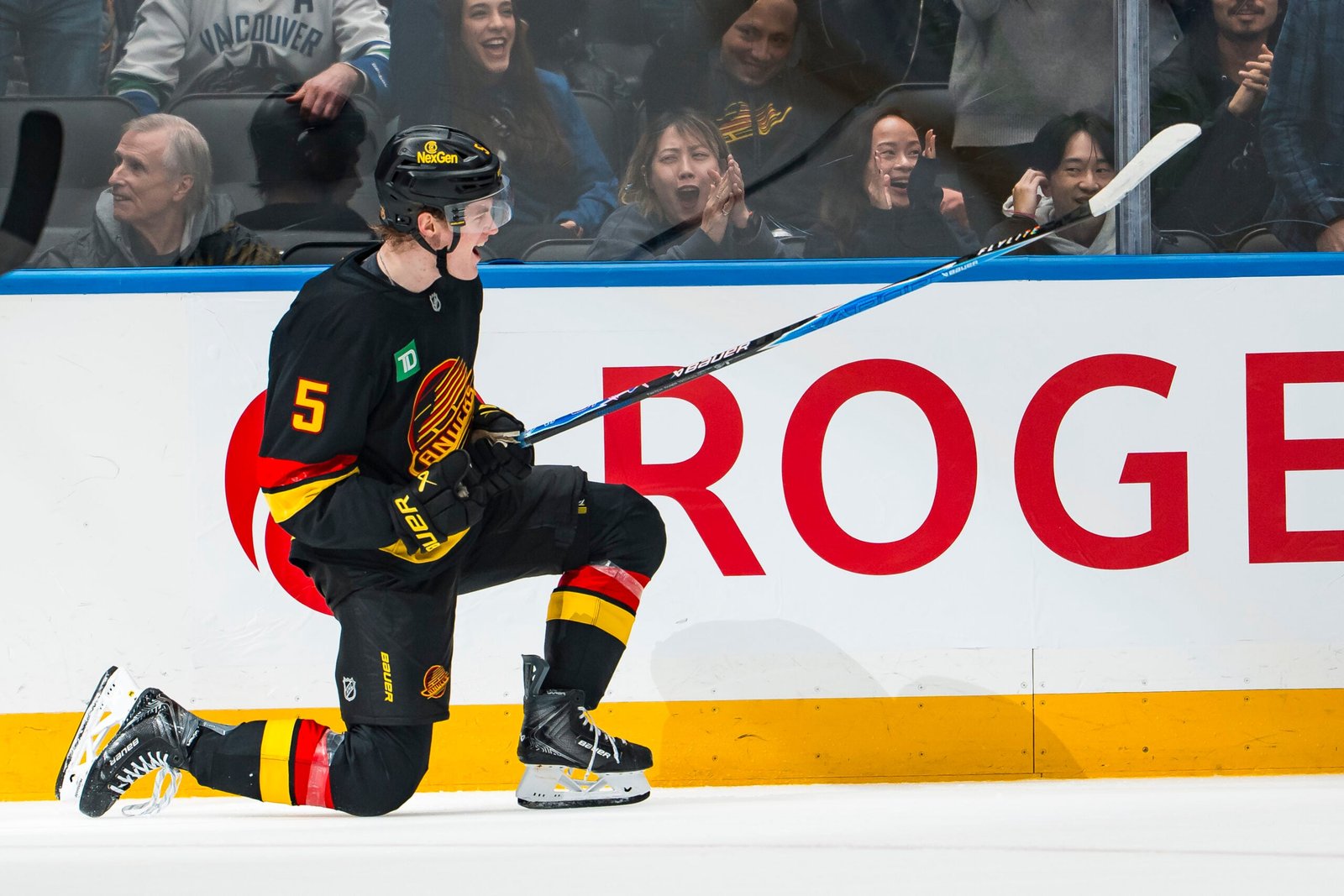
Last night’s scoreboard read 5–2 for the Minnesota Wild, but the game was more than numbers: it was a snapshot of where the Vancouver Canucks are as a team, how the young players are developing, and the lessons they’re learning as they faced a playoff-ready opponent.
Two Teams, Two Directions: What the Canucks Saw in Minnesota
From the drop of the puck, the contrast was stark. The Wild have a clear identity, cohesion, and confidence; Vancouver is still trying to find its rhythm. Matt Boldy and Kirill Kaprizov scored twice each and reached the 40-goal mark in the same game, slicing through defensive gaps with precision. Meanwhile, the Canucks’ structure couldn’t match the pace or pressure.
Related: Jake DeBrusk and the Canucks Are a Perfect Match in the Making
Amid the mismatch, a few bright spots emerged. Jake DeBrusk showed why he’s dangerous on the power play, and rookie Tom Willander continues to impress with his poise on the blue line. Quinn Hughes faced his former team for the first time and set a new Wild record for points by a defenseman. These individual moments highlight potential, even as the Canucks have struggled to keep pace.
The Hard Part: What the Canucks Are Learning Late in the Season
Games like this matter less for the score and more for what they reveal. They test players and systems under real pressure. Coming off an 8-6 win against the Colorado Avalanche in Denver on Wednesday before facing the Wild in Minnesota on Thursday, Vancouver had to dig deep, and it was clear who was up for it. Young players like Willander are growing through adversity, learning where timing, positioning, and anticipation matter most.
Defensive breakdowns stand out here, too. Minnesota’s second and third goals were textbook results of missed assignments and slow transitions. Losing might not seem productive, but for a young team, every shift teaches something about spacing, support, and responsibility. These reps are the groundwork for the future.
Good Effort, Same Result: The Canucks’ Familiar Problem
The Canucks’ effort is rarely the issue; they compete hard. But execution has been inconsistent all season. Thursday marked the sixth straight game in which the team gave up four or more goals. Even with DeBrusk producing on the power play and Willander showing promise, the same structural issues surface night after night.
Related: White Towels and King Richard: The Underdog Magic of the 1982 Canucks
This is the pattern: the team’s compete level is acceptable, but the system breaks down under pressure. It’s not bad luck; it’s a development gap. These games serve as a mirror, showing both flashes of skill and recurring vulnerabilities that need fixing.
Flashes and Gaps: A Night That Sums Up the Canucks Season
This game boiled Vancouver’s season down to a few clear takeaways. Early on, the Canucks showed some fight, but Minnesota’s depth and skill quickly took over. By the middle of the game, Vancouver had faded, a familiar pattern: flashes of promise, followed by exposure.
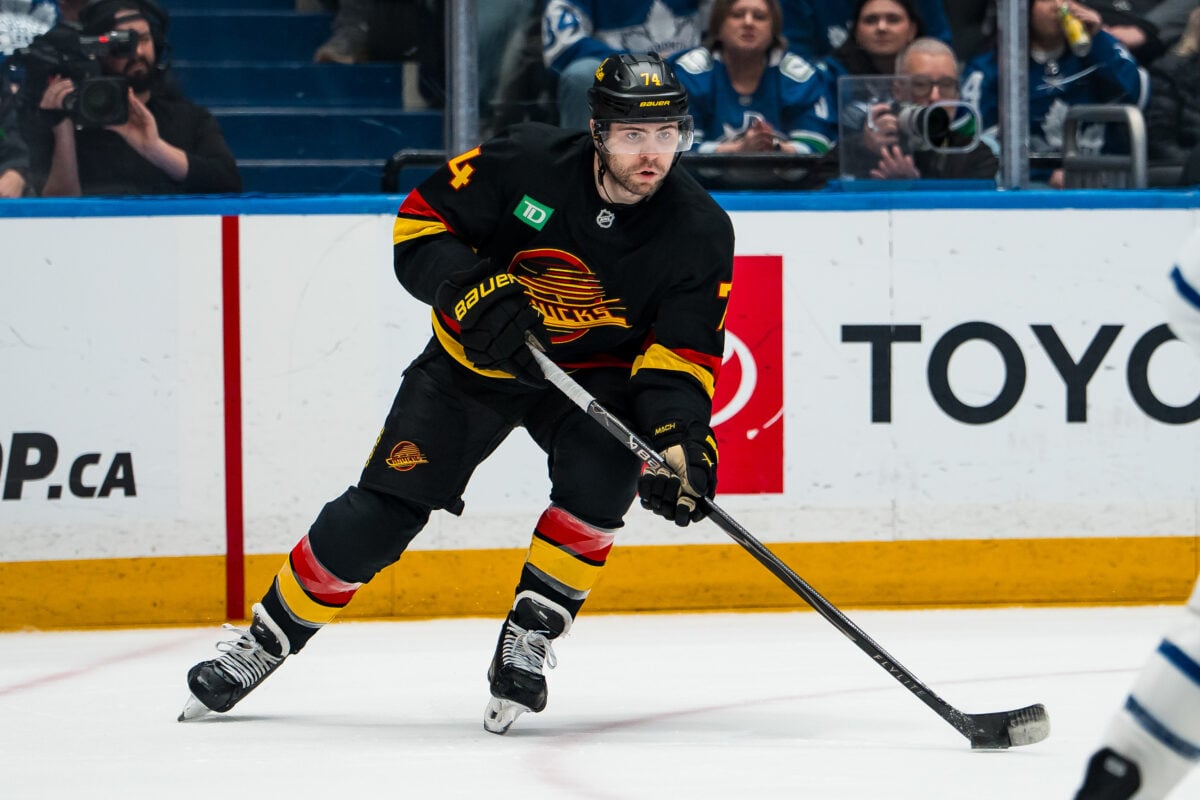
It’s been that way all season. The talent is there, but when the pressure is consistent, execution slips. Games like this aren’t just losses—they’re lessons. Young players are seeing next-level rhythm, chemistry, and smart decision-making—even if it doesn’t click every shift.
Canucks’ View of the Other Bench
Finally, there’s perspective. From the other bench, Vancouver’s players could see what it means to play in a connected, confident group. Hughes is thriving on a team built around his strengths; Boldy and Kaprizov feed off structure and speed. Canucks youngsters, meanwhile, are learning what it takes to be that kind of team.
Related: 5 Takeaways From Canucks’ 5-2 Loss to the Wild
It’s a reminder that development isn’t linear. Games are a laboratory, losses are part of the experiment, and flashes of skill—DeBrusk’s power-play touch, Willander’s steady presence—show that there is reason for optimism. The question is whether the lessons stick and whether the Canucks can start translating flashes into a consistent team identity.
