
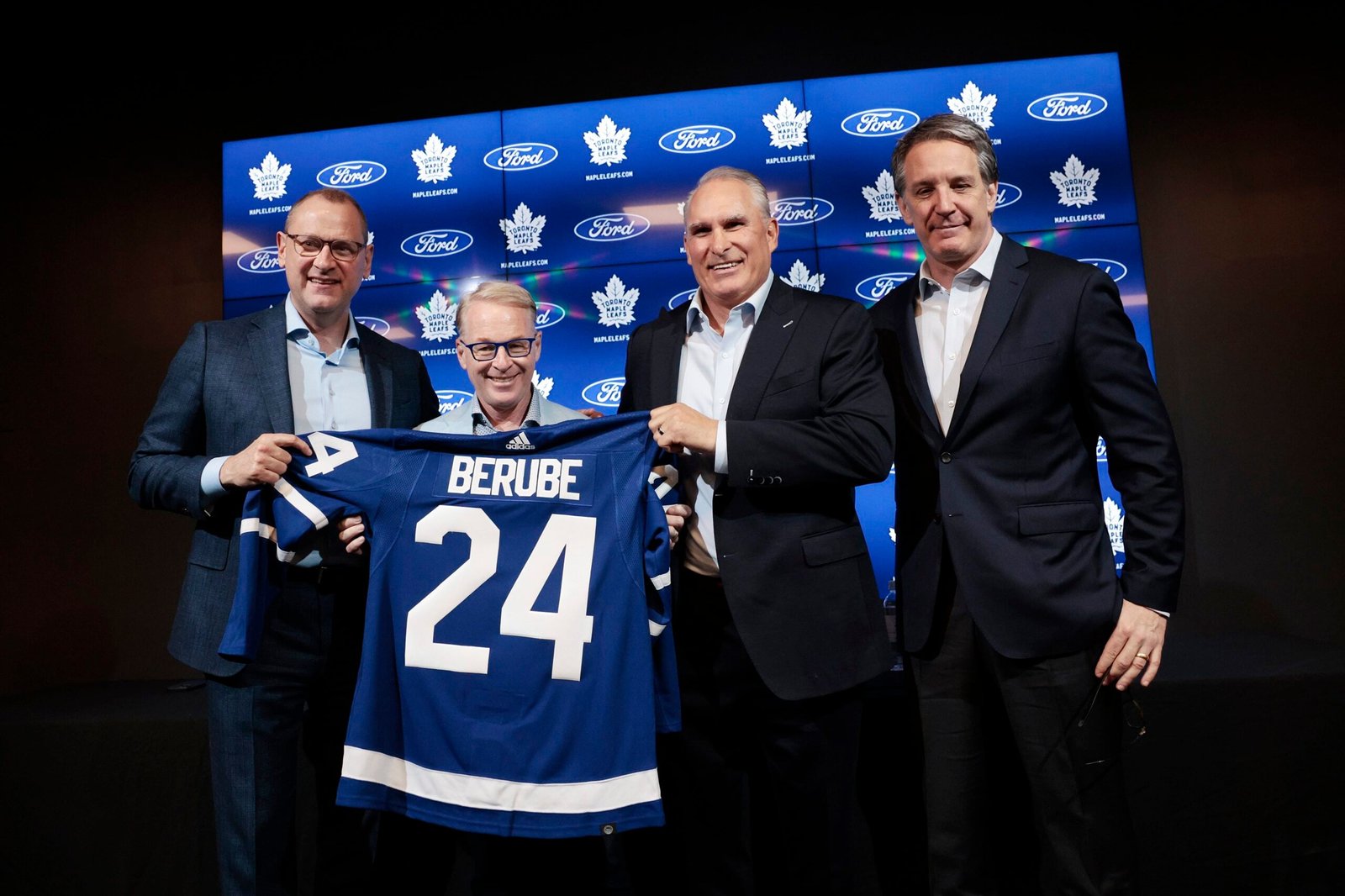
There’s something almost noble about former Toronto Maple Leafs president Brendan Shanahan’s “Shanaplan,” even if it became a caricature in the end. It wasn’t tidy or infallible, but it had a logic. It was, at its simplest, a carpenter’s rule for building a club—one that valued speed, skill, and a long runway.
Related: Maple Leafs Talking Big Blue Line Trade Despite No GM
If you’re going to salvage anything from that era, you don’t take the blueprint wholesale; you strip down to the beams that actually held the house up. Here are the things I’d save, whether fans applaud or grumble, and how they could be reprised in a new iteration of Maple Leafs management.
Maple Leafs Need to Build Identity First, Make Transactions Second
Shanahan’s insistence on an organizational identity was the plan’s spine. That meant building toward a fast, skilled team rather than patching holes with stopgap muscle. It’s boring to say and harder to execute, but the clarity matters. A new regime should start by defining what the Maple Leafs will be in three years, five years, and then refuse deals that contradict that vision.
Keep elite-level scorers like Auston Matthews and complementary playmakers like Steven Lorentz, sure. But don’t keep buying mismatched parts because the scoreboard demands immediate soothing. The discipline of “measure twice, cut once” applies here: decide your timber, then only fell what you must.
Maple Leafs Need Development That Actually Develops
One of the better aspects of the Shanaplan was the patient approach to prospect growth. Drafting for fit—not simply for flair—and giving young players coherent developmental tracks is something Toronto abandoned at its peril.
Related: Maple Leafs News & Rumours: Laughton, Tavares & Wickenheiser’s Influence
Reinstating a genuine bridge between the American Hockey League (AHL) Toronto Marlies and the big club is essential: shared systems, coaching continuity, and roster paths that reward readiness rather than convenience. That means committing to deployment plans for prospects, resisting the urge to trade them for temporary fixes, and accepting short-term growing pains for long-term gain.
Maple Leafs Need Player Evaluation Beyond Box Scores
Shanahan’s front office often looked at character, role fit, contract terms, and durability as much as raw points. That’s a useful filter that should be recycled. The new regime should keep an eye on intangible attributes such as leadership, adaptability, and hockey IQ.

(Jess Starr/The Hockey Writers)
Then, they should weigh those traits when making trade and signing decisions. A tidy contract and a player who steadies the locker room can be as valuable as a flashy stat line, especially in the playoffs.
Maple Leafs Need Patience—Not Paralysis
Patience was the Shanaplan’s strength and eventual weak spot, as it morphed into stubbornness. The lesson here isn’t to shelve urgency, but to apply it properly. Commit to timelines for prospect transitions, be clear about performance thresholds for veterans, and don’t let short-term optics force you into identity-contradicting moves. Measured adjustments beat frantic tinkering.
Related: Maple Leafs News & Rumours: Tavares, Stolarz & Cowan’s Got to Wonder
Shanahan’s model was about aligning ownership, hockey ops, and coaching into a single spine of intent. That coherence must return. Public slogans like ‘reshaping the DNA’ aren’t culture. Consistent decisions are.
Whether it’s minutes for youngsters, contract structures, or trade thresholds, everyone in the building should be working from the same blueprint. That reduces mixed messaging and prevents the kind of scattershot transactions that erode long-term value.
The Shanaplan Is Gone Because It Didn’t Deliver a Stanley Cup
Yes, the plan was abandoned, and, yes, it didn’t deliver the ultimate prize. But some of its tenets were sound: coherent identity, patient development, nuanced evaluation, and organizational alignment. A new management team that can cannibalize those ideas and update them for today’s cap realities and competitive pressures would be doing the sensible thing.
Fans want results, and they are right to do so. Still, you don’t get durable success by chasing the next headline. You measure twice, you pick the right cut, and you build something that lasts.
The old plan’s bones are worth keeping—if they’re used to build a smarter house.

