
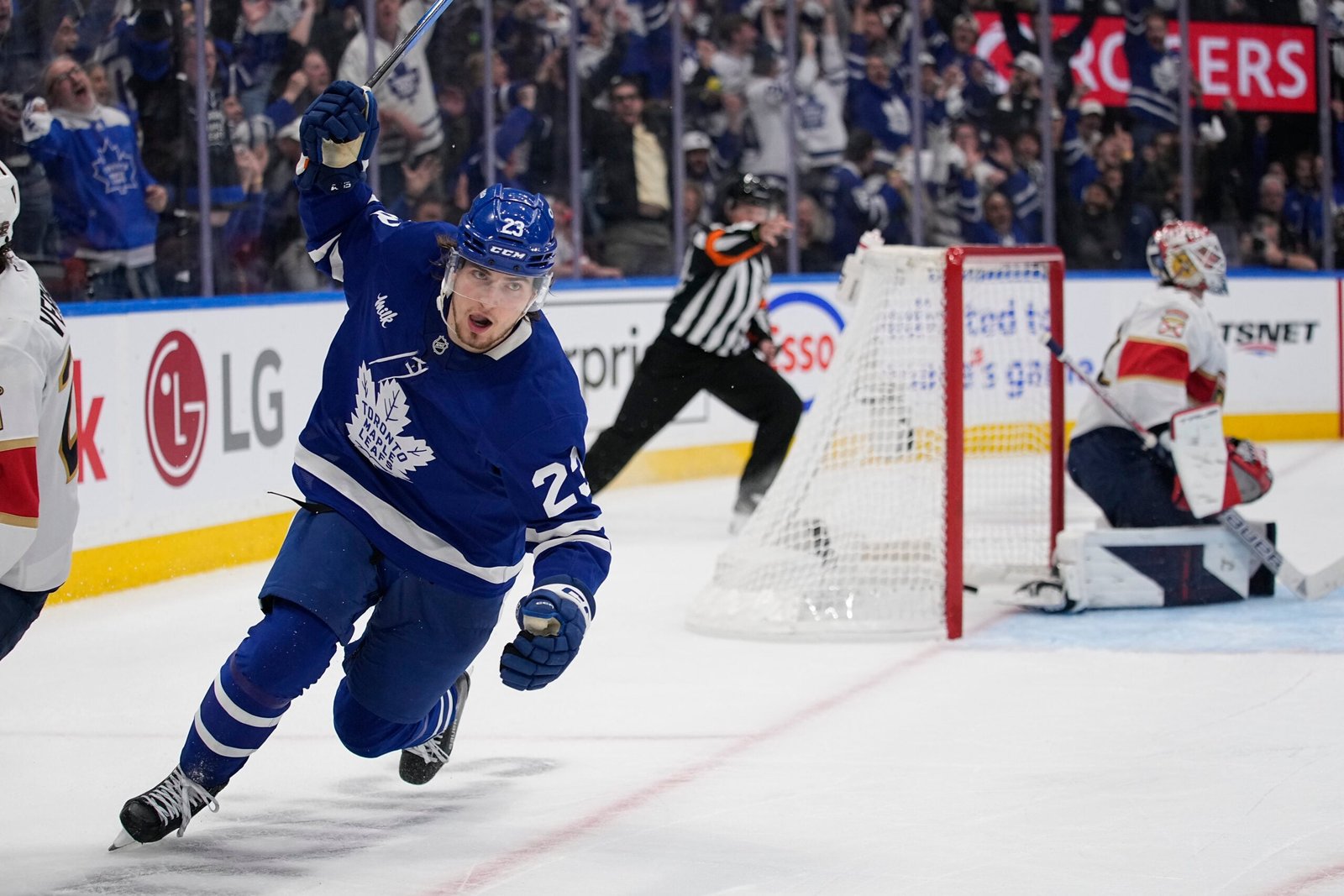
Last night’s game was something. The Toronto Maple Leafs and Los Angeles Kings didn’t so much play a hockey game as stage a kind of controlled chaos—if such a thing exists. Toronto’s 7–6 OT loss felt less like a game and more like an end-to-end track meet: rushes, missed assignments, and flashes of brilliance mixed with defensive breakdowns.
Related: Maple Leafs News & Rumours: Tavares, Stolarz & Cowan’s Got to Wonder
William Nylander’s missed breakaway and Quinton Byfield’s OT finish bookended a night where the Maple Leafs scored six on the road but somehow still conceded seven—enough to temper any optimism. Credit where it’s due: down 6–4 in the third, Toronto didn’t quit.
Nicholas Robertson and Matthew Knies rallied them to force overtime, showing the roster’s depth and character. Still, resilience isn’t the same as control—until the Maple Leafs tidy up the details that have allowed so many odd-man chances, these attrition shootouts will keep costing them points.
Item One: Knies Breaks Out and Looks Like a Top-Six Force
There’s been a fair bit of chatter this season about what the Maple Leafs tried to do with Matthew Knies. Trade chip? Supporting piece? Nice player, but not essential? Well, nights like this complicate that conversation—in a good way.
Knies put up four points (two goals, two assists) and, more importantly, looked every bit like a player who is figuring things out in real time. His game-tying goal was the headline moment, but the real takeaway is how he’s getting his chances. He’s not waiting for the play to find him anymore. He’s taking it by attacking open ice, getting pucks off his stick quickly, and playing with a kind of quiet authority.
Related: Brad Treliving’s Worst Moves as Maple Leafs General Manager
Over his last stretch, the numbers are starting to line up with the eye test: goals, assists, and a physical presence that doesn’t disappear when the puck does. For a team that has spent years trying to find a winger who can blend size with touch, Knies is beginning to look like the answer hiding in plain sight. Right now, Knies is giving the Maple Leafs every reason to believe he’s part of the answer.
Item Two: Tavares Hits 30 Again and Still Carries Weight
If Knies is the story of emergence, then John Tavares remains the story of reliability. Thirty goals for the eighth time in his career. A goal and two assists in this one. Points in seven of his last eight games. It doesn’t come with much fanfare anymore, and that’s the point. When something happens often enough, we stop remarking on it.
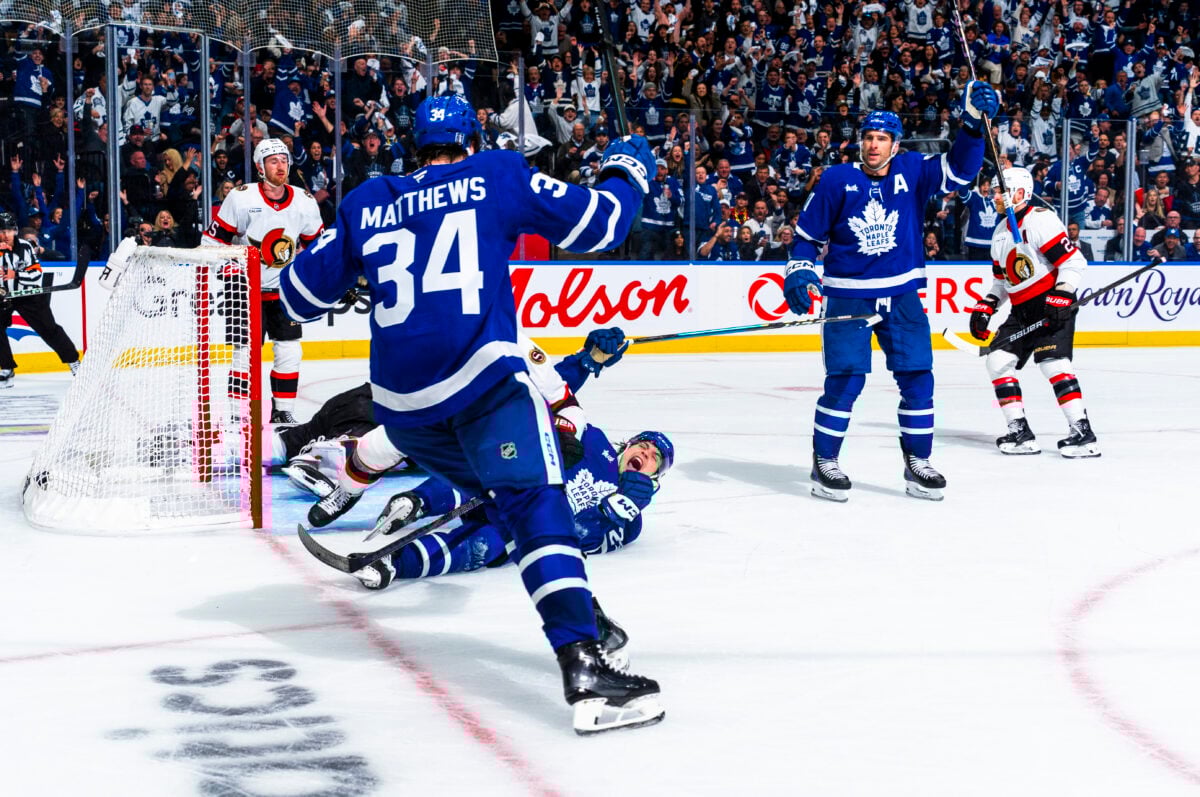
(Photo by Mark Blinch/NHLI via Getty Images)
But fans shouldn’t. Tavares still does the work around the net, on the power play, in those small pockets of space where games are often decided. Even with so many Maple Leafs fans questioning his value, he’s producing. His recent run includes a power-play goal in three straight games, which speaks to how he earns his keep.
Related: Maple Leafs News & Rumours: Laughton, Tavares & Wickenheiser’s Influence
In a game like this one—loose, chaotic, a little bit wild—he stood out precisely because he wasn’t any of those. He was steady, predictable, and effective. There’s a kind of value in that which doesn’t always show up in highlight packages, but it shows up on the scoreboard over time. The Maple Leafs still lean on him.
Item Three: Maple Leafs’ Next Architect Will Think Numbers First
Now, step back from the game for a moment, because there’s a bigger conversation unfolding around this team. If you reflect on how Keith Pelley has framed things—“data-centric,” “evidence-based”—you start to get a sense of where this is headed. The next great decision-maker in Toronto, whether you call him president or general manager, is likely to be someone who doesn’t just appreciate analytics but lives them.

That helps explain why Brandon Pridham remains such a central figure in the organization. It may also explain why more traditional profiles, like Brad Treliving or even Craig Berube behind the bench, don’t align with the direction ownership seems to favour in the long term.
This doesn’t mean hockey becomes a spreadsheet exercise. Emotion, chemistry, feel—all of that still matters. But the spine of decision-making is shifting. Contracts, trades, and even lineup choices will increasingly be framed as testable ideas.
Related: Maple Leafs Talking Big Blue Line Trade Despite No GM
It’s sort of what the academic world calls “action research,” which is wrapped up in the idea that “We believe this works because the numbers say it should.” Then, a plan is tested, assessed, and tweaked to improve its success under game conditions. The trick in all this, of course, is to translate those analytical numbers into habits and on-the-ice decisions. That’s where theory meets reality, and not every team gets that part right.
There’s a kind of internal logic to it, even if we don’t yet know who the architect will be. The thinking goes like this: what we often call “chemistry” on a hockey team isn’t just something you feel in your gut or spot with the naked eye—it’s something that can be tracked, measured, and, in a sense, tested. Every successful line, every effective pairing, leaves behind a trail of evidence.
(Brad Penner-Imagn Images)
Patterns emerge. Tendencies repeat. When something works, it does so for reasons we can study. The old mystery of chemistry becomes a little less mystical and a little more practical. Theory grows out of what happens on the ice, and in turn, that theory shapes what coaches and managers try next. It’s a loop—practice informing theory and theory refining practice—and the teams that master that loop tend to stay ahead of the ones still relying on instinct alone.
The point is that we don’t know yet who that person will be, but we have a good sense of how they’ll make decisions.
What’s Next? The Same Old Problem, Wearing a New Scoreline
Back to last night’s game. Scoring six goals and losing is a kind of blunt instrument. It tells you everything and nothing at the same time. The Maple Leafs can score. We know that. Yes, they can push back when games get away from them. We’ve seen that too. But the defensive looseness—the missed reads, the risky plays, the odd-man rushes against—that keeps creeping back in.
Related: What the Maple Leafs Should Salvage From the Shanaplan
This wasn’t a systems failure so much as an execution one. For one reason or another, they make bad decisions with the puck. Coverage arrives a second too late. There are moments when the game speeds up, and the structure falls away.
The Maple Leafs earned a point in Los Angeles. They showed fight and offence. What they didn’t show was control. Until they do, this season or next, skill or not, nights like this will keep ending in Maple Leafs losses. Entertaining, frustrating, and exhausting—because they keep coming up just a bit short.

