
Before the 2018 NBA Draft, Golden State Warriors general manager Larry Harris sought the advice of one of his players, Draymond Green, about who the team should pick. His response, which Harris would later relay to reporters, has become a central component of NBA roster-building lore. “There are 82-game players, then there are 16-game players,” Green said.
If you’re just looking to be decent and make the playoffs, you want 82-game players. The ones who stay healthy. Who play a lot of minutes. Who raise your floor by putting up stats night in, night out. Those are the players who get you through the 82-game grind. But if you’re trying to win championships, as those Warriors were, your needs are entirely different. You’re not trying to survive 82 games. You’re trying to win 16 against four of the very best teams in the NBA. The needs here are different.
Players whose workloads might need to be managed over the course of 82 games can suddenly cut loose in the name of winning 16. Players with vulnerabilities in their skill sets that might not get noticed by opponents on the second night of a back-to-back get picked apart by coaches game-planning seven times over the course of two weeks. The stakes change. The demands change. The intensity changes.
2026 NBA playoff bracket: Matchups, schedule with postseason field finalized
Brad Botkin
It’s now April, and we’ve therefore eliminated 10 teams. Over the next two months, 19 more will fall before we crown a champion. The last team standing will be the one whose roster best transitions from the 82-game grind to the 16-game crucible that now awaits them. To help figure out who that team might be, we’re going to rank the top 50 players of the 2026 postseason.
To clarify the exact nature of this exercise, this is not a ranking of the top 50 players in the NBA. These are not the players you would want to build a roster around, nor are they the ones you’d want on opening night of next season. They are the top 50 players on the 20 postseason rosters filtered through that 16-game lens and ranked according to how much you would want to have them on your team if your goal is to win the 2026 championship.
That means that active injuries apply. As Luka Dončić, Austin Reaves and Joel Embiid have injuries that could very plausibly keep them sidelined for too long to prevent their team’s elimination, they have been left unranked. Other players who are currently playing through injuries will have their medical situations taken into account. Some players dropped a few spots. Others, like Franz Wagner, who has played 10 games since early-December and has been managed on a pretty careful minutes limit, were knocked out of the top 50 over those health concerns. Performance during the 2025-26 season, particularly the end of it, will be paramount as well. Track record counts, but if we’re ranking players based on how they’ll look for the next two months, you ideally want players who are doing well in this moment.
The players below will be tier-listed, meaning I would not argue with any movement within a grouping, but I see some tangible gap between the groups. With all of this in mind, let’s start ranking.
Tier 1: The best of the best
1. Nikola Jokić, Nuggets
2. Shai Gilgeous-Alexander, Thunder
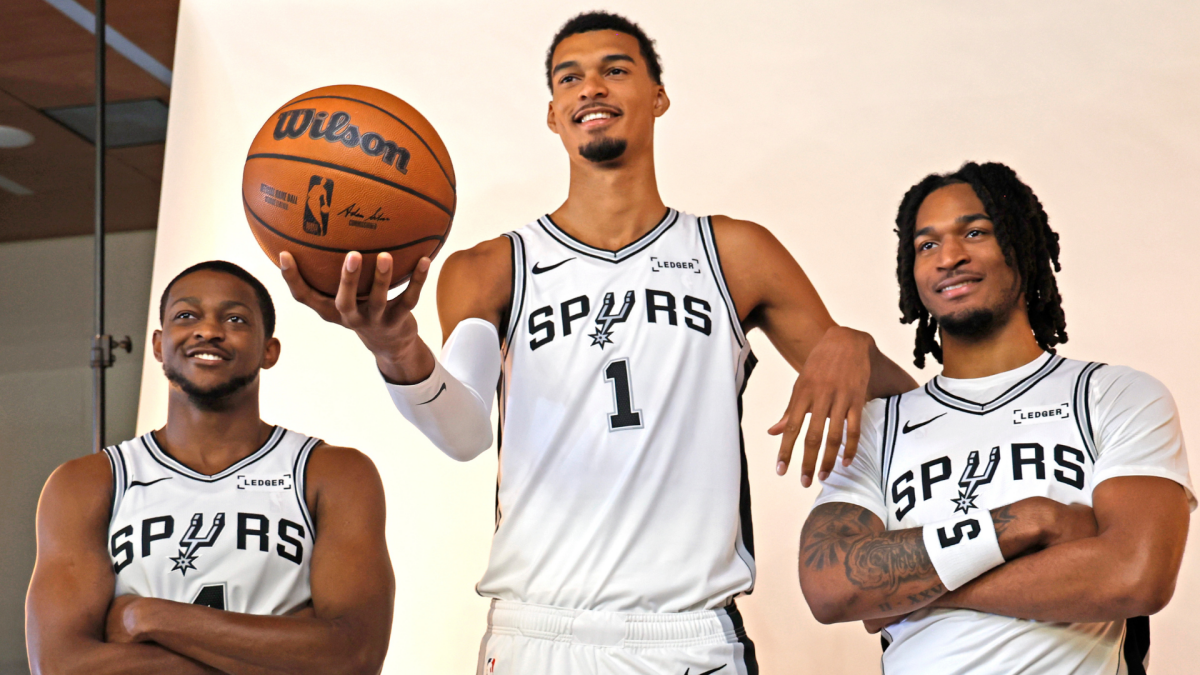
3. Victor Wembanyama, Spurs
At various points in the ranking process, I considered all six possible orders for this grouping. I don’t know if you can truly get this one wrong.
Jokić was the best player of the trio from October through December. At that point, he was having the greatest statistical season in NBA history — a near 30-12-11 stat line on just under 61-44-85 shooting. That shouldn’t be possible. Then he hurt his knee and wasn’t quite the same. The turnovers — especially in transition — went way up. His 3-point shooting dropped roughly a dozen percentage points, his floater went from completely unstoppable to merely very good, and his defense, always a concern, became, at times, downright alarming. Was he hurt? Was he struggling to compensate for injured teammates? Was his early season pace just unsustainable?
Wembanyama, at least on a per-minute basis, has been the best since the All-Star break. He’s the most game-breaking defensive player in modern NBA history, but the real development has come on offense. Do you know how many centers have ever averaged 30 points per 36 minutes? Three: Wilt Chamberlain, Joel Embiid and Wembanyama. The unusual thing about this is that his post-All-Star uptick has come with him playing a somewhat more dependent role offensively. Before the break, more than 33% of his shots were unassisted. He’s down to around 24% after the break, with a similar uptick in the percentage of his points coming in the paint. He spent the early portion of the season continuing to experiment, and he remains a good albeit not great self-creator. But as he’s grown more comfortable with the guards around him and recognized the rising stakes of these later games, he cut all of the fat out of his offensive diet. The isolations and post-ups are down. The spot-ups, the cuts, the absolutely lethal rolls to the rim are all up. He’s become the most devastating play-finisher in the NBA, and this isn’t even his final form. It’s just the one that puts San Antonio in the best position to win here and now.
Gilgeous-Alexander has been the steadiest of the three, Oklahoma City’s metronome of an MVP. You know exactly what you’re getting every night: roughly 30 points on historic efficiency with no turnovers and stellar help defense. He’s the best scorer of the group, but lacks the secondary superpower his competitors bring. He’s a very good playmaker, adept at the basic reads that come with drawing two to the ball and comfortable enough as an off-ball player to allow hot teammates stretches at the helm, but Jokić pulls points out of thin air that Gilgeous-Alexander just can’t. There’s only so much an off-ball guard can do defensively, and being good in his relatively easy job pales in comparison to all of the ways Wembanyama can impact a defense. Of course, Gilgeous-Alexander comes with neither of their weaknesses, either. He’s the easiest of the three to build around. He also probably has the lowest ceiling. But when that ceiling is a modern Michael Jordan reboot, it’s still pretty dang high.
The trio has a bit of a rock-paper-scissors relationship. Jokić has faced Wembanyama seven times, won five of them and averaged 37 points in those games. He’s too strong for Wembanyama in his present state, but he’s too slow for Gilgeous-Alexander, who takes great delight in bringing Jokić into as many pick-and-rolls as possible whenever their teams face off. His inability to keep Gilgeous-Alexander out of the paint is the defining trait of their head-to-head matchups, but Wembanyama’s Spurs went 4-1 against the Thunder because Oklahoma City’s offense is far too reliant on Gilgeous-Alexander’s penetration. When faced with such a deterrent, the structure has crumbled. Purely from a championship perspective, Gilgeous-Alexander got the right bracket. Jokić will face Wembanyama before he does.
I landed on Jokić in that top spot for a few reasons. Playoff track record is the biggest. We now have a two-year sample of Gilgeous-Alexander’s efficiency dipping meaningfully in the playoffs against mostly so-so defensive competition. Hardly definitive, but worth noting considering how well his game should theoretically translate. Jokić’s efficiency dips too, but again, he can cover for that with playmaking in ways Gilgeous-Alexander can’t, and the limitations of some of his supporting casts have just allowed defenses to attack him more aggressively than they have Gilgeous-Alexander to this point. Wembanyama has never played in the playoffs before. We don’t yet know how he’ll translate to the increased physicality, and we don’t know how well he’ll translate to what will likely be a pretty significant increase in playing time. It’s not as though we’ve never seen players thrive in their first postseason; Jordan scored 63 in his second playoff game. But that’s the exception, not the norm. Wembanyama may also be an exception. He should have to prove it first.
If you’re picking against Jokić, it’s under the “playoffs are about weaknesses” school of thought, because his defense, at its worst, is genuinely detrimental. It has traditionally been better — not perfect, but better — in the playoffs, and the uptick in effort in meaningful games has been notable. He’s visibly coasted through this regular season and should be better when it counts. Nonetheless, this is a valid reason to lean Gilgeous-Alexander. He takes nothing off the table.
Wembanyama’s limitations as an individual creator and vulnerabilities in specific, one-on-one defensive settings are going to be tested in the playoffs. We all assume that when we revisit this list in a year, he’ll be No. 1. If you want to be early, put him there now. It’s not out of the realm of possibility, and he might be the rare exception to the notion that individual offense is more valuable than individual defense. You’re just banking on the most hypotheticals if you pick him. I’m not quite there yet. Jokić is a bit more reliable and comes with that non-scoring superpower that Gilgeous-Alexander doesn’t. That gives him the slimmest of edges in a race close enough to come down to preference.
Tier 2: Capable of being the best player on a champion
4. Kawhi Leonard, Clippers
5. Donovan Mitchell, Cavaliers
6. Jalen Brunson, Knicks
7. Cade Cunningham, Pistons
8. Anthony Edwards, Timberwolves
9. Jaylen Brown, Celtics
10. Jayson Tatum, Celtics
11. Tyrese Maxey, 76ers
12. Kevin Durant, Rockets
13. Stephen Curry, Warriors
What does it say about this group that Kawhi Leonard feels like one of the safer health bets of the bunch? He’s only missed six games since the end of November, has set a new career scoring high and has done so on some of the best efficiency of his career. We have to defer to the playoff track record here, especially since Leonard can still summon his former Defensive Player of the Year self for high-leverage possessions even if he’s slumped slightly as a 48-minute defender in his mid-30s.
Then we have a clump of four guards, two of whom are dealing with various maladies. How bothersome is a recently recovered collapsed lung? Can runner’s knee be managed under playoff intensity? Mitchell and Brunson get the slight edge purely for the sake of health. Brunson’s late-game heroics are well-documented, but his size makes him far easier to hunt defensively than Mitchell, who holds up reasonably well on that end of the floor against playoff-level scrutiny. That gives Mitchell the advantage, especially since he’s a sorely underrated playoff riser. He’s the seventh-leading per-game scorer in playoff history!
Cunningham was the best of the guard group in the regular season. Edwards has a better recent playoff track record. The younger Edwards is probably better equipped to handle runner’s knee than Stephen Curry is, which is what nudged Curry to the back of this tier, especially since so much less of his value is derived from running a marathon around the court every night. Edwards improved his mid-range and post game this season specifically to diversify his dunks-and-3s-heavy offense for the postseason after Oklahoma City stifled him last spring. He just hasn’t come far enough along as a playmaker yet to match Cunningham’s overall impact on an offense. Cunningham’s efficiency is dinged by the low-spacing offense he plays in, but those aren’t the worst conditions to prepare for the playoffs under. He’s spent the season getting used to opponents not guarding his teammates.
Brown might have been able to argue that he made up for his limitations as a playmaker relative to the guard group with his vastly superior individual defense when he was shooting like Kevin Durant early in the season. Through the end of December, he was shooting 49.5% on mid-range looks and 37% on 3s. Since the beginning of January, he’s down to 33% on mid-range shots and 32.6% on 3s with a slight dip as a finisher as well. Boston has covered up this regression to the mean well structurally, but those faint MVP notions were really only based on a few months of shooting. He proved enough as a No. 1 option to make it to this tier. Boston is an entirely feasible champion with Brown leading the way. But their ceiling is based on his partnership with our next player.
What to do with Tatum? At his best, he’s the fourth-best player we’re covering in this tier. He’s significantly closer to his best than we figured he’d be. Close enough to make it into this group. Brown is likelier to be Boston’s best player in this postseason run, but it’s within the realm of possibility that Tatum re-seizes the mantle. All of the auxiliary stuff that made him Boston’s ideal Swiss Army star is already a full-go. The rebounding, the playmaking, the defense, he’s ready to go. But he hasn’t shot especially well yet either on jumpers or as a finisher, and his post-Achilles body hasn’t really been stress-tested yet. What he’s done in the regular season has been nothing short of miraculous. It’s about to get harder.
Maxey tends not to get the acclaim of the five guards above him here. He’s played at their level this season, and his specific combination of speed and shooting is lethal in a playoff setting that emphasizes the exploitation of opponents’ weaknesses. You run into some of the size issues that Brunson does, and he isn’t nearly as proven as a playoff closer, but he’s grown enough as a mid-range shotmaker over the past two years to plausibly be grouped alongside him. Joel Embiid’s appendicitis was frustrating on a number of levels, but costing Maxey his chance to prove his place among the NBA’s top guard tier is one of the bigger ones. He doesn’t have the supporting cast he needs right now, but he’s reached a level at which, if he did, he’d be capable of leading a champion.
Durant was the borderline case. We just dinged Brown — ranked multiple spots higher — for no longer shooting like Kevin Durant. Well, you know who’s still shooting like Kevin Durant? Kevin Durant. He’s still a better off-ball defender than Brown too. But he’s not close when it comes to matching up with opposing scorers, and while Durant is still among the NBA’s very best difficult-shotmakers, he just doesn’t create advantages like he used to because he never gets to the rim anymore and he struggles to pass out of doubles. Brown is just more well-rounded in that respect. The fully healthy Rockets might have been able to compensate. With Steven Adams cleaning up misses and Fred VanVleet to guide the team offense through a more coherent structure, this version of Durant may have been good enough to lead Houston to a title. We won’t get to see that this spring, but that bad luck was out of Durant’s hands.
A healthy Curry could be argued as high as No. 5. He’s not at 100% right now, and Steve Kerr tempered expectations for his Play-In workload by telling reporters he wouldn’t play 40. There was virtually no decline in his game when he was at full strength earlier in the season even as a 38-year-old. Would the Warriors be more aggressive with him if this team had any real hope of advancing in the postseason? We don’t know for sure. But this is the stage of the list at which, if you wanted to win the championship, you’d roll the dice on him rather than taking an inferior, healthier player.
Tier 3: You’re in great shape if he’s your No. 2
14. Jamal Murray, Nuggets
15. Chet Holmgren, Thunder
16. Evan Mobley, Cavaliers
17. LeBron James, Lakers
18. Devin Booker, Suns
This was the season we always wanted from Jamal Murray. Healthy and in shape from the word “go,” Murray made his first All-Star team and will make his first All-NBA Team. He’s a playoff riser historically, but he really doesn’t need to rise this year. He’s just been his playoff self all year. Even the “Jokić merchant” critiques are falling on deaf ears now. That’s what happens when you average a cool 28 points and eight assists on just below 50-40-90 shooting across a 12-game no-Jokić stretch. Denver scored 116.5 points per 100 possessions with Murray on the floor and Jokić off this regular season — good for the 61st percentile in terms of lineup offensive efficiency, per Cleaning the Glass — and most of those lineups played the bulk of their minutes in stretches in which other key Nuggets were out. The guards in the first two tiers are the All-NBA staples. For the next 20 slots on this list, we’re in the “All-Star-caliber most years, All-NBA-caliber at their best” level of guards, and Murray was by far the best of that group this season.
Holmgren and Mobley are different flavors of the same archetype as a defensively inclined sidekick to a superior offensive player. Holmgren is the better rim-protector. Mobley is the better switch-defender. Holmgren is the more reliable shooter, especially since the promise Mobley showed last season hasn’t materialized into consistency this year. Mobley is the superior shot-creator, especially since Holmgren’s growth on that front has come in bits and pieces. Neither is a great rebounder, but that’s not a problem since they’re versatile enough to play power forward or center and can therefore slot next to basically any frontcourt partner. Neither will ever be the primary creator for a contender, but they’re both perfectly suited to playing off of such a player. In that context, shooting is slightly more valuable than supplementary creation, and rim-protection is a bit more universal, whereas big switchability is a bit more circumstantial, so Holmgren gets the very slim edge.
For the last two slots in this tier, we’re balancing track record and contemporary performance. The obvious case of that is LeBron. He has not been a top-20 player this season. Of course he hasn’t. He’s 41! The early season was a struggle. He has to ration his defensive effort carefully and the jumpers mostly haven’t fallen this year. He’d just settled beautifully into a new, supporting role when Dončić and Reaves went down. He almost immediately scaled back up to old LeBron usage, and that’s where ranking him in a playoff context contrasts so heavily with the season we just watched. We’re talking about LeBron James here. What would have to happen in a regular season for you to trust, say, Jalen Johnson more than him in a high-leverage moment? James was arguably the best Laker in last year’s first-round playoff loss to Minnesota. He held their center-less defense together like duct tape while scoring an efficient 25 points. The Laker injuries are going to force usage out of him that might not be reasonable, but on a proper, contending-caliber roster, he’d be the ultimate secret weapon, the player who scales up slowly over the course of a series before destroying the opponent in do-or-die time. He’s still capable of that even if his roster can’t set him up for it.
Booker is the subtler example of that phenomenon. He’s another sorely underrated playoff riser, just below Mitchell on the all-time postseason scoring list, but with much better playoff efficiency. He also has a case of Durant syndrome: killer tough shotmaker, declining advantage creator. Like Durant, he’s not getting to the rim at the rate he once did. It was never his strength, and he’s made up for it this year by getting to the line way more. He’s a good creator but not a point guard-level creator. And his efficiency is way down. We now have a two-year sample of him as a below-league average 3-point shooter. He doesn’t look quite as quick as he once did, and that makes him vulnerable to a tougher playoff whistle considering how reliant he’s been on free throws this year. A handful of players ranked below him have had better seasons. They just don’t have the track record or the playoff-friendly style that Booker does. Like LeBron, his ranking has as much to do with his past as his present.
Tier 4: Reasonable question marks
19. Jalen Johnson, Hawks
20. Scottie Barnes, Raptors
21. Bam Adebayo, Heat
Barnes and Johnson are transition monsters who now have to show they can adjust to the slower pace of the playoffs. Barnes still defers the bulk of Toronto’s late-game creation burden to Brandon Ingram, whereas Johnson is a slightly more active participant in those high-leverage possessions. Barnes has lapped him defensively. Johnson has taken a step back on that front as his usage has increased, which isn’t uncommon for forwards who age into bigger roles with time. But Johnson is the superior playmaker and he’s at least grown into a nominal 3-point threat, which Barnes hasn’t. Barnes has improved enough in the mid-range that I think he’ll remain a very impactful offensive player in the playoffs, but I’m slightly more optimistic about Johnson transitioning into the postseason.
We know Adebayo can play in the playoffs. He’s been to the Finals twice. He falls closer to the Mobley end of the defensive spectrum than the Holmgren end, but he’s both smaller and a half-step slower than Mobley at this stage. He’s also become a more dependent offensive player without a corresponding bump in efficiency. He’s creating less for himself and teammates, but he’s also shooting worse from all across the floor. He’s a tricky player to judge because of how weak his roster is. Mobley and Holmgren are living far easier lives right now, but they’re also doing the things they can control better than Adebayo is, which knocks him out of their tier.
Tier 5: The best role player
22. Derrick White, Celtics
Cleveland coach Kenny Atkinson recently called Derrick White a top-five player in the NBA, and while that’s a bit extreme, it underlines an important point as we near the midpoint of these rankings. No one left on the table is really capable of being the best player on a championship team, and once that line is drawn, secondary skills start to become significantly more important. Well, White has every secondary skill. He’s the best transition defender in the NBA. He’s the best rim-protecting guard in the NBA. He’s one of the best perimeter help-defenders in the NBA. He’s an elite connective passer and positional rebounder. The 3s haven’t quite gone in at the rate they usually do — though that’s trending in the right direction as Jayson Tatum grows more comfortable and his creation burden dips — but he takes so many of them that defenses still have to show him absolute respect. There are players coming up who will consistently get you an extra, say, 5-7 points per night. Those players are probably better-suited to finding you a tough bucket late. But over the course of 48 minutes, they’re not doing nearly as many things to actually impact winning as Derrick White is. Once you have one or two players who are better than Derrick White — as any championship team would need anyway — there is nobody you’d want on your team more than Derrick White.
Tier 6: Imperfect stars
23. Jalen Duren, Pistons
24. Alperen Sengun, Rockets
25. Jalen Williams, Thunder
26. De’Aaron Fox, Spurs
27. James Harden, Cavaliers
28. Deni Avdija, Trail Blazers
29. LaMelo Ball, Hornets
30. Karl-Anthony Towns, Knicks
Duren has arguably had a better year than big men ranked ahead of him on this list like Mobley or Adebayo. He’s just not quite as well-rounded, nor does he come with playoff experience. He’s better than those players near the rim on offense, but that’s where most of his offense comes. He’s grown into a very good rim-protector, just not quite an All-Defense level rim-protector, and he doesn’t come with quite as much schematic versatility as Mobley or Adebayo. Even still, we might come out of this postseason thinking he’s on their level. The strengths are so overwhelming. He’s such a good rebounder and so undeniable around the basket that he very well could power the Pistons to the Finals, and as his game rounds out in the years to come, he’s going to be a pretty consistent All-NBA candidate.
Sengun is another tough rank because of how weird his team circumstances are. He’s a fairly inconsistent finisher playing in lineups that freely allow defenses to pack the paint and an enormously creative passer in a scheme blander than oatmeal. What would he be on a more standard contending roster? We still don’t know, but we also don’t know how he’d function defensively if he weren’t on a roster packed to the brim with athletic wings. He was headed for an All-NBA berth if he kept making 3s as he was early in the season. That obviously didn’t happen, and, like many big men before him, he struggled when faced with the Draymond Green test last postseason. His upside is arguably higher than Duren’s, Holmgren’s, Mobley’s or Adebayo’s just because, unlike them, he has primary option potential on offense. The hope for Houston was probably for him to earn enough of Durant’s trust to cede control of the offense over the course of the season. That’s not how the year played out, so Sengun is trapped for now in the imperfect stars tier.
Williams has actually been the second-best player on a championship team. At his best, he belongs in Tier 3. We’ve also barely seen him this year, and when we have, his jumper has been gone. Offseason wrist surgery is probably the culprit there, but it’s just not clear if it’s going to come back this season. If it doesn’t, that’s going to change the way teams defend him in the playoffs, and with so many iffy shooters already in Oklahoma City’s rotation, that poses serious issues. He’s still so valuable in transition and on defense that we have to split the difference and rank him in this range. But the difference between the Williams we’ve seen this year and the Williams we’ve seen at his best is the difference between the Thunder facing real danger in the postseason and Oklahoma City sleepwalking its way to the title.
Peak Fox was the fastest player in the NBA, which put a tremendous amount of pressure on the rim. His drive numbers and paint scoring — both in terms of volume and efficiency — are down a fair bit. Is he pacing himself on a team with several ball-handlers, or is he slightly past his physical peak? It’s probably a bit of both, but the fact that he’s never developed a consistent 3-pointer makes any incremental decline more meaningful since paint pressure is where he derives so much of his value. Still, he’s so good on mid-range and floater-range looks that he remains a very valuable offensive player, especially late in games, which is when San Antonio needs him most. Ultimately, this range of the list feels appropriate. He probably shouldn’t be the primary offensive engine anymore, but his strengths are still hugely valuable in a playoff setting.
Deni Avdija is about to be confronted with a problem that has been bedeviling James Harden throughout his postseason career: Can you get the same whistles in the playoffs that you did in the regular season? The answer for Harden has traditionally been a slight no. Avdija isn’t as well-rounded as Harden. So much of his value is derived from attacking the basket and getting whistles that less favorable officiating could pose problems in the playoffs. Avdija has also declined throughout the year. Are defenses adjusting to him? That’s been another issue Harden has had in the playoffs. His playing style is so optimized for specific, efficient outcomes that defenses adjust over the course of seven games. Avdija’s defense has declined this year to correspond with his uptick in usage. Harden’s defense is what it is, though he’s always held subtle value as a post-defender and turnover-generator. Harden’s more reliable shot and generational playmaking put him ahead of Avdija, but they have spiritual similarities. One has a lengthy history of playoff struggles. The other is about to start his playoff journey with real questions about how he’ll translate.
I view Harden, in some ways, as an instructive opposite for Ball in a playoff context. Harden’s game is tuned to rational ends. He wants a layup, a floater, a lob, a pocket pass, a stepback 3 or a whistle every time he dribbles the ball. Defenses get used to the cold, efficient logic that guides his decision-making and he therefore tends to become easier to defend over the course of a series. Ball, on the other hand, operates with an almost healthy irrationality. You’re never going to get used to him because he’s conceiving his playing style on the fly every night. Sometimes he might just take a turnaround, one-legged 3 and there’s little you can do to prevent it from going in. He’s as much a shot-inventor as he is a shot-creator, and the Hornets have built a playing style that rewards that freneticism. The ultimate question here is how effective a point guard can be when he doesn’t want to shoot inside the arc. We’ve never seen a defense genuinely game-plan for Ball across a series and we’ve never seen Ball have to adjust to that level of game-planning. It’s a fascinating and almost unknowable dynamic because he simultaneously has such a visible flaw and yet he’s so absurdly creative that he might find totally unpredictable solutions for addressing it. There might not be a single player with more variance on this list.
I’ll confess: I very nearly ranked OG Anunoby as the second-best Knick. He’s certainly the second-most reliable Knick. Towns does one or two completely inexplicable things per quarter. A blown coverage, an unnecessary offensive foul, a moment of frustration that lingers for a possession longer than it should. It can be maddening. The broad theory of Towns as a star has always been that he was so overwhelming as an offensive center that you could ignore his defensive shortcomings. That wasn’t true for most of this season. He went a full calendar year as just a decent 3-point shooter, not a great one, his finishing was ugly for the first few months of this season, and his drive numbers are way down. He’s been far closer to himself since the All-Star Game, and this has probably been the best defensive season of his career, even if we know how eager teams are going to be to test him in space once the playoffs arrive. The traditional markers of stardom haven’t been as evident this season. His ceiling is 15 spots higher. His floor is off the list entirely. Winning championships means hitting ceilings. You have to be willing to take some risks to get there.
Tier 7: Role players you can set your watch to
31. OG Anunoby, Knicks
32. Desmond Bane, Magic
33. Aaron Gordon, Nuggets
The Knicks get to ride the Towns roller coaster because they get to simultaneously coast along the open road on the Anunoby express. He’s a different flavor of Derrick White. Bigger and better on the ball, but not quite as masterful a helper. A steadier shooter, but one who doesn’t really dribble or create for teammates. Depending on your team circumstance, you could go either way, but the end result is the same: your stars get to be your stars because you have a White or an Anunoby on your team to do everything else. These are players that championship teams absolutely need.
Orlando has taken a lot of flak for the price it paid for Desmond Bane, yet he’s been by far the most reliable player on the team. He didn’t even miss a single game. He was acquired as a 3-point shooter, and he’s still elite on that front, but the Magic were such a mess for so much of the year that he had to serve as the primary overall scorer for far more of the season than anyone envisioned. Scorers who can scale up or down are rarer than you’d think, and the further scarcity of those scorers who can also defend at a reasonably high level is what compelled the Magic to pay four first-round picks for Bane in the first place. It’s just an enormous luxury to have a player who does everything you need a No. 3 scorer to do in order to fit into a healthy team structure who can also sometimes just level up and drop 35 when you need him to. We’re assuming here that his minutes were limited in the final two games of the season more out of caution than concern about a serious injury.
Aaron Gordon can shoot now. You knew about the cutting and the rebounding and the defense and the positional versatility, but there was always a faint hesitation to crown him a truly elite role player because defenses so eagerly left him open. Would all of that other stuff be as powerful if it weren’t coming next to Jokić? Even if the answer is no, it hardly matters now because we have almost a 400-shot sample across two seasons of Gordon making 40% or so of his 3-pointers with his free-throw shooting also improving pretty drastically, and that only enhances all of the supplementary skills. Do you know how much easier it is to back-cut a defender who’s staying home than one who’s only nominally glancing in your direction from the edge of the paint? The concern here — real but immeasurable — is his recent propensity for muscle injuries. Can Gordon make it through four rounds without a hamstring or calf issue popping up? For now, he deserves the benefit of the doubt. He looked healthy and great to close the season. But it’s a real concern, and if you wanted to ding him for it, I wouldn’t exactly blame you.
Tier 8: Awesome with one glaring weakness
34. Stephon Castle, Spurs
35. Amen Thompson, Rockets
36. Rudy Gobert, Timberwolves
Castle and Thompson have the same broad weakness. They’re both bad shooters, though Castle ended the season with a very hot March. Castle almost takes that weakness as a challenge. Oh, you’re going under screens against me or defend me with a center? Thanks for the runway. Castle is relentless. Thompson isn’t quite that aggressive. His handle isn’t as tight, so getting to the rim as a half-court creator is a bit more of an adventure, and he’s not as adept at finishing through contact or turning the advantages he creates into points for teammates. Castle is, essentially, much more of a point guard. Sometimes that means making point guard-y mistakes in the name of exploration (the turnovers can be a bit much), but the Spurs have seemingly determined that they’re better off with a more aggressive Castle figuring things out on the fly than one being asked to conform to a more standard contender hierarchy.
Something we learned about Thompson with Fred VanVleet out is that, for now, he’s still very much a wing. That means Castle has a bigger shooting burden, but he’s taken actual steps towards improving that Thompson has not. Thompson is better at the non-point guard things. They’re both great defenders, but Thompson is slightly bigger, has superhuman reflexes and doesn’t have Castle’s Wembanyama-sized safety net. Thompson is the better rebounder as well. Ultimately though, both of them are going to run into problems related to their shooting. Castle, for now, is more equipped to combat those problems. If he proves capable of doing so, he probably deserves to be 10 or so spots higher on this list. He had a better regular season than Fox, but Fox has a playing style that’s seemingly better suited to the postseason.
Gobert has long since beaten the “can’t defend on the perimeter” allegations, and even now, in his mid-30s, he remains one of the sport’s very best rim-protectors. He’s just far too dependent offensively to rank any higher than this. Offensive rebounds and screen assists are nice, but the skill level of centers has risen so dramatically throughout Gobert’s career that even someone who does as many of the less show-y things it takes to win as he does is going to stand out if he can’t do anything with the ball in his hands. You can make it onto this list primarily as a rim-runner, but every other center we’ve covered can at least credibly create some shots for themselves. Gobert really doesn’t, so now that he’s only a mortal elite rim-protector as opposed to the best in the sport, this is roughly his cap.
Tier 9: A lot to prove
37. Darius Garland, Clippers
38. Nickeil Alexander-Walker, Hawks
39. Paolo Banchero, Magic
40. Paul George, 76ers
41. Jaden McDaniels, Timberwolves
42. Kon Knueppel, Hornets
43. Brandon Miller, Hornets
44. Julius Randle, Timberwolves
Regular-season Darius Garland is one of the better generators of team offense in all of basketball. The Clippers are outscoring every full-season offense in the NBA by almost three points per 100 possessions during Garland’s minutes this season, and Cleveland’s No. 1-ranked offense last season was around eight points per 100 possessions better with Garland on the floor. High-level point guard decision-making paired with almost infinite shooting range is a lethal combination. It just hasn’t translated to the postseason yet. Cleveland’s postseason offense collapsed whenever Donovan Mitchell rested in 2023 and 2024. It was better last year, but that had much more to do with Ty Jerome than Garland, who was a shell of himself because of a toe injury. That injury lingered into this season, and durability in general has been a major concern. Couple that with the problems his size creates defensively and you have a player who has just never translated as well to the postseason as you’d hope.
A year ago, when Nickeil Alexander-Walker was in Minnesota, I predicted that he would sign with a new team and evolve into their version of Derrick White. I was right in a sense. He’s indeed had a breakout season now that he has a full-time starting role, and he still does a lot of the role player things that got him on the floor in Minnesota. I, and everyone else for that matter, just undersold his upside as a scorer. Even if less of it is self-created than White’s offense and even if he still has a lot of room to grow as a playmaker, Alexander-Walker just averaged 21 points per game. He’s become a serviceable individual creator and a borderline elite spot-up and transition scorer without taking a noticeable step back defensively. He’s going to win Most Improved Player and his offense is more than balanced enough to translate to the playoffs.
Banchero’s playoff counting stats have been somewhat inflated by uncharacteristic 3-point shooting and high volume. He’s shot below 46% on 2s in the playoffs. Even against elite defenses, that’s pretty disappointing for someone his size. That’s the perpetual frustration with Banchero. He wastes a lot of possessions on jumpers that don’t go in while not attacking the basket nearly as frequently or effectively as he should. Among the top-40 per-game drivers in the NBA, only Ja Morant, Josh Giddey and Jalen Johnson had a lower field goal percentage on those drives. There’s some team context baked into that. Orlando has never given Banchero good spacing. But he’s also never really lifted the teammates he’s had either. In four seasons, the Magic offense has never dipped by more than 2.3 points per 100 possessions in his bench minutes. The gap between what we think Banchero can be and what he actually has been is concerningly wide thus far in his career.
Paul George was a perfectly capable 3-and-D wing for most of the season. He’s getting paid to do quite a bit more than that, and even when banged up, he could still create more than your average small forward, but that’s largely what he was for the first three months of the season: a very good role player. And then he was suspended for 25 games, came back, and almost immediately resembled his Clippers self again. Is this a mirage? Or has he just been so banged up in Philadelphia that we’re only now learning what a healthy 35-year-old George can do? I’m leaning towards the latter, but with a smidge of the former. George can’t lock up opposing wings anymore, and Philadelphia won’t ask him to take on his former volume with Maxey and VJ Edgecombe in place. But he remains a terrific help-defender and shooter who still has a deep enough bag of tricks to create real offense.
McDaniels made a real case for the Anunoby-Gordon tier. He can do a bit more with the ball in his hands than Anunoby (and he’s getting better on that front every year), and he’s a better and more versatile defender than Gordon. But reliability was a big factor in that tier, and McDaniels’ shot is just a bit too erratic. It’s been great this year. It’s been up and down throughout his career. Couple that with the knee injury he’s been managing down the stretch and it felt a bit premature to put him there for now, but if he maintains this shooting next season, there’s no reason he can’t rise a few tiers up this list.
Knueppel has never played in the postseason because he’s a rookie. Elite off-ball shooters can be hit or miss in the postseason. Knueppel isn’t Kyle Korver. He has more creation capability than most of the (very few) shooters in his class, and a lot of his value is derived just from his movement, but he’s going to get tested in the playoffs in ways he never has before. Couple that with his so-so defense and he’s probably a year or two away from being able to fully translate his stellar regular-season production into a playoff season. Of course, nobody thought he’d be this good as a regular-season rookie either, so maybe he’ll just be a Day One postseason star.
Given their disparities in size and athleticism, it’s a tad concerning that Brandon Miller neither drives nor gets to the rim any more often than Knueppel does. That will have to come with time, and even so, Miller is the closest thing to “normal” this three-headed Charlotte offensive hydra has. He’s neither a Ball-esque mad scientist nor a Kirkland brand Curry off-ball mover like Knueppel. He’s just a big wing who makes most of his shots and runs a deceptively effective pick-and-roll. In the slower, more deliberate style that the playoffs tend to create, the Hornets are probably going to have to lean on that more than they have all season. Miller is probably the least important of the three offensively, but he makes up for it as the only reliable defender in the trio.
Julius Randle would not have made this top 50 based on the season he’s had if not for his strong 2025 postseason. His Knicks playoff runs were ugly. Beating up the tiny Lakers last season didn’t mean much, but we haven’t seen many guys take it to Draymond Green the way Randle did in the second round. That series alone bought him some respect, but it won’t be permanent if he can’t get his jumper right. He’s been a mess from both mid-range and 3, and now that he’s in his early 30s, he probably can’t rely on his power and drive game to sustain moving forward. His finishing and rebounding are down this year and he’s never been much of a defender. You can dine off of one series for a year, but if he can’t replicate it this year, the Timberwolves have no real hope against the Western Conference heavyweights.
Tier 10: The per-minute game-wreckers
45. Alex Caruso, Thunder
46. Mitchell Robinson, Knicks
There is a certain strain of role player who doesn’t play even a normal starter’s minutes-load but is so transformational in the minutes that he does play that he can completely change a playoff series. Think of Steven Adams against the Warriors last season. He played less than half of Houston’s total minutes against Golden State, but they won his minutes in each of the first six games by a total of 53 points. His offensive rebounding and the bizarre zone defenses his size enabled (and perhaps necessitated) warped the game in such an impactful way that it didn’t matter how much he played. He still controlled the series. There are a handful of such players in every postseason, and with Adams out, two stand out this year.
I like to track something I call the “Andre Iguodala rule.” Essentially, seasoned champions often have a single player whose playing time indicates how seriously they take an opponent. You knew the Warriors were ready to take care of business the moment they decided to start our rule’s namesake, Andre Iguodala. For Oklahoma City, it’s Alex Caruso. Last year, Caruso had more 25-minute Finals games (six) than regular-season games (five). He only topped 25 minutes four times this season, but all of them came against playoff teams: twice against the Rockets, once against the Nuggets (whom he crossed that threshold four times against in the playoffs) and once against the Pistons. When the best team in the NBA tells you “this is the player we trust when the games really matter,” believe them. He was Oklahoma City’s best defender and second-best player for significant stretches of last year’s run. The only drawback is his inconsistent shooting. When the 3s are falling, he impacts winning about as much as it’s humanly possible to do so without being an individual shot-creator.
Mitchell Robinson has become the center version of Caruso. His drawback, aside from durability, is free-throw shooting. The Knicks have been incredibly careful with him all season precisely to get him to this point healthy. His offensive rebounding, like Adams’, can be game-breaking. The Knicks rebounded more than 40% of their own misses in the Boston series last year when he was on the floor, forcing the Celtics to intentionally foul just to try to get him off the court. When you pair that rebounding with his enormously valuable rim-protection and schematic flexibility defensively, he is effectively New York’s playoff ceiling. The Knicks don’t profile like a normal contender. We have a two-year sample of their starting five struggling together. Their path to postseason winning is pretty reliant on him owning bench minutes, and fortunately, he usually does just that.
Tier 11: The borderline
47. Ausar Thompson, Pistons
48. Isaiah Hartenstein, Thunder
49. Jarrett Allen, Cavaliers
50. Jrue Holiday, Trail Blazers
Thompson might be as impactful defensively as Caruso, but the reasons they play somewhat limited minutes differ. The Thunder are cautious with Caruso, letting him go all-out only when needed. Thompson is 23 and one of the NBA’s best athletes, but his offense is so limited that the Pistons sometimes have to pull him in the name of scoring. Caruso is a shaky shooter; Thompson is a total non-shooter who even struggles at the foul line. He’s an active cutter and willing passer, but he’s still a work in progress as a finisher and he’s not the quick connector Caruso is. Essentially, he comes with many of the same weaknesses his brother does, only amplified, and the first victim of playoff coaching is almost always one-way players. Detroit opponents will do everything in their power to get Thompson off the floor. Any skepticism towards him stems from the fear that they might succeed.
Hartenstein is one of those luxuries the Thunder got to splurge on as a reward for years of impeccable management. He should be playing 34 minutes per game as someone’s primary rim-protector. Instead, he’s a 24-minute tag-partner for Holmgren who chips in wherever he’s needed. Want to protect Holmgren from an especially physical matchup? Hartenstein does that. Need someone to bail out a lost possession on offense? Hartenstein will take his flip shot as the clock expires. Some high-level rebounding here, some killer high-post passing there, Hartenstein just checks more boxes than most centers. He’s not quite as good on the post or on switches as you’d like and he doesn’t shoot 3s, but there’s really no other sub-star center skill you’d want him to have. Dirty work is at a premium in the playoffs and Hartenstein does all of it.
That’s where the Jarrett Allen questions lie. He should be a tier or two higher, but I can’t get Robinson and Hartenstein punking him in the 2023 postseason out of my head. Myles Turner took it to him last year. It’s admittedly not a great look when any player literally says “the lights were brighter than expected,” but he’s now had several shaky postseasons where he’s just been physically bullied by opposing centers. That shouldn’t happen. He’s typically a great interior player, and Harden’s presence sets him up for a monster postseason. He’s pretty underrated with the ball in his hands as well. You’re not just getting lobs out of him. Allen will make quick passes in tight quarters. His runner is lethal and he’s got a nice little hook. But after the last few postseasons, it’s on him to prove he’s adjusted to those brighter lights.
Jrue Holiday might not have won the crowded race for the final slot a year ago. His otherworldly defense—especially against guards—finally started to slip, and Boston had so many other creators in place that his offensive role leaned much more heavily on shooting, which tended to be shaky in the postseason at least during his Milwaukee years. But Portland is letting him play like a point guard again and reaping major benefits. Aside from Avdija he’s the only consistent playmaker on the team. Having the ball more has helped him generate a healthy rhythm that has been quite helpful for his jumper, and his ability to kill smaller guards in the post is a weapon that always seems to swing at least a single game every postseason. You’re not getting the All-Universe defender anymore, at least when it comes to quicker ball-handlers, but he’s still solid on bigger options. Couple that with the renewed shot-creation and he’s our final choice.
Before we sign off, here are the 18 unmentioned players who drew consideration for the list.
Honorable mentions
- Brandon Ingram, Tyler Herro, Norm Powell and CJ McCollum just provided too little aside from scoring. Ingram has the best case given his tough shotmaking, but he just doesn’t meaningfully impact the game in other ways. Herro’s playoff defense was bad enough that Darius Garland openly told reporters last spring that Cleveland’s plan was to “pick on Tyler Herro.” Powell is better defensively, but not as offensively well-rounded. McCollum has been a great story for the Hawks, but the field is too crowded.
- Dylan Harper and VJ Edgecombe missed out for being rookies. Knueppel made it, but he’s been better than Edgecombe on balance and Harper just hasn’t played a big enough role yet.
- Josh Hart came closer to being the fifth Knick than Mikal Bridges did. If only they could do the fusion dance. Hart’s presence in any game is more acutely felt. He’s the beating heart of the Knicks. His shooting can also kill them on the wrong nights. Bridges has no major weaknesses, but fades too easily into the background of games.
- Ajay Mitchell and Cason Wallace both felt like they were a year away. If Wallace’s offensive breakout lasted three months rather than one, he makes the cut. Mitchell just isn’t quite efficient enough yet. But seven Thunder players had plausible arguments here.
- Draymond Green is only a very good defender at this stage, not a superhuman defender, and his offense would just be too detrimental anywhere but a system like Golden State’s that is designed specifically around his strengths. Kristaps Porziņģis is likely ineligible for lists like this moving forward just given his perpetual availability concerns. He’s best treated as a pleasant surprise.
- Donovan Clingan’s combination of offensive rebounding, rim-protection, and now, a bit of 3-point shooting is rare and valuable. He’s just too schematically limited defensively, and he’s not nearly a reliable enough finisher at his size. He’ll make this list down the line though. Toumani Camara’s offensive improvements were offset by a slight defensive decline. Pair this year’s offense with last year’s defense and you probably have a top-50 playoff player, which is encouraging for Portland’s future as he’s still only 25.
- Dillon Brooks checks a lot of boxes. Great defender, great tone-setter for playoff intensity, underrated scorer and playoff track record. Holiday just felt a bit more trustworthy, and thanks to his playmaking, more well-rounded.
- Jalen Suggs affects games in similar ways to Caruso, but I’m a bit more skittish about his perpetual availability issues, and though he hasn’t really had the chance in Orlando, he lacks Caruso’s sterling playoff history. I’m comfortable putting inconsistent shooters like Suggs or Caruso on this list, but you have to be a Thompson twin to make it as a total non-shooter and Dyson Daniels doesn’t quite clear that bar. Isaiah Stewart’s rim-protection makes a low-minutes case similar to Robinson’s rebounding, but he doesn’t have the postseason track record and his offense just isn’t good enough now that his 2024 shooting appears to have been a mirage.
require.config({“baseUrl”:”https://sportsfly.cbsistatic.com/fly-535/bundles/sportsmediajs/js-build”,”config”:{“version”:{“fly/components/accordion”:”1.0″,”fly/components/alert”:”1.0″,”fly/components/base”:”1.0″,”fly/components/carousel”:”1.0″,”fly/components/dropdown”:”1.0″,”fly/components/fixate”:”1.0″,”fly/components/form-validate”:”1.0″,”fly/components/image-gallery”:”1.0″,”fly/components/iframe-messenger”:”1.0″,”fly/components/load-more”:”1.0″,”fly/components/load-more-article”:”1.0″,”fly/components/load-more-scroll”:”1.0″,”fly/components/loading”:”1.0″,”fly/components/modal”:”1.0″,”fly/components/modal-iframe”:”1.0″,”fly/components/network-bar”:”1.0″,”fly/components/poll”:”1.0″,”fly/components/search-player”:”1.0″,”fly/components/social-button”:”1.0″,”fly/components/social-counts”:”1.0″,”fly/components/social-links”:”1.0″,”fly/components/tabs”:”1.0″,”fly/components/video”:”1.0″,”fly/libs/easy-xdm”:”2.4.17.1″,”fly/libs/jquery.cookie”:”1.2″,”fly/libs/jquery.throttle-debounce”:”1.1″,”fly/libs/jquery.widget”:”1.9.2″,”fly/libs/omniture.s-code”:”1.0″,”fly/utils/jquery-mobile-init”:”1.0″,”fly/libs/jquery.mobile”:”1.3.2″,”fly/libs/backbone”:”1.0.0″,”fly/libs/underscore”:”1.5.1″,”fly/libs/jquery.easing”:”1.3″,”fly/managers/ad”:”2.0″,”fly/managers/components”:”1.0″,”fly/managers/cookie”:”1.0″,”fly/managers/debug”:”1.0″,”fly/managers/geo”:”1.0″,”fly/managers/gpt”:”4.3″,”fly/managers/history”:”2.0″,”fly/managers/madison”:”1.0″,”fly/managers/social-authentication”:”1.0″,”fly/utils/data-prefix”:”1.0″,”fly/utils/data-selector”:”1.0″,”fly/utils/function-natives”:”1.0″,”fly/utils/guid”:”1.0″,”fly/utils/log”:”1.0″,”fly/utils/object-helper”:”1.0″,”fly/utils/string-helper”:”1.0″,”fly/utils/string-vars”:”1.0″,”fly/utils/url-helper”:”1.0″,”libs/jshashtable”:”2.1″,”libs/select2″:”3.5.1″,”libs/jsonp”:”2.4.0″,”libs/jquery/mobile”:”1.4.5″,”libs/modernizr.custom”:”2.6.2″,”libs/velocity”:”1.2.2″,”libs/dataTables”:”1.10.6″,”libs/dataTables.fixedColumns”:”3.0.4″,”libs/dataTables.fixedHeader”:”2.1.2″,”libs/dateformat”:”1.0.3″,”libs/waypoints/infinite”:”3.1.1″,”libs/waypoints/inview”:”3.1.1″,”libs/waypoints/jquery.waypoints”:”3.1.1″,”libs/waypoints/sticky”:”3.1.1″,”libs/jquery/dotdotdot”:”1.6.1″,”libs/jquery/flexslider”:”2.1″,”libs/jquery/lazyload”:”1.9.3″,”libs/jquery/maskedinput”:”1.3.1″,”libs/jquery/marquee”:”1.3.1″,”libs/jquery/numberformatter”:”1.2.3″,”libs/jquery/placeholder”:”0.2.4″,”libs/jquery/scrollbar”:”0.1.6″,”libs/jquery/tablesorter”:”2.0.5″,”libs/jquery/touchswipe”:”1.6.18″,”libs/jquery/ui/jquery.ui.core”:”1.11.4″,”libs/jquery/ui/jquery.ui.draggable”:”1.11.4″,”libs/jquery/ui/jquery.ui.mouse”:”1.11.4″,”libs/jquery/ui/jquery.ui.position”:”1.11.4″,”libs/jquery/ui/jquery.ui.slider”:”1.11.4″,”libs/jquery/ui/jquery.ui.sortable”:”1.11.4″,”libs/jquery/ui/jquery.ui.touch-punch”:”0.2.3″,”libs/jquery/ui/jquery.ui.autocomplete”:”1.11.4″,”libs/jquery/ui/jquery.ui.accordion”:”1.11.4″,”libs/jquery/ui/jquery.ui.tabs”:”1.11.4″,”libs/jquery/ui/jquery.ui.menu”:”1.11.4″,”libs/jquery/ui/jquery.ui.dialog”:”1.11.4″,”libs/jquery/ui/jquery.ui.resizable”:”1.11.4″,”libs/jquery/ui/jquery.ui.button”:”1.11.4″,”libs/jquery/ui/jquery.ui.tooltip”:”1.11.4″,”libs/jquery/ui/jquery.ui.effects”:”1.11.4″,”libs/jquery/ui/jquery.ui.datepicker”:”1.11.4″}},”shim”:{“liveconnection/managers/connection”:{“deps”:[“liveconnection/libs/sockjs-0.3.4″]},”liveconnection/libs/sockjs-0.3.4”:{“exports”:”SockJS”},”libs/setValueFromArray”:{“exports”:”set”},”libs/getValueFromArray”:{“exports”:”get”},”fly/libs/jquery.mobile-1.3.2″:[“version!fly/utils/jquery-mobile-init”],”libs/backbone.marionette”:{“deps”:[“jquery”,”version!fly/libs/underscore”,”version!fly/libs/backbone”],”exports”:”Marionette”},”fly/libs/underscore-1.5.1″:{“exports”:”_”},”fly/libs/backbone-1.0.0″:{“deps”:[“version!fly/libs/underscore”,”jquery”],”exports”:”Backbone”},”libs/jquery/ui/jquery.ui.tabs-1.11.4″:[“jquery”,”version!libs/jquery/ui/jquery.ui.core”,”version!fly/libs/jquery.widget”],”libs/jquery/flexslider-2.1″:[“jquery”],”libs/dataTables.fixedColumns-3.0.4″:[“jquery”,”version!libs/dataTables”],”libs/dataTables.fixedHeader-2.1.2″:[“jquery”,”version!libs/dataTables”],”https://sports.cbsimg.net/js/CBSi/app/VideoPlayer/AdobePass-min.js”:[“https://sports.cbsimg.net/js/CBSi/util/Utils-min.js”]},”map”:{“*”:{“adobe-pass”:”https://sports.cbsimg.net/js/CBSi/app/VideoPlayer/AdobePass-min.js”,”facebook”:”https://connect.facebook.net/en_US/sdk.js”,”facebook-debug”:”https://connect.facebook.net/en_US/all/debug.js”,”google”:”https://apis.google.com/js/plusone.js”,”google-csa”:”https://www.google.com/adsense/search/async-ads.js”,”google-javascript-api”:”https://www.google.com/jsapi”,”google-client-api”:”https://accounts.google.com/gsi/client”,”gpt”:”https://securepubads.g.doubleclick.net/tag/js/gpt.js”,”hlsjs”:”https://cdnjs.cloudflare.com/ajax/libs/hls.js/1.0.7/hls.js”,”recaptcha”:”https://www.google.com/recaptcha/api.js?onload=loadRecaptcha&render=explicit”,”recaptcha_ajax”:”https://www.google.com/recaptcha/api/js/recaptcha_ajax.js”,”supreme-golf”:”https://sgapps-staging.supremegolf.com/search/assets/js/bundle.js”,”taboola”:”https://cdn.taboola.com/libtrc/cbsinteractive-cbssports/loader.js”,”twitter”:”https://platform.twitter.com/widgets.js”,”video-avia”:”https://sports.cbsimg.net/fly/js/avia-js/2.48.0/player/avia.min.js”,”video-avia-ui”:”https://sports.cbsimg.net/fly/js/avia-js/2.48.0/plugins/ui/avia.ui.min.js”,”video-avia-gam”:”https://sports.cbsimg.net/fly/js/avia-js/2.48.0/plugins/gam/avia.gam.min.js”,”video-avia-hls”:”https://sports.cbsimg.net/fly/js/avia-js/2.48.0/plugins/hls/avia.hls.min.js”,”video-avia-playlist”:”https://sports.cbsimg.net/fly/js/avia-js/2.48.0/plugins/playlist/avia.playlist.min.js”,”video-ima3″:”https://imasdk.googleapis.com/js/sdkloader/ima3.js”,”video-ima3-dai”:”https://imasdk.googleapis.com/js/sdkloader/ima3_dai.js”,”video-utils”:”https://sports.cbsimg.net/js/CBSi/util/Utils-min.js”,”video-vast-tracking”:”https://sports.cbsimg.net/fly/js/sb55/vast-js/vtg-vast-client.js”}},”waitSeconds”:300});
