

In the high-stakes world of NHL development, the word “bust” is often tossed around too loosely. When a player like Aatu Räty — once whispered to be a potential first-overall pick — slides to the second round and eventually finds himself traded, the narrative usually shifts toward what he isn’t. But in Vancouver, a different story is being written.
Related: Canucks May Already Have the Pieces to Take a Big Jump Next Season
Räty isn’t becoming the flashy, high-scoring superstar the early scouts predicted. Instead, he is evolving into something far more practical and, arguably, more essential for a team with championship aspirations: the modern reincarnation of Manny Malhotra.
Mastering the Dot: Elite NHL Faceoff Winning Percentage
If you watched the Vancouver Canucks during their historic 2010-11 run, you remember the comfort of seeing No. 27 skate out for a late-game draw. Faceoffs are often dismissed as “toss-ups,” but for specialists like Malhotra and now Räty, they are a calculated science.
Räty’s efficiency in the circle is bordering on historic. Currently sitting second all-time in career faceoff win percentage among players with at least 500 draws, he is maintaining a 61% success rate this season. To put that in perspective, Malhotra clocked in at 61.7% during his peak in Vancouver.
This isn’t just luck or raw strength. Much like a pitcher studying a batter’s tendencies, Räty is known for obsessively scouting opposing centres. He employs a unique technical quirk — flipping his stick to take draws on his weak side — to disrupt the rhythm of veteran opponents. In a game where losing a defensive zone draw is essentially gifting the opposition a 15-second power play, having a “fireman” like Räty to extinguish the threat before it starts is an immense luxury for head coach Adam Foote.
Defensive Zone Starts and the “Sedin Effect”
To understand why a third-line centre with modest scoring totals is so valuable, you have to look at the “Sedin Effect.” During the early 2010s, Henrik and Daniel Sedin were able to terrorize opposing defences because they were rarely forced to start a shift in their own end.
Malhotra acted as the structural shield for those stars. By taking on a grueling workload — often starting 75% of his shifts in the defensive zone — he ensured that the team’s elite offensive talent stayed fresh and positioned near the opponent’s net.
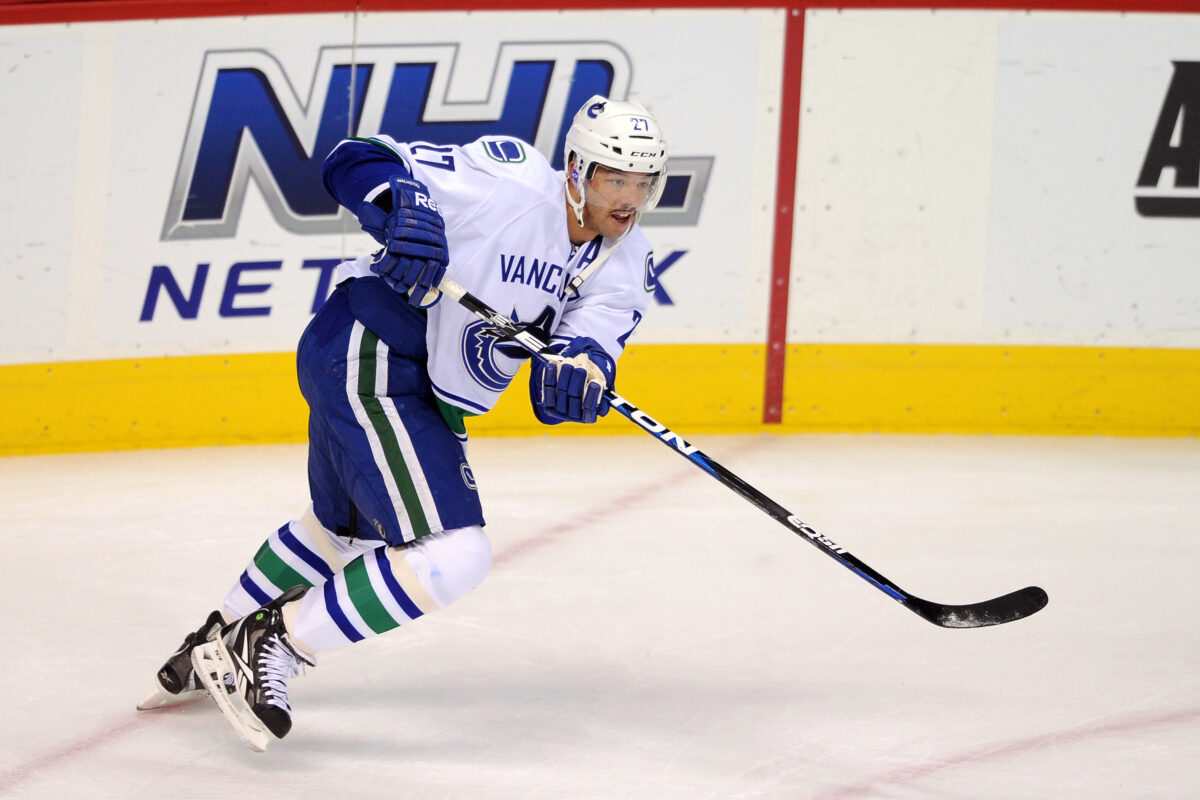
We are seeing a similar deployment strategy with Räty. He is frequently utilized as a situational specialist: he hops over the boards for a high-leverage defensive draw or a crucial overtime possession, wins the puck, and heads to the bench. This tactical deployment allows Vancouver’s current stars to avoid the physical toll of grinding out pucks from behind their own goal line. It is the dirty work that directly translates to more goals for the top six.
Overcoming Skating Concerns with High Hockey IQ
The primary reason Räty’s ceiling is projected as a middle-six forward rather than a franchise centrepiece is his foot speed. Skating has been the asterisk on his scouting report since his junior days in Finland. He lacks the “burn” required to beat NHL defenders wide on a consistent basis.
However, speed isn’t the only way to navigate the ice. Räty compensates with a sophisticated hockey IQ and a sturdy frame that excels in the cycle game. He understands lane integrity and defensive positioning, ensuring he is rarely caught on the wrong side of the puck. While he might not win a footrace, he rarely loses a battle of wits. Furthermore, he possesses a sneaky release on his shot — an asset that suggests he can contribute more offensively than a pure checker if given the space.
The Abbotsford Connection: Learning From the Source
There is a poetic symmetry to Räty’s development path. His head coach with the Abbotsford Canucks last season was none other than Malhotra himself.

Under Malhotra and the development staff’s tutelage, Räty’s skating mechanics showed visible improvement, but more importantly, he learned the nuances of the shutdown role from one of the best to ever do it. The mentorship was focused on turning Räty into an all-situations contributor — a player who can kill penalties, hold a lead in the final two minutes, and chip in 10-15 goals a season.
The Valuation of a Specialized Third-Line Centre
For a knowledgeable fan base, the realization that Räty may never be a 90-point scorer shouldn’t be a disappointment. The NHL landscape is littered with teams that have elite talent but lack the structural depth to survive four rounds of playoff hockey.
If Räty cements himself as a 45-55 point player who can dominate the dot and neutralize the opponent’s best line, he becomes one of the most cost-effective assets on the roster. Every Stanley Cup contender needs a specialist who can win the “game within the game.” In Räty, the Canucks haven’t just found a prospect; they’ve found the defensive backbone for the next generation.
AI tools were used to support the creation or distribution of this content, however, it has been carefully edited and fact-checked by a member of The Hockey Writers editorial team. For more information on our use of AI, please visit our Editorial Standards page.

