
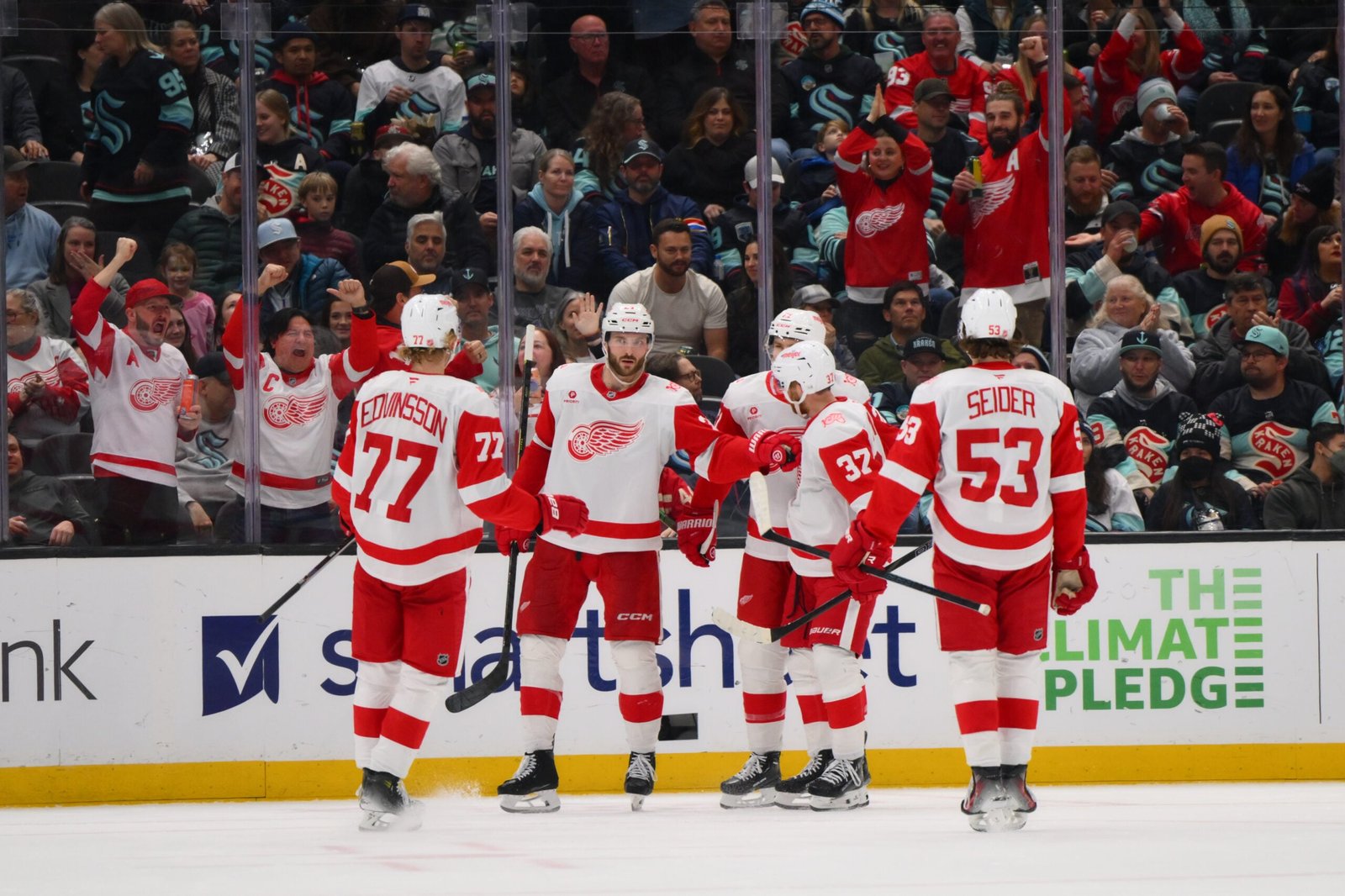
Now that we’ve evaluated the Detroit Red Wings as a whole, we can turn to the individual performances. Some exceeded expectations, and others fell short.
To evaluate the 2025-26 Red Wings, we’ll look at their preseason projections, roles, production, deployment, and more before assigning a grade.
Red Wings 2025-26 Scoring Projections & Data
To get us started, here are the scoring projections for the Red Wings that I shared prior to the season. Expected roles, historical data, age, contract status, and other factors played into these calculations.
| Player | GP | G | A | PTS |
| Lucas Raymond | 82 | 31 | 50 | 81 |
| Dylan Larkin | 76 | 35 | 45 | 80 |
| Alex DeBrincat | 80 | 33 | 39 | 72 |
| Patrick Kane | 68 | 22 | 34 | 56 |
| Moritz Seider | 82 | 9 | 44 | 53 |
| Marco Kasper | 80 | 25 | 23 | 48 |
| J.T. Compher | 80 | 13 | 24 | 37 |
| Simon Edvinsson | 80 | 8 | 28 | 36 |
| Andrew Copp | 80 | 11 | 21 | 32 |
| James van Riemsdyk | 64 | 12 | 19 | 31 |
| Michael Brandsegg-Nygard | 54 | 10 | 12 | 22 |
| Michael Rasmussen | 65 | 9 | 13 | 22 |
| Ben Chiarot | 80 | 5 | 14 | 19 |
| Nate Danielson | 42 | 8 | 9 | 17 |
| Axel Sandin-Pellikka | 62 | 4 | 13 | 17 |
| Albert Johansson | 70 | 4 | 12 | 16 |
| Mason Appleton | 62 | 6 | 9 | 15 |
| Jacob Bernard-Docker | 50 | 2 | 6 | 8 |
| Emmitt Finnie | 26 | 3 | 4 | 7 |
| Travis Hamonic | 50 | 2 | 5 | 7 |
In addition, I’ve plotted the five-on-five expected goals on a per 60 basis for this year’s Red Wings team. This helps identify which players were able to contribute to high-quality chances for, plus their ability to defend high-quality chances against.
Red Wings 2025-26 Player Grades
Similar to last year’s edition, we’ll take the inputs above and combine them with individual performance data to evaluate the 2025-26 Red Wings based on their expected role. Two players can have the same grade, but have vastly different seasons. It’s all about expectations going in, and what the player did in that role.
- A – Star-level performance, outperformed role
- B – Reliable and effective, met or slightly exceeded role
- C – Adequate, but replaceable
- D – Struggled relative to usage and expectations
Mason Appleton – RW
Stats: 65 GP – 6 G – 8 A – 14 PTS
Role: Bottom-six energy forward with penalty kill responsibilities
Analysis: It wasn’t an overly productive year for Mason Appleton. In line with projections, yes, but not particularly impressive. Appleton did a good job creating rebounds and forechecking, but also registered the 16th-worst Offensive Rating among NHL forwards and wasn’t terribly physical, either.
Grade: D+
Jacob Bernard-Docker – RD
Stats: 63 GP – 1 G – 4 A – 5 PTS
Role: Depth defenseman
Analysis: First-year Red Wing Jacob Bernard-Docker wasn’t expected to be a major offensive contributor, and didn’t surprise there. That said, he was strong defensively in a low-event, third-pairing role. He finished the year with the 58th-best Defensive Rating and earned a two-year contract extension. Ideally, Bernard-Docker improves his offensive output next season and doesn’t get caught out on long shifts as much.
Grade: B
Ben Chiarot – LD
Stats: 82 GP – 5 G – 10 A – 15 PTS
Role: Second-pairing defenseman with penalty kill responsibilities
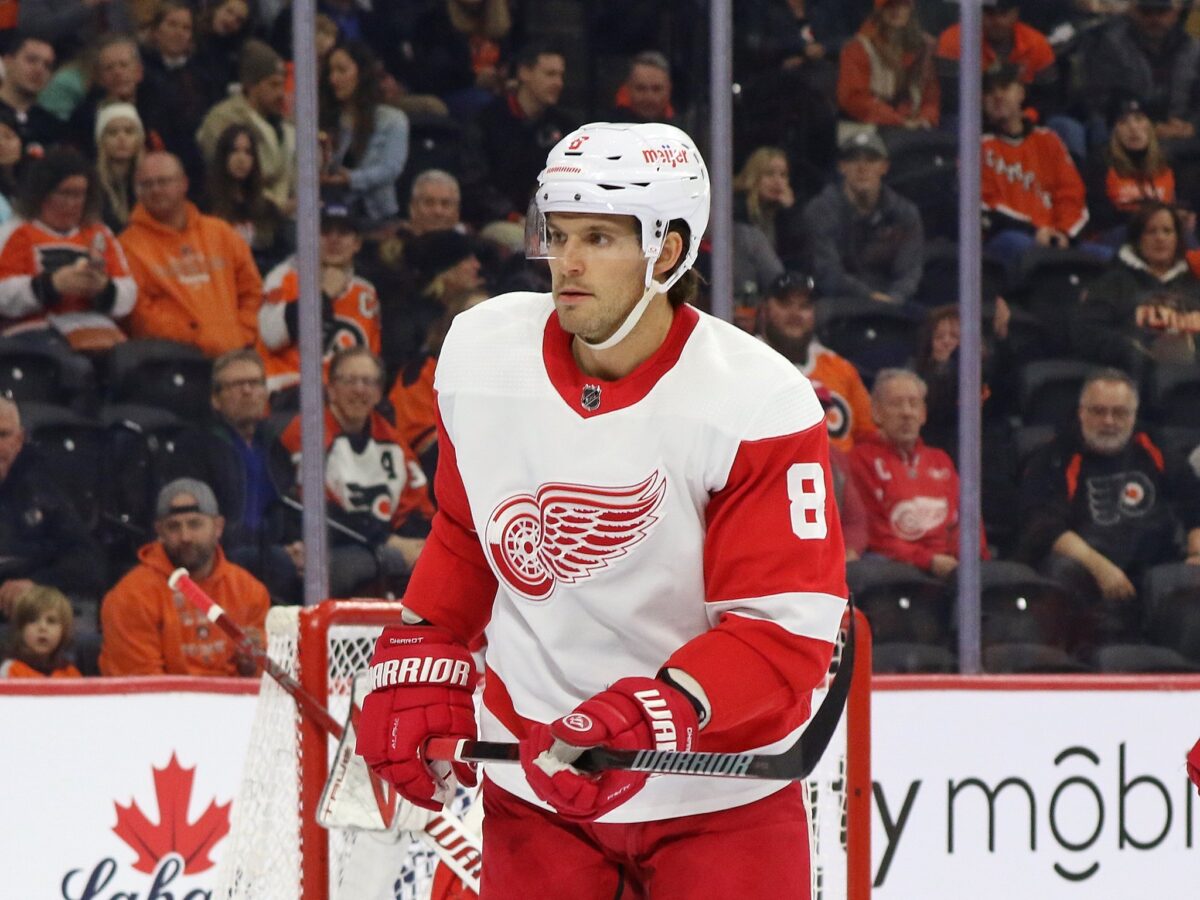
Analysis: While his scoring was right in line with expectations, it was a down year for Ben Chiarot overall. Detroit reduced his elite competition workload and he still struggled, especially with defensive zone retrievals and exits – even more so than last year versus stronger opponents. Overall, Chiarot had the 10th-worst Net Rating among blueliners. Ending on a positive note, Chiarot recorded the 28th-most blocked shots at five on five.
Grade: D
J.T. Compher – C
Stats: 82 GP – 11 G – 17 A – 28 PTS
Role: Middle-six center with special teams responsibilities
Analysis: Skating in the middle six, J.T. Compher did a good job creating low to high off the cycle and found some chemistry with Patrick Kane and Alex DeBrincat while Detroit’s top two centers were injured. Otherwise, he was a replacement level forward when it came to generating offense, zone entries, and defensive zone coverage and exits. The Red Wings need more from Compher in 2026-27 – if he’s back.
Grade: C-
Andrew Copp – C
Stats: 79 GP – 9 G – 34 A – 43 PTS
Role: Middle-six center with special teams responsibilities
Analysis: Centering a line with DeBrincat and Kane helped Andrew Copp exceed his scoring projections this season. His play down low helped the Red Wings create high-danger chances and rebounds in tight. The trade off was that his defensive zone retrieval and exit microstats took a step back compared to 2024-25.
Grade: B-
Alex DeBrincat – LW
Stats: 82 GP – 41 G – 44 A – 85 PTS
Role: Top-six forward with power play responsibilities

Analysis: It was a big year for Alex DeBrincat. Not only did he exceed expectations, but he led the Red Wings in scoring, producing at a top-line rate for both box score stats and offensive microstats. League-wide, he had the fifth-most shot attempts per 60 at five on five and the fifth-most power play goals with 15, finishing the year with the 20th-best Offensive Rating (no other Red Wing finished in the top 60).
DeBrincat was also one of Detroit’s best forwards when it came to defensive zone exits and rush chances. His 1.97 takeaways per 60 at five on five ranked fifth among forwards with 200-plus minutes played, all the while playing 35 percent of his shifts against elite competition.
Grade: A+
Simon Edvinsson – LD
Stats: 72 GP – 9 G – 16 A – 25 PTS
Role: Top-pairing defenseman with penalty kill responsibilities
Analysis: During the 2025-26 season, we saw Simon Edvinsson emerge as a top-tier shutdown blueliner, giving the Red Wings one of the best defensive pairs in the NHL. He excelled when it came to defensive zone denials, and was fine retrieving the puck and exiting the zone (a weak point of the team in general). Offensively, Edvinsson took a step forward. His zone entries improved year-over-year, and he looked very comfortable activating in the offensive zone.
Grade: A
Emmitt Finnie – LW/C
Stats: 82 GP – 13 G – 17 A – 30 PTS
Role: Versatile energy forward with part-time special teams responsibilities
Analysis: A great story turned into a valuable contributor. Emmitt Finnie spent a good chunk of the year flanking Dylan Larkin on Detroit’s top line and performed well in that capacity. His zone exit and high-danger shot microstats ranked favorably, typically deferring to Larkin and Lucas Raymond while he served in more of a worker/forechecker role. Finnie was also one of Detroit’s best penalty killers, too – he had the 13th-best xGA/60 and HDCA/60 among NHL forwards with 50-plus minutes played while shorthanded.
Grade: A
John Gibson – G
Stats: 57 GP – 2.72 GAA – .901 SV%
Role: 1A goalie
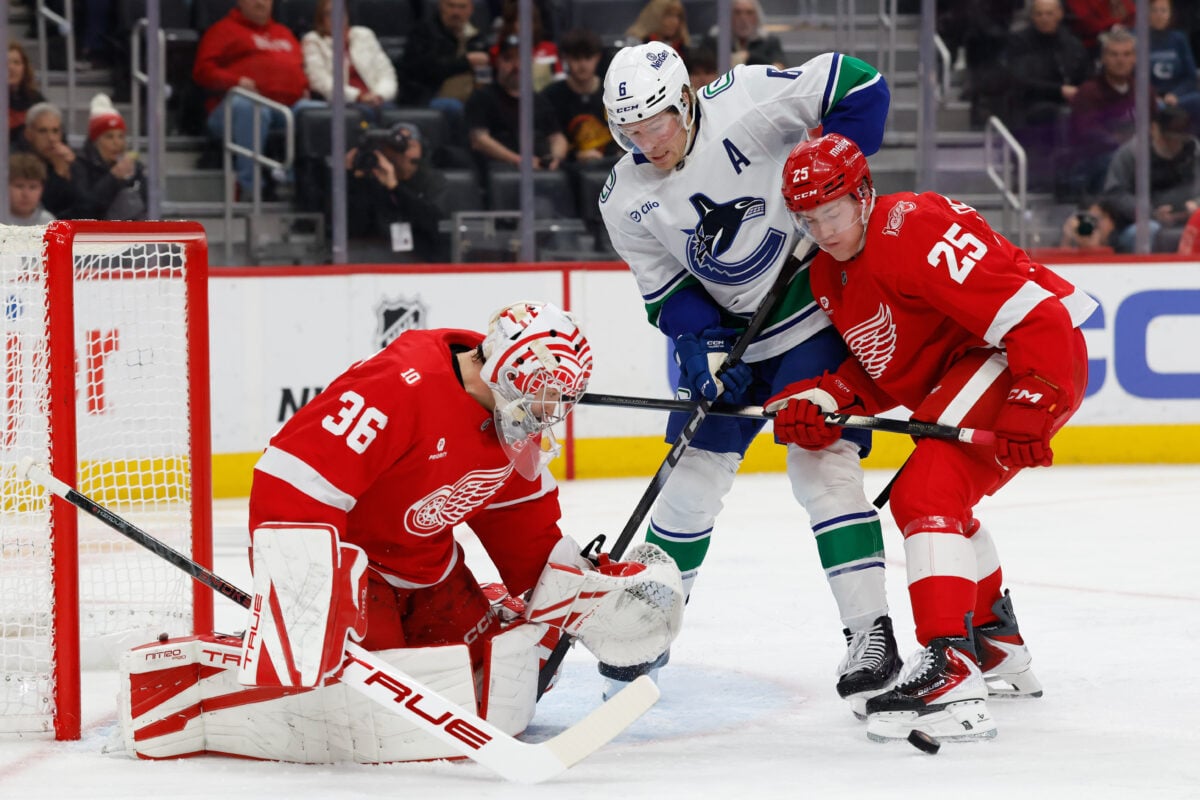
Analysis: If the Red Wings had season-end awards, John Gibson would be one of the MVP finalists. He was stellar in net for much of the season and gave the Red Wings a chance to win almost every night. He could be even better next year – his experience with the team coupled with a contract year could result in Vezina-caliber numbers.
Grade: A
Albert Johansson – LD
Stats: 82 GP – 3 G – 8 A – 11 PTS
Role: Depth defenseman with part-time special teams responsibilities
Analysis: Last year, Albert Johansson was fine, and nothing more than that. This year, he took a step forward and his confidence on the ice was apparent. Johansson retrieved the puck well and was middle-of-the-road in terms of giveaways and takeaways. The offensive side of his game improved, too, with better shot generation microstats compared to 2025-26.
Grade: B
Patrick Kane – RW
Stats: 67 GP – 16 G – 41 A – 57 PTS
Role: Top-six winger with power play responsibilities
Analysis: Lots of milestones, lots of offense for Patrick Kane. The future Hall-of-Famer produced at a top-line rate for the Red Wings, especially when it came to generating runs chances, scoring chances, and shot volume. On the other hand, his defense took a major step back from what was an above-average performance last season. Detroit needs Kane to minimize mishaps in the defensive zone when/if he returns next season.
Grade: B+
Marco Kasper – C/LW
Stats: 81 GP – 9 G – 10 A – 19 PTS
Role: Top-nine chess piece with part-time special teams responsibilities
Analysis: Predictable sophomore slump for Marco Kasper after being relegated to the bottom six for most of the season. He did some things well, like forechecking, controlled entries, creating opportunities near the net, and playing physical. The puck just didn’t hit the net very often – he had the 22nd-worst Offensive Rating among NHL forwards. Kasper’s defensive zone coverage needs to improve as well, and having quality linemates will help with that.
Grade: D+
Dylan Larkin – C
Stats: 74 GP – 34 G – 33 A – 67 PTS
Role: All-situations 1C

Analysis: Playing 40 percent of his shifts against elite competition, Dylan Larkin had the toughest deployment among Detroit’s forwards and still put up strong offensive numbers. His chance creation and high-danger assist microstats improved year-over-year, and he was solid in exiting the zone and generating rush chances, too. Larkin also ranked eighth in the NHL with 14 power play goals. While his nine five-on-five goals left much to be desired, it was a solid campaign for Detroit’s captain, especially when you consider his push to return from a knee injury late in the season.
Grade: A-
Michael Rasmussen – C/LW
Stats: 64 GP – 6 G – 8 A – 14 PTS
Role: Bottom-six energy forward with penalty kill responsibilities
Analysis: Similar to Mason Appleton in terms of production and role, Michael Rasmussen struggled this season. There was some slight year-over-year improvement in his offensive microstats and he blocked more shots than any other Red Wings forward, but the cons outweighed the pros. Rasmussen had the 29th-worst Offensive Rating league-wide and had awful zone exit numbers – all playing a sheltered bottom-six role. He wasn’t overly physical, either. It’s unclear if he has a future in Detroit.
Grade: D
Lucas Raymond – RW
Stats: 80 GP – 25 G – 51 A – 76 PTS
Role: Top-line winger with power play responsibilities
Analysis: Producing at nearly a point per game, Lucas Raymond played like a top-line forward—relative to the rest of the NHL—all season for the Red Wings. He had very good zone entry microstats and held his own in the defensive end. Detroit will want him to create more at five on five next season – a true top-line winger opposite him should help with that.
Grade: A-
Axel Sandin-Pellikka – RD
Stats: 68 GP – 7 G – 14 A – 21 PTS
Role: Depth defenseman with power play responsibilities
Analysis: Offensively, Axel Sandin-Pellikka was great for the Red Wings. He had the best offensive microstats of all blueliners not named Seider and Edvinsson. Defensively, though, he struggled, which is somewhat understandable as an undersized rookie learning the league. He had the 17th-worst Defensive Rating among NHL defensemen this season and got himself into trouble several times when not careful in the defensive zone. Still, there’s a lot to like about Sandin-Pellikka, and it’s safe to assume he’ll take a step forward next season.
Grade: C
Moritz Seider – RD
Stats: 82 GP – 10 G – 50 A – 60 PTS
Role: All-situations cornerstone defenseman
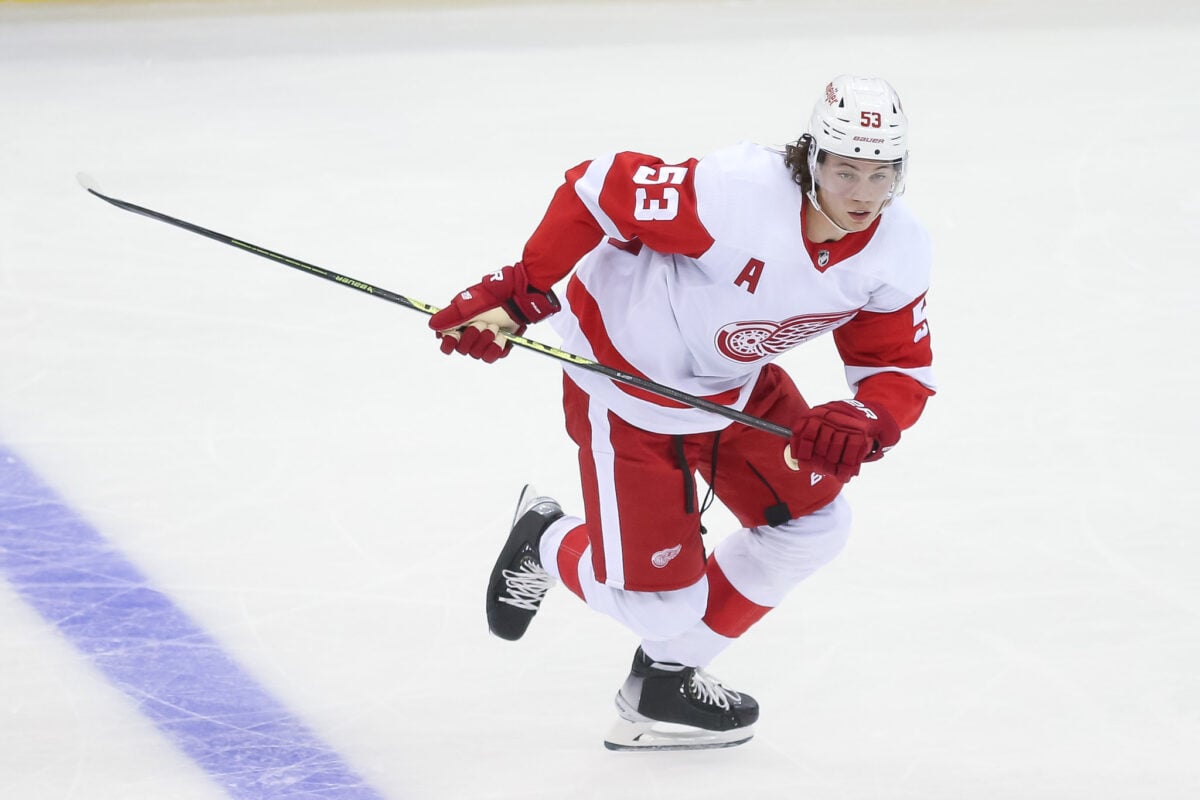
Analysis: Detroit’s MVP. Moritz Seider should be a Norris Trophy finalist after a stellar two-way season for the Red Wings. He had the ninth-best Net Rating and played the 15th-most minutes against elite competition among all NHL blueliners (and had a lower GA/60 than the 14 players above him). Seider saw his power play production tick up and ended the year with 25 power play assists—the same as Cale Makar—and 28 power play points – both of which ranked fourth-best among all blueliners. Lastly, Seider was proficient in both zone exits and entries into the offensive zone – a true two-way, all-situations talent.
Grade: A+
Cam Talbot – G
Stats: 34 GP – 3.19 GAA – .883 SV%
Role: 1B goalie
Analysis: Adequate would best describe Cam Talbot’s season. He stole some games early on and was dependable, but there’s also a reason why John Gibson started a vast majority of the games down the stretch.
Grade: C-
James van Riemsdyk – LW
Stats: 72 GP – 15 G – 16 A – 31 PTS
Role: Bottom-six forward with power play responsibilities
Analysis: Scoring a little under half a point per game is exactly what was expected of James van Riemsdyk. He added a net front dimension to the power play that the Red Wings lacked in recent years, resulting in 19.17 iHDCF/60, which was fourth-best in the NHL among forwards with 50-plus minutes played. He was also solid at five on five and was one of Detroit’s best forwards at getting to the front of the net and creating chances there.
Grade: B
Other 2025-26 Red Wings Players
These 10 skaters played less than half a season in Detroit and, thus, it would not be fair to grade them in a similar manner as above. Instead, they’ll get brief write-ups.
- Michael Brandsegg-Nygard – Suited up for 14 games and registered an assist; spent 42 percent of his ice time against elite competition.
- Nate Danielson – Seven points in 28 games; sheltered role, but generated 1.14 rush chances per 60 at five on five – the most among NHLers who played 200-plus minutes.
- Sheldon Dries – Pressed into action when injuries decimated the Red Wings; played with energy and competed hard in five games.
- Justin Faulk – Five goals ranked fourth among Red Wings defensemen despite playing just 17 games; gave up a few too many chances while paired with Ben Chiarot and could benefit from another defensive partner next season.
- Erik Gustafsson – Two-game cameo while spending a good chunk of the season practicing with the Red Wings; valuable member of the Grand Rapids Griffins.
- Travis Hamonic – Two assists in 26 games; defensive zone coverage wasn’t pretty, but he brought a physical element that was otherwise lacking among Detroit’s depth defensemen.
- John Leonard – Strong creator in 11 games with the Red Wings; earned a one-year contract extension after an impressive AHL season and positive impact in Detroit.
- Carter Mazur – Safely made it through his first game, then suited up for seven more; will play even more next season since he’ll need waivers to be assigned to the AHL.
- David Perron – Same old, same old; three goals in 16 games, plus several defensive gaffes.
- Dominik Shine – Fourth-line sparkplug scored three times in 18 games and constantly gave the Red Wings top-notch effort.
Final Word
It probably shouldn’t come as a surprise that the Red Wings finished the year with a handful of stars and a few squeaky wheels, with the rest falling somewhere in the middle. They’ll need greater contributions from the entire lineup next season if they want to improve. Suffice to say, change is needed.
Still, we should celebrate the years that Moritz Seider, John Gibson, and Alex DeBrincat had. These three players carried the Red Wings all season, with Dylan Larkin, Lucas Raymond, and Simon Edvinsson close behind them. You’re doing something right when your core players are leading the way. Now, it’s time to get the rest of the roster in order.
Data courtesy of All Three Zones, HockeyStatCards, MoneyPuck, NHL.com, Natural Stat Trick, and PuckIQ.
Free Newsletter
Get Advanced Stats coverage delivered to your inbox
In-depth analysis, breaking news, and insider takes – free.
