
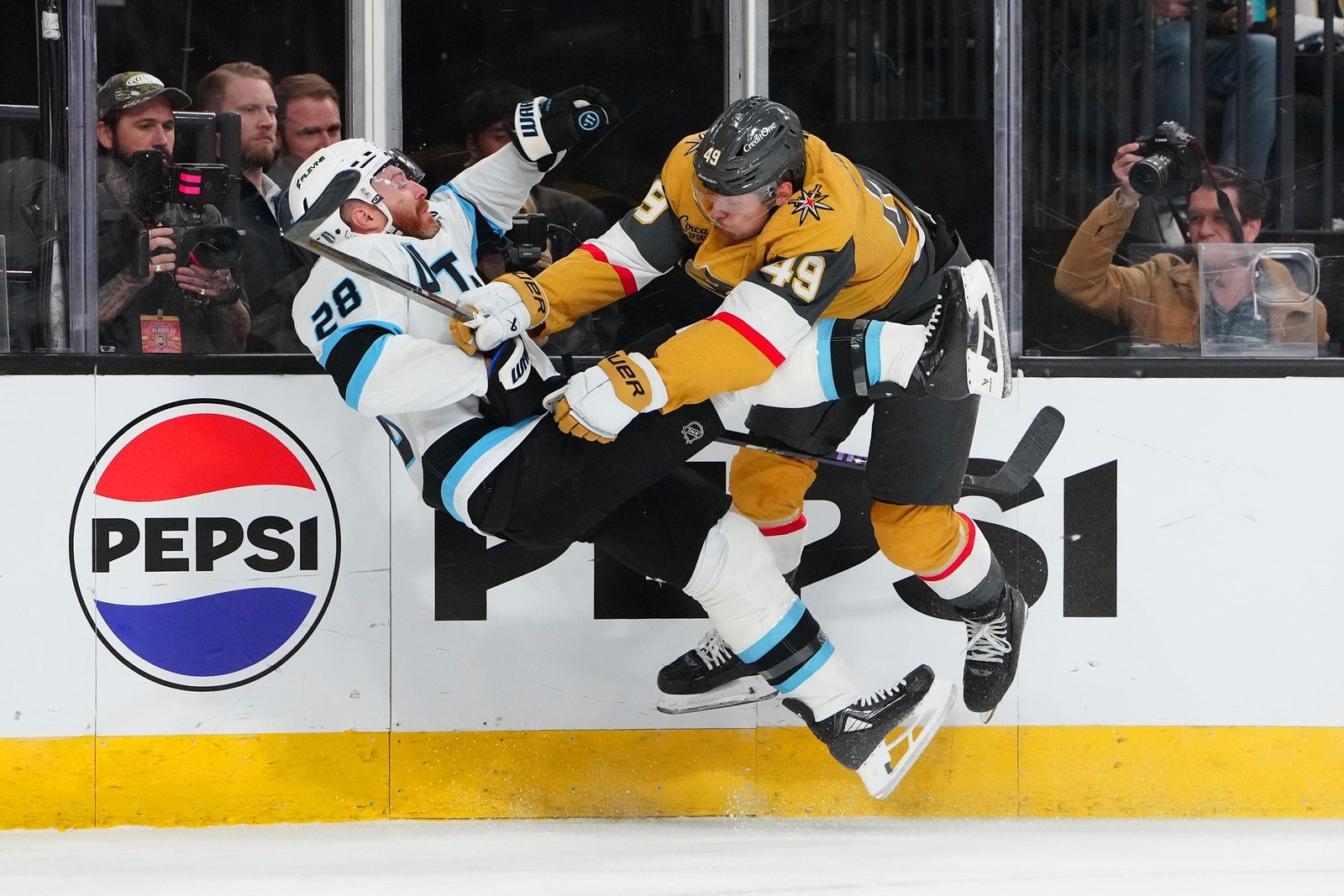
Something has been brewing in the 2026 Stanley Cup Playoffs. Game after game in the opening round, the officiating has become a big story, and the people saying so out loud aren’t just angry fans venting on social media. They’re credentialed media members, former players, and respected insiders who almost never go there. That in itself should tell you something.
The numbers, when you look at them carefully, suggest this isn’t random noise. It points to something real: the NHL appears to be in the middle of a generational handoff among its referees, unfolding right now in the year’s highest-pressure games.
The Changing of the Guard
According to Scouting the Refs, the NHL named 22 referees to its 2026 Stanley Cup Playoffs roster, led in experience by Kelly Sutherland (252 career playoff games) and Wes McCauley (220). Sutherland’s total places him fourth on the all-time list, behind Bill McCreary (297), Don Koharski (266), and Kerry Fraser (254). 
Look past those two names, though, and experience drops away fast. Of the 22 referees assigned to this postseason, at least seven have 15 or fewer career playoff games entering the first round. Furman South, who made his playoff debut only last year, entered this postseason with only a handful of career games. Kendrick Nicholson also made his playoff debut in 2025. Brandon Blandina and Corey Syvret are both making their first playoff appearances this spring, while Pierre Lambert has limited postseason experience.
The 2025 Playoffs offered an early preview of this trend. Last year’s postseason already saw referee South, along with linesmen Julien Fournier, Tyson Baker, and CJ Murray, make their playoff debuts. In 2026, referees Blandina and Syvret, along with linesmen Kilian McNamara and Travis Toomey, are also making their playoff debuts and are still very much learning on the job in the sport’s highest-pressure environment.
The Penalty Problem Is Real — and So Is the Inconsistency
The statistical picture, even in a small sample, reinforces what has been visible on the ice. Through the opening round, certain officiating crews have produced significantly higher penalty totals than others, with wide gaps in penalty minutes and power-play opportunities from game to game. That variation in standards, more than any single number, has defined the early games.
The gap between the lightest and heaviest whistles in the same round tells its own story about consistency. The Rank/Rehman pairing has averaged 38.7 penalty minutes per game, the second-highest among all referee pairings this postseason. The Francis Charron/John McIsaac pairing, by contrast, is averaging just 20 penalty minutes per game, third-lowest in the playoffs. It’s worth noting that Charron brings 104 career playoff games to the ice, and McIsaac has 41, making them one of the more balanced pairings working this round.
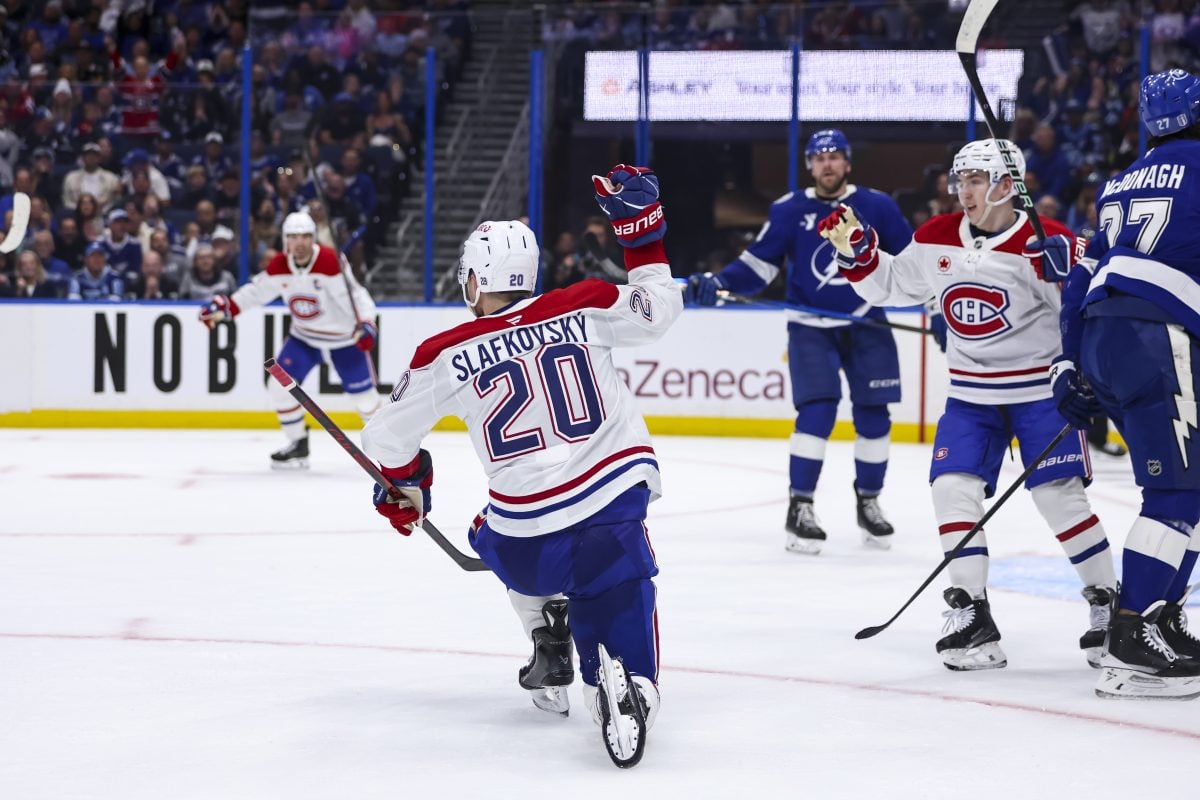
Nowhere has the penalty situation been more visible or more controversial than in the Tampa Bay Lightning–Montreal Canadiens series. Through five games, the two teams have combined for 39 minor penalties, a striking total given that only 27 goals have been scored in the series. In Game 4 alone, 17 total penalties were called. Of those 17, 11 were stick infractions.
Montreal’s Mike Matheson, when asked if he knew what the standard was for penalties, said: “That’s a good question. I think we’re wondering ourselves.” That’s a playoff player, mid-series, telling you with genuine bewilderment that he cannot identify a consistent standard on the ice.
Kaiden Guhle put it plainly: “It’s going on both sides, too. There’s a lot of stick penalties on both sides. Refs are looking for it. We talked about it. A couple of high sticks that are just weird plays, guy’s face gets in the way. It’s nothing you can really do about it.”
The Major Penalty Question
One recurring feature of these playoffs deserves specific explanation, because it is rooted in a rule that most casual fans don’t know exists.
Since the 2019-20 season, NHL referees have been required to use on-ice video review for all major non-fighting penalties, either confirming the call or reducing it to a minor. The rule was later expanded further: referees now have three options after reviewing a major penalty call: confirm it, reduce it to a lesser penalty, or rescind it altogether. This means that every time a referee calls a five-minute major for boarding, high-sticking, charging, or similar infractions, play stops and the officials conduct their own video review right there on the ice before the penalty stands.
The Scouting the Refs podcast addressed this directly in its most recent episode, using a high-sticking review from these playoffs that went through the process and came back as a non-call. The hosts confirmed it was the correct interpretation under the current rulebook, then asked whether the rule itself might simply be wrong.
The concern isn’t only whether the call from the review process is correct. It’s that the process itself, officials pulling up footage, conferring, sometimes reversing a game-altering call, has become a repeated interruption in postseason games, already drawing scrutiny for inconsistency. When fans in the building, players on the bench, and coaches behind it can’t predict what will happen after the huddle, the situation has outgrown a rulebook footnote.
On a recent episode of Daily Faceoff Live, host Tyler Yaremchuk said the officiating standard has been “very confusing to follow,” and that in games like Tampa-Montreal and Philadelphia Flyers-Pittsburgh Penguins, handing out coincidental minors every time a scrum breaks out “is not going to deter anyone.” He pointed specifically to the Utah Mammoth-Vegas Golden Knights series, noting that Vegas had effectively calculated that committing multiple infractions per period meant that referees, reluctant to “impact the game,” would call only one or two.
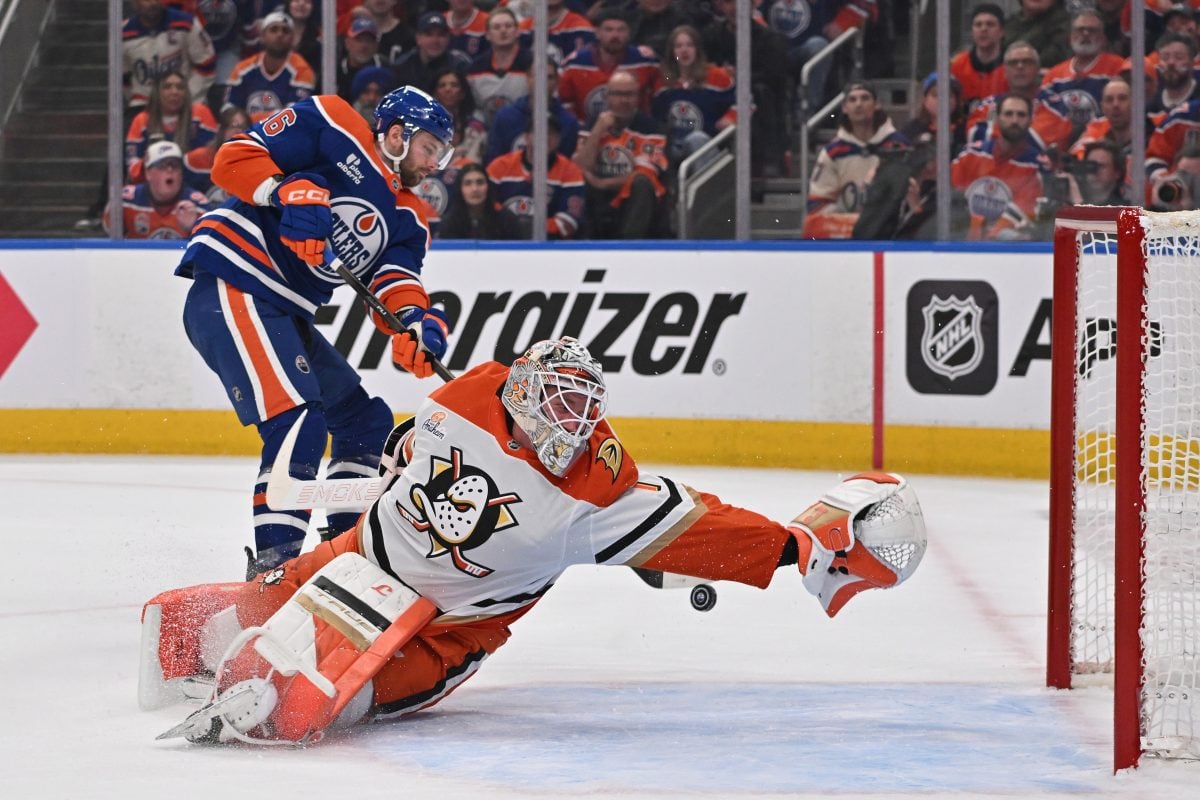
The incident that crystallized everything in these playoffs happened just 2:29 into overtime of Game 4 between the Edmonton Oilers and Anaheim Ducks on Sunday night. Ryan Poehling sent a puck toward the crease that deflected off Darnell Nurse and slipped through goaltender Tristan Jarry. The officials on the ice ruled it a goal, ending the game on the spot and giving Anaheim a 4-3 win and a 3-1 series lead.
Here is where it gets complicated, and why the reaction was so fast and so sharp. No official appeared to be positioned behind the net with a clean look at the goal line when the puck crossed the crease. Under NHL review rules, once a goal is called on the ice, it can only be overturned with conclusive evidence. Officials hesitated visibly before confirming the goal, then a lengthy video review followed, and the call stood.
The Tone Has Shifted Publicly
The Hockey News’ Michael Traikos wrote directly about the Game 4 Tampa-Montreal situation under the pointed headline “Put Away The Whistles!” Traikos reported that Montreal’s Oliver Kapanen was called for high-sticking on Tampa Bay’s Dominic James in the third period. The replays appeared to show that Kapanen’s stick never made contact at all and that the ensuing Lightning power play produced the tying goal. Even Lightning coach Jon Cooper, whose team benefited from the call, was openly frustrated with the officiating.
The Ottawa Senators-Carolina Hurricanes series added another flashpoint, drawing criticism over the offside review process after Mark Jankowski’s goal was disallowed, which instead led to a Carolina penalty shot, a sequence that prompted calls for a reassessment of a review system critics say turns clear situations into baffling ones.
A Pattern That Didn’t Start This Week
The 2025 Playoffs were already a sign of where things were headed. Last year’s postseason saw several officials making their debuts and a handful of experienced referees. The officials who got their first playoff assignments in 2025 are the ones showing up in 2026 with two or three career postseason games.
Experience in playoff settings does specific things for a referee: it builds positional habits, creates the split-second certainty required to blow the whistle or keep it in the pocket at a decisive moment, and generates a kind of credibility with players that newer officials have to earn over time. A tight call from McCauley and an identical call from a referee working his second playoff game will be received very differently by the players, the coaches, and the crowd.
A Standard That May Take Time to Rebuild
None of this is to say the referees are incompetent or that these playoffs aren’t delivering excellent hockey. But when a quarter of the playoff officiating pool has fewer than 15 career postseason games, when game-deciding calls are being made without an official in the proper position, when coaches on the winning side are grumbling about how calls are manufactured, and when Elliotte Friedman and Ron MacLean are raising pointed questions on live national television, it means the issue has crossed a threshold.
The NHL has navigated officiating transitions before, and it will navigate this one. The generation of McCreary, Fraser, and Koharski gave way to McCauley and Sutherland. That transition was uneven, too. What’s different now is the pace and the fact that the clearest breakdowns in this young postseason have come in the exact moments where experience matters most: overtime, late in regulation, in series that are hanging by a thread.
The frustration and confusion about officiating in this year’s playoffs are not misplaced. When the standard shifts from game to game, it becomes part of the story whether the league wants it or not. A wave of newer officials working through high-leverage playoff situations, combined with the loss of veteran presence, has led to uneven standards from crew to crew. That kind of transition takes time, and it may last longer than a single season before the standard settles into something clearer.
Free Newsletter
Get Commentary coverage delivered to your inbox
In-depth analysis, breaking news, and insider takes – free.
