
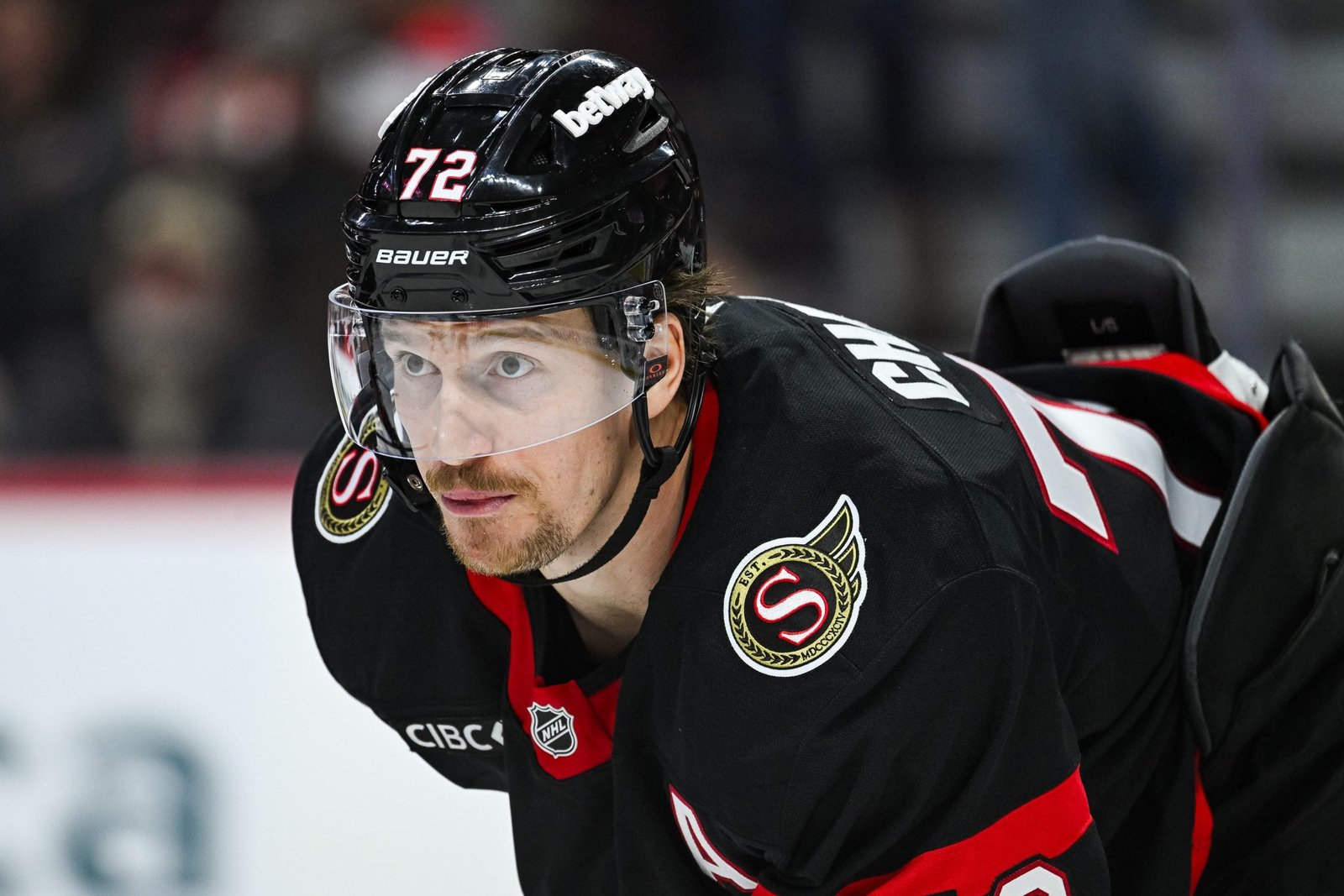
Thomas Chabot was one of the original building blocks that the late Eugene Melnyk hoped would “take over this team” before the 2018-19 season, the start of the Ottawa Senators’ rebuild. The other two pieces were Brady Tkachuk and Drake Batherson. Fans hoped these three would fuel the next wave of Sens’ hockey and help lead the club to championship contention.
In eight seasons with the trio, Ottawa has played postseason hockey twice while not making it out of the first round – both in consecutive seasons. They have not won a playoff series since Chris Kunitz’s knuckle puck ended their spectacular run in the 2017 Eastern Conference Final.
- 2018-19: 29-47-6 (64 pts) – missed playoffs
- 2019-20: 25-34-12 (62 pts) – missed playoffs
- 2021 (COVID): 23-28-5 (51 pts) – missed playoffs
- 2021-22: 33-42-7 (73 pts) – missed playoffs
- 2022-23: 39-35-8 (86 pts) – missed playoffs
- 2023-24: 37-41-4 (78 pts) – missed playoffs
- 2024-25: 45-30-7 (97 pts) – lost first round
- 2025-26: 44-27-11 (99 pts) – lost first round
Not being able to make it past the first round should signal the time to move on from at least one of the three above – not just for an organizational change, but to let Tim Stutzle and Jake Sanderson take over this team.
However, there is another name to add to this next wave, and it comes, perhaps, sooner than most expected: Carter Yakemchuk. Ottawa’s top prospect has been banging on the door with his play all season in the American Hockey League (AHL) and has been given a taste of NHL action because of it.
In fact, it can be argued that he’ll be ready for a full-time role as soon as next season, which is why it should be Chabot who becomes expendable over Batherson or even the club’s captain, Tkachuk.
Yakemchuk’s Rise to the Big Leagues
Selected seventh-overall by the Senators in the 2024 NHL Draft, Yakemchuk was praised by club president and general manager Steve Staios for his offensive abilities, mainly his “NHL-ready shot.” In four seasons with the Western Hockey League’s Calgary Hitmen, he recorded 70 goals and 180 points in 245 games – including 30 goals and 71 points in his draft year.
After opening way more eyes at the Sens’ rookie camp last September, including two goals and three points against the Toronto Maple Leafs in the opening game, Yakemchuk started this season with the Belleville Senators. For an AHL rookie, the 20-year-old put up solid numbers – 10 goals and 40 points in 54 games.
Then, late in the season when the Senators were banged up on the blue line, Yakemchuk got his shot in Detroit on March 24. After setting up Stutzle for his first point, he made another statement with his first NHL goal, activating from the point and ripping it upstairs. He would also run the first power-play unit in place of the injured Sanderson and Chabot at various points.
CARTER YAKEMCHUK HAS HIS FIRST NHL GOAL!
And look how happy his family is! 🤗 pic.twitter.com/OI4oE3e5NU
— NHL (@NHL) March 25, 2026
There’s a reason head coach Travis Green wanted to give the Fort McMurray, Alberta native plenty of opportunity right off the hop: “He sees the ice well and passes the puck well,” as he told reporters after the young defenceman’s first game.
Yakemchuk was re-assigned to the AHL as the regular season ended with Chabot and Sanderson, among others, back from injury, but not before getting recalled for Game 4 of the Senators’ first-round series against the Carolina Hurricanes in hopes of providing a spark. He was in on both Ottawa goals that afternoon with two assists.
Yes, Yakemchuk still has work to do on the other side of the puck after finishing a minus-31 with Belleville, but his puck-moving ability is exactly what Ottawa is looking for with the makeup of their current roster. His addition to the Sens’ blue line was massive for the club this past month, and his youth and skill will be important factors heading into next season.
Why He Fits Better Without Chabot
For Yakemchuk to properly grow, the Senators have to keep thrusting him into high-leverage situations as they did late in the regular season and the playoffs. But the biggest factor is in who he plays with, which is where he and Chabot playing together won’t work.
He can certainly benefit from having the right forwards to move the puck to. But what really makes Yakemchuk stand out is how he creates his offence: jumping up into rushes from the offensive blue line thanks to his skating. Chabot is the same way but relies more on his puck skills to make plays from the back end.
As well, both Chabot and Sanderson play a very similar two-way style while standing out offensively. Jordan Spence, who had the same amount of points as Chabot (31), is also more of an offensive-based defender who is flexible throughout the lineup. He was paired with eight different defencemen throughout the season.
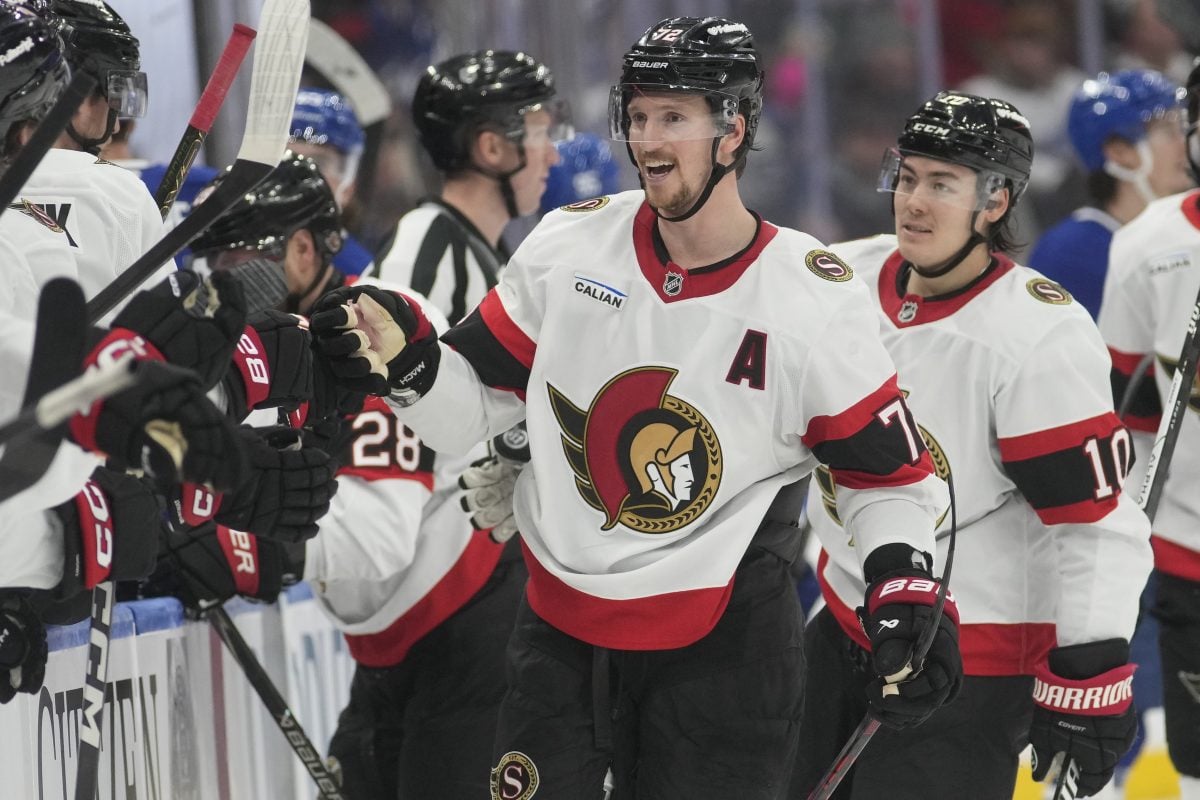
After those three comes Yakemchuk. He is suited to play the second or third defensive pair, but his offence will either be limited from maximum potential or completely taken away if he plays full-time with one of the three options above.
Could he work with Tyler Kleven on the third defensive pair? Sure. But he could also reach the next level with top-four minutes and power-play time next season. Besides, Kleven and Spence worked well in the regular season with the 657-plus minutes they got together and could be an intriguing third pair for the future.
Simply put, if Chabot is back next season, Yakemchuk will not get the opportunity to fully blossom since he would likely be stuck on the third pairing. This is nothing against Chabot, as he is a solid defender in his own right, but Ottawa would be foolish to move on from Sanderson this early into his career, and again, Spence is a solid fifth-to-sixth defenceman.
How the Senators Should Solve This Problem
Because the Senators have too much offence on their back end and need a shakeup, Chabot has to be the odd man out. He should not be too hard to move, considering his $8 million average annual value (AAV) for two more years and many teams seeking a top-four defenceman.
Now comes the hard part in replacing one of the club’s longest tenured players. The Senators would still have three blueliners that bring offence as their main strength, so adding a defence-first guy might be the best way to enter their next phase of contention.
A left-handed option, or someone who can play the left side, may be more ideal, so Yakemchuk can drive his own offence from the right with a sturdy, physical, more defensive mind standing by. Perhaps a Jamie Oleksiak or a Brett Kulak in free agency? Look at swapping Chabot for a stronger defensive D-man in a trade?
No matter who it is, the target has to be someone with some mileage who can log premium defensive zone minutes. This not only helps Yakemchuk grow his game since he would be free to activate offensively, but it gives the Sens another defensive-minded guy to pair with Artem Zub or Kleven on the penalty kill or late in games.
Chabot might be a great locker room leader and has meant a lot to Ottawa for the past eight seasons, with 335 points in 569 regular-season games for the club. But moving on from him would be the best outcome as it signals both an organizational shift and a commitment to Yakemchuk’s development.
Letting it be known that this is Yakemchuk, Sanderson and Stutzle’s team has to be the way for Ottawa to evolve as a contender.
Free Newsletter
Get Ottawa Senators coverage delivered to your inbox
In-depth analysis, breaking news, and insider takes – free.
