
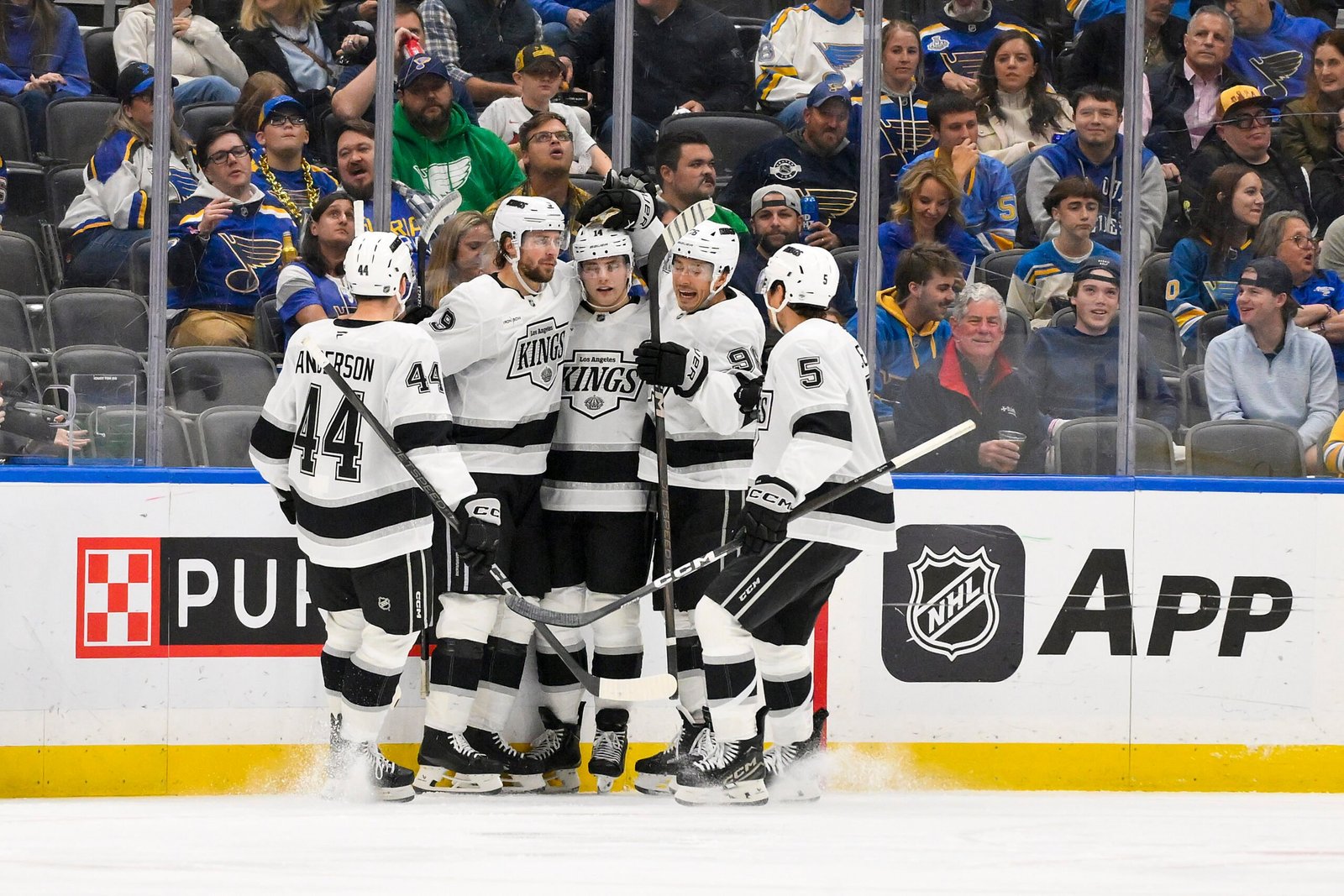
The March 2026 NHL Trade Deadline has come and gone, and for the Los Angeles Kings, it was a whirlwind of activity that signaled one very clear message: The window is wide open and the front office is not afraid to throw everything at a run for a third Stanley Cup.
With interim head coach D.J. Smith now behind the bench and the acquisition of Artemi Panarin already settling in, the Kings entered March looking to close the remaining gaps in a roster that suddenly looks like a heavyweight contender. To understand where this team is headed, we have to look at the specific moves made during this frenetic March window and determine if the price paid matches the potential reward.
Kings Land Laughton
To understand why the Kings were willing to trade a conditional 2026 third-round pick for a single player, look at Scott Laughton’s stat line. Laughton is the type of player who makes every single teammate better just by being on the ice. He is a high-IQ and physical center who can also play the wing. In a playoff series, those are the guys who decide games.
Under Smith, the Kings have moved toward a system that demands relentless pressure. Laughton fits that like a glove. He is a tenacious forechecker and a player who thrives when the game gets rough. While Panarin provides the flash and Anze Kopitar provides the class, Laughton provides the energy. By slotting him into the third-line center spot, the Kings have created a “shutdown” unit that can erase an opponent’s top scoring line, freeing up the Kings’ stars to exploit on easier matchups.
The Cost: Moving Perry and Foegele
Of course, getting a player like Laughton requires giving up something that could hurt the team’s statistics. The departures of Warren Foegele and Corey Perry represent two different types of loss for this locker room.
Related: Non-Canadian-Born Captains to Win the Stanley Cup
Foegele was the “energy” guy. His straight-line speed and ability to hunt pucks made the Kings’ transition game dangerous. He was a reliable middle-six producer who could play a heavy game. Moving him is a gamble on defensive certainty and the Kings have essentially bet that Laughton’s ability to prevent goals is more valuable than Foegele’s ability to score them. In the regular season, that’s debatable. In the playoffs, where one defensive mistake can end a season, it’s a much easier pill to swallow.
Then there is Perry. He was brought in to be the veteran “rat;” the guy who knows exactly how to taunt a superstar into a five-minute misconduct. Even this season, Perry’s hockey sense remained elite. However, his lack of speed was becoming a issue under Smith. By moving Perry, the Kings have chosen mobility over experience. They believe Laughton can provide the same “edge” and leadership that Perry brought, but with the ability to actually catch the guy he’s trying to hit.
Analyzing the Trade
The logic here is a “concentration of talent.” The Kings effectively took two depth pieces and condensed them into one elite utility player. From a chemistry standpoint, this move is a massive win for the coaching staff. It’s hard to find minutes for both Foegele and Perry in a way that maximizes their specific strengths without compromising the team’s overall speed. By bringing in Laughton, the Kings now have a player who can play 20 minutes a night in all situations. He can take the 5-on-3 penalty kill, he can move up to the top power-play unit if there’s an injury, and can take the biggest defensive-zone draw of the game.
Beyond the Stat Sheet
The most important part of this trade is the culture shift. The Kings have been a “nice” team for a few years. They were talented, they were structured, but they weren’t necessarily “intense.” Laughton changes that immediately. He is a loud, abrasive leader who drags his teammates into the fight. By moving Foegele and Perry, the Kings also signaled a change in the “age and speed” profile of the team. They are now younger and faster than they were with Perry, but more disciplined and “heavy” than they were with Foegele. They are now a team built for the grind of a seven-game series.
The Final Grade: B+
The Kings addressed their biggest structural need. They now have a center who can play top-tier minutes and kill penalties at an elite level. However, what remains is that secondary scoring is the major concern. Foegele was a consistent threat to score, and Perry excelled at scoring “dirty” goals. If the Kings’ top six line goes through a slump, they might find themselves missing the depth production those two provided. Laughton isn’t a “scorer” in the traditional sense; he’s a “grinder” who chips in. It’s the kind of trade a team makes when it is 100% committed to winning right now. The Kings gave up two good players to get one great “playoff player.” It’s a bold bet on grit, versatility, and defensive structure.
In the Western Conference’s high-stakes environment, the Kings decided they didn’t need more players but simply put, they needed better ones. Laughton is a better, more versatile, and more impactful player for a Cup run than Foegele or Perry at this stage of their careers. The Kings gave away speed and a legendary veteran to gain a new unit, and that is a trade that almost any Cup-contending general manager would make in a heartbeat. The grade sits at a B+ only because of the risk to the secondary scoring, but if the Kings make a deep run, this could be remembered as the “missing piece” trade of the decade.

