
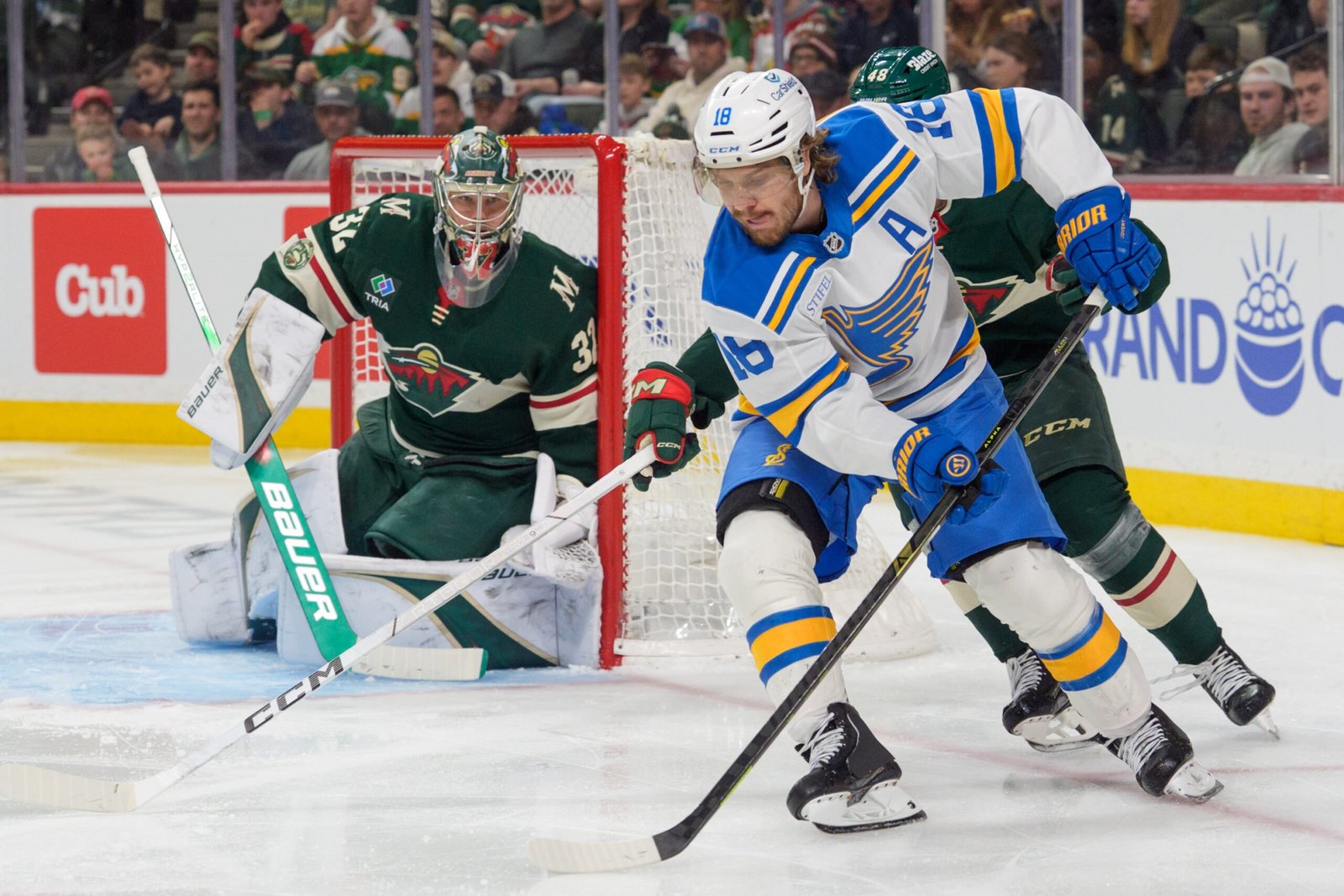
Just a few weeks ago, it seemed improbable that the St. Louis Blues would trade Robert Thomas. Yes, he was in trade rumors, but it still felt like he was untouchable, and there was no chance he was leaving. That changed this past weekend, when Elliotte Friedman stated that there is a , naming the Utah Mammoth as an interested team.
Jeremy Rutherford added more fuel to the rumors on Sunday by stating that Thomas was inquiring as to the length of the Blues’ retool suggesting the forward is open to the possibility of waiving his no-trade clause (from “What I’m hearing about Robert Thomas, Jordan Binnington and other Blues Ahead of the Trade Deadline,” The Athletic, Feb. 26, 2026).
With the trade deadline this Friday, it seems appropriate to take a look at a possible Thomas trade to the Mammoth. What would the package need to look like to convince the Blues to make this deal?
Utah’s Interest in Thomas
The Mammoth are in the middle of the playoff race in the Western Conference. Adding Thomas would significantly improve their playoff chances this season and beyond. He is under contract through the 2030-31 season, and his cap hit is relatively team-friendly at $8.1 million. For a player with multiple 80-point seasons and 100-point potential, that is a great deal.
Related: NHL Rumours: Thomas to Mammoth, Henrique Staying & Kings Forward Hunting
Furthermore, Utah’s general manager, Bill Armstrong, was the director of amateur scouting when the Blues drafted Thomas in 2017. There is a relationship there that could help Thomas agree to accept a trade to the Mammoth.
What Should the Return Look Like?
Thomas is a core member of the Blues and can be a key member of the organization when they are ready to contend. If the Blues are going to trade someone like Thomas, they need a significant return. This return should have the potential to accelerate the retool by bringing young talent back into the organization.
To try to figure out what a return would need to look like, we are going to look at the Quinn Hughes trade from earlier this season. The Minnesota Wild acquired Hughes, a 26-year-old offensive-minded defenseman under contract through the 2026-27 season. To acquire him, the Wild gave the Vancouver Canucks three first-round selections – Zeev Buium, Marco Rossi, and Liam Ohgren – as well as a 2026 first-round pick.
Of course, Hughes and Thomas are different kinds of players. However, given Thomas’s offensive capabilities as well as being under contract through 2030-31, the return should not be any lower than what Hughes got the Canucks.
Proposed Return
We will start with the obvious and begin with the Mammoth’s first-round pick in the upcoming draft. Even without that first-round pick, the Mammoth would still hold five picks in the first three rounds, so they could afford to part with their first-round pick in the right deal.
The Blues would then need to dip into the Mammoth’s prospect pool. Cole Beaudoin and Tij Iginla should be involved in the trade. These are two of the top prospects in the Utah system, but considering who the Mammoth are getting in return, it would be worth it. Iginla’s ability to create high-quality scoring chances and his high hockey intelligence would make him a valuable member of the Blues’ organization. Beaudoin is another scorer, but adds some physicality to his game.
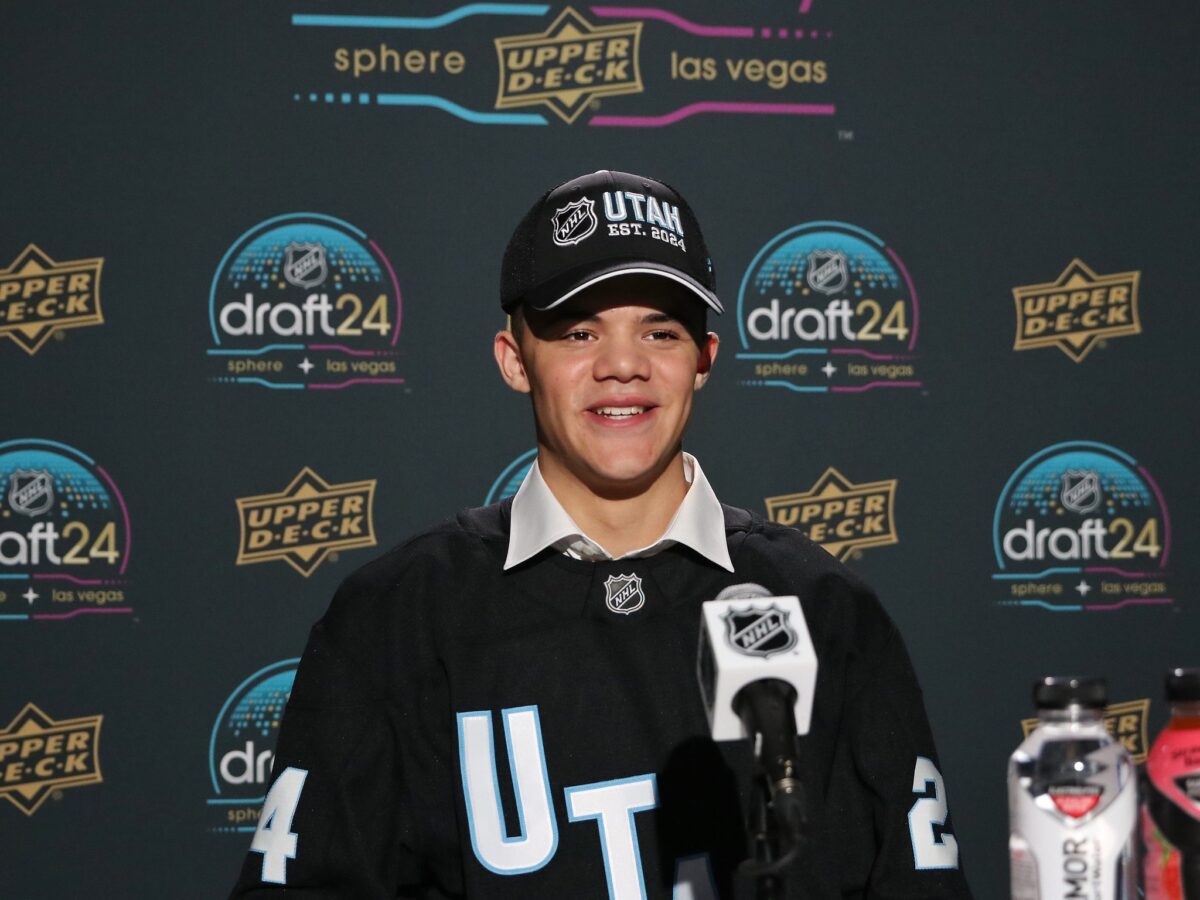
Lastly, the Blues should look to add someone who can join the NHL team immediately. Barrett Hayton would be a nice addition to the lineup. He is a two-way forward with a net-front presence. Furthermore, he has 20-goal potential, having reached that total last season and scoring 19 goals in 2022-23. Hayton is 25 years old and under team control through next season, giving the Blues time to see how he fits into their plans at a reasonable price.
In summary, here is the proposed trade:
- Mammoth receives:
- Blues receive:
- 2026 first-round pick (Utah)
- Barret Hayton
- Cole Beaudoin
- Tij Iginla
Does This Make Sense For Both Teams?
The Blues should not trade Thomas unless the return is eye-popping. This return is certainly that. The equivalent of four first-round picks is certainly an enticing package. However, it would be a tough pill to swallow for the Blues. Trading Thomas would essentially mean committing to a rebuild rather than a retool. There is also the risk that the players acquired do not pan out. With that being said, this is a strong return for the player they are giving up.
For the Mammoth, could this price be considered overpaying? Perhaps. However, the Hughes trade set a standard for the trade market. Thomas is the same age as Hughes but under contract for a longer period. To get what you need in the NHL, sometimes you have to pay a higher price.
The good news for the Mammoth is that the salary cap will be rising in 2026-27. This will make Thomas’s already reasonable cap hit look even better and still leave money to add more players.
Clock Is Ticking
There are only a few days left before Friday’s deadline. It is important to remember, however, that even if Thomas is not moved by then, the conversation may start again this summer.
Check in with The Hockey Writers throughout the week for trade deadline coverage for all 32 teams! It is one of the most exciting times of the year, and we are here for it all!

