
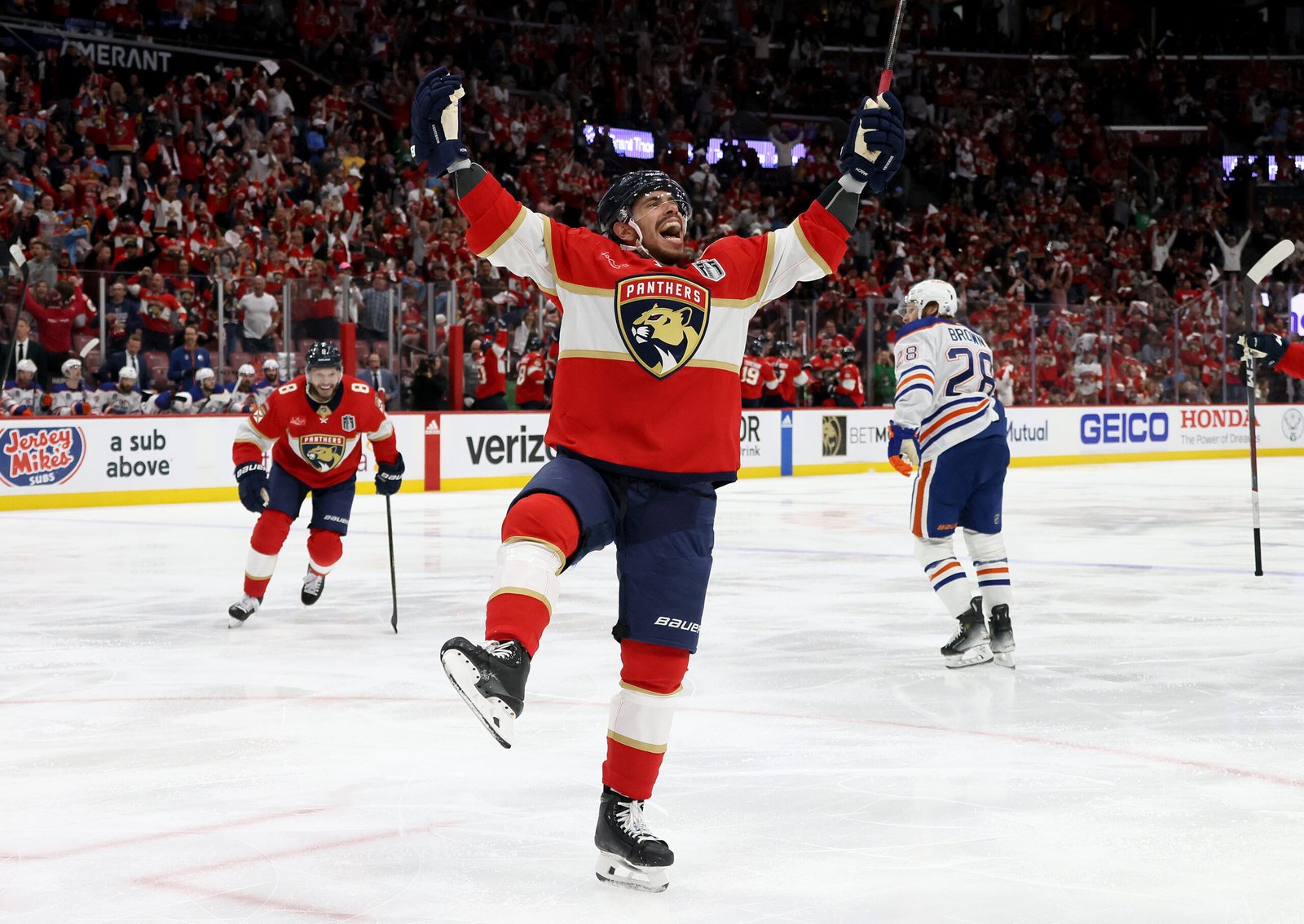
In total, there were four players and one photographer inducted into the US Hockey Hall of Fame on Wednesday evening, Dec. 10, in St. Paul, Minnesota. Ray Shero was also honored with the Lester Patrick Award posthumously for all the work he did in the NHL before he passed away this past April.
It’s no surprise what names made the list in terms of players, and it’s not a huge surprise that Shero was given the Lester Patrick Award because of the impact he had on the game of hockey. However, it was rather surprising to see a photographer make the list, but when hearing of all he’s accomplished over his career, it made complete sense. In this article, we’ll look closer at Bruce Bennett’s induction, starting with how he got here.
Bennett Still Loves the Game
Many fans may not have heard the name Bruce Bennett, but they’ve most likely seen his work if they’ve seen any hockey photos from the NHL over the past 40-plus years. He’s covered the New York Islanders mainly, but quite a few other teams as well. He got his start with The Hockey News and eventually expanded to his own studio, and now, apart from taking photos, he’s the Director of Photographer at Getty Images.
Bennett is the first photographer to be inducted, and it’s easy to see why when you hear how many events he’s covered and how many shots he’s taken. He’s taken over 2.5 million photos, and that includes 45 Stanley Cup celebrations, but he still gets excited to go to the rink. After such a long career, it would be easy to fall into routine and not feel the excitement the same way as when he started, but it’s clear he still has a passion for the game and for his craft.
“Yeah, I do, and to prepare for the games, usually I’ll wake up in the morning, like all excited, like who am I going to see tonight? I’ll download the media notes, I’ll take a look at who’s going for records, maybe their first NHL goal or their first game. I’ll scour the media wires and see if there’s any other story that I need to tell that night in photos. Sometimes the matchups aren’t as great as, aren’t that interesting to me. Western teams I always love because I don’t see them as often but still when I walk in there, I get in my zone, I kind of zone out a little bit, and start thinking all the notes I’ve taken about what to shoot that night and try to just be in the moment…but it’s still a great feeling getting to the rink,” said Bennett when asked if he’s still as excited about shooting the game as he was when he was younger.
Bennett Captures the Special Moments
Although he’s not on the ice or behind the bench, he’s part of the game, and he has helped fans find a way to connect to it as well. While photographs don’t speak out loud, they evoke emotions and bring up different memories based on each person and their specific memories surrounding that exact event. An example can be the Stanley Cup being awarded; there’s a winning team, but there’s also a losing team, which usually means a crushed fanbase who hoped their team would be successful. All of those moments, it has to be hard to choose a favorite, and Bennett explained how it often changes.
“It’s changed, like when I walked in the room I changed it but I will tell you that like this year I added the (Alex) Ovechkin goal when he beat Gretzky’s record that instantly catapulted let’s call it Top 3, it was just ‘the moment’ and honestly it was just luck that I was in the position I was in and that he turned and faced me because if he had scored that goal in the first and third period, I wouldn’t have had celebration, I wouldn’t have had the goal scored, it would’ve been blocked so you just look at sometimes it’s just getting lucky, sometimes it’s experience, being able to anticipate where things are gonna happen but that’s definitely a Top 3,” said Bennett when asked if he had a Top 10 list of his favorite photos.
“It’s a weird one, good question because it’s a weird one. The New York Rangers parade in 1994 after they won the Stanley Cup. I was on a float with Mike Keenan, assistant coach Colin Campbell, and Dick Todd, I believe, and Steve Larmer, and I’m telling you when that float turned onto Broadway, and you heard the roar and saw all the confetti up in the air and flying down on us. It was just an incredible, incredible time that parade and being with the Rangers for that Stanley Cup that year was just a career highlight,” said Bennett when asked about his favorite event he’s shot.
Bennett Adapted to the Game
What’s so amazing about Bennett’s ability and why he was inducted was his skill to get those great shots. It’s not an easy thing to do, especially now that players are so fast and big; ultimately, he does miss some shots because the player turned the wrong way, or he simply chose the other person. However, his ability to choose the right time, majority of the time, is what earned him this spot.
“…but sometimes I think about the goaltender who lets in the goal and that red light goes on, and 18,000 people jump up, and they’re going crazy, how does he reset himself for the next shot? Sometimes they don’t, obviously, but that’s a skill in itself. It’s maybe a little internal calming like people who sit next to me; are you talking to me or are you talking to yourself, and sorry dude, I’m talking to myself right now, and it’s usually “Bennett, get your head in the game, what’s wrong with you, how could you miss that? Bennett, why didn’t you pick the shooter instead of picking who’s shooting in front of the net? So I like to calm myself down, it’s 50/50, dude, that one you lost, next one’s going to come your way,” said Bennett when asked about how he deals with getting the great shot and also missing them.
Not only has he learned how to anticipate the players’ movements to get those great shots, but he has also had to adapt to different kinds of technology over the years. When Bennett first started, pictures used to take time to develop, and it was a rush to get them in time for deadlines; now it’s all digital and almost instantaneous.
Related: 8 Fascinating Facts From Ovechkin’s Gr8 Chase
“…Yeah, early days, film, not knowing that you missed the shot until three days later when you would get it, film processed. Auto focus versus in the old days we were just manual focusing, and now autofocus has helped out all photographers. Having to have the image immediately, and with today’s world, with websites, and it used to be okay, newspapers closing their doors at 10 o’clock at night or 11 o’clock at night is deadline, and you’d shoot to get stuff out somehow. Now, it’s every minute somebody scores, we immediately put it out there. So there’s that pressure of feeding the beast immediately. So that’s really the biggest change with digital versus film…” said Bennett about having to adapt to the different levels of technology.
Over his career, Bennett has seen it all, and he’s not done yet. He has plans to go to the Olympics in Milano Cortina in February, and he’s still taking pictures at the NHL level as well. It’ll be interesting to see what big moment he’ll capture next and when he does eventually retire, what his final Top 10 list will be if he can narrow it down.

