

When NHL fans discuss the league’s model captains, the same names almost always surface. Players like Sidney Crosby, Aleksander Barkov, Mark Stone, Anze Kopitar, and Connor McDavid have come to represent the modern standard for NHL leadership. These players combine elite talent with the ability to handle the hardest minutes on the ice. They are relied upon in every situation and earn widespread respect for their composure and consistency.
Nick Suzuki increasingly resembles that same profile, yet he is rarely mentioned in those conversations. That gap between perception and performance is what makes Suzuki’s rise as captain particularly compelling. His influence is defined by exceptional two-way play, calm under pressure, and the ability to thrive within the expectations surrounding the Montreal Canadiens.
Through 80 games this season, Suzuki has produced 99 points, including 71 assists, while averaging more than 20 minutes per night. Only four players have more points, yet when the league’s best are discussed, his name is often left out.
Across the NHL, teams spend years searching for centers capable of combining elite offensive production with heavy defensive responsibility. Those players often become the backbone of contenders and, just as frequently, the captains who define their teams.
What an NHL Captain Usually Looks Like
There is no single blueprint for NHL leadership, but the players who earn the deepest respect tend to share a recognizable profile. They play difficult minutes and remain emotionally steady. They set the standard through preparation and consistency rather than theatrics. They are often the players coaches trust most in pressure situations, whether taking defensive-zone faceoffs late in games or protecting a one-goal lead.
That is why players such as Crosby, Barkov, Stone, Kopitar, and McDavid are widely viewed as captain archetypes. Their personalities differ, but they share hockey’s most valued leadership traits: control, accountability, and credibility.
Steadiness vs. Emotion in Modern Captaincy
Not every star captain fits that mould in the same way. Auston Matthews is known for an even more understated leadership style, but the Toronto Maple Leafs’ repeated playoff disappointments during his tenure have fueled debate about how much influence a superstar captain can exert when the stakes rise. NHL captains are often judged not only on their individual production but also on how their teams perform in the most important moments, fairly or not.
Related: Insider Reports Matthews’ Future Will be Determined This Summer
Other captains lead through visible emotion. Brady Tkachuk plays with relentless intensity and rarely hides his feelings on the ice. That style can energize teammates, but it can also introduce volatility. The players who command the most respect tend to project steadiness rather than emotional swings.
Suzuki’s Place Among Elite Captains
Suzuki fits that quiet yet intense leadership profile far more closely than he is often credited for. His authority comes from the way he elevates his play in the moments that matter most. Teammates trust his composure and decision-making under pressure, qualities that have drawn comparisons to captains like Patrice Bergeron and Sidney Crosby.
Bergeron spent nearly two decades establishing the gold standard for two-way excellence, winning multiple Selke Trophies while serving as the emotional and tactical anchor of the Boston Bruins. Crosby brought that same level of control to championship success, guiding the Pittsburgh Penguins to three Stanley Cups while establishing himself as one of the most complete leaders of his generation.
Suzuki’s leadership carries a comparable tone, disciplined, controlled, and defined by responsibility as much as production. Players in that mould influence games in every zone while rarely appearing overwhelmed by the moment. Teams across the league search constantly for centers capable of dominating offensively. The rarer players are those who combine that clutch production with heavy defensive responsibility and the trust to handle late-game situations.
Barkov is frequently cited as the modern benchmark for that type of captain. His two-way dominance and calm authority have helped define the Florida Panthers during their championship era. Suzuki’s game is not identical, but the similarities are difficult to ignore. Both centers carry demanding defensive assignments, drive play at both ends of the ice, and lead without drawing attention to themselves.
Related: Panthers’ Aleksander Barkov is Best Captain in Franchise History
Barkov established that reputation during Florida’s rise into a powerhouse. Suzuki has developed alongside the Canadiens’ rise out of their rebuild and into the early stages of contention. Outside Montreal, Suzuki is still often viewed primarily as a productive young center rather than one of the league’s defining leaders. His role and performance suggest a trajectory that may soon change that perception.
The Momentum Has Been Building Since Last Season
Suzuki’s emergence as one of the NHL’s most quietly effective captains did not begin this season. The shift arguably began late last season, around the 4 Nations Face-Off, when Suzuki was left off Team Canada’s roster. The decision was not widely viewed as controversial, but it reflected how his game was still being evaluated outside Montreal.
He was respected around the league but rarely mentioned alongside the NHL’s elite centers. What followed began to reshape that perception. Suzuki finished the 2024–25 season with a career-high 89 points. He recorded 34 points (13 goals, 21 assists) in his final 22 games and helped push Montreal into the playoffs for the first time since 2021. For a young team emerging from a rebuild, that stretch was pivotal. The Canadiens leaned heavily on their captain, and Suzuki responded with some of the most complete hockey of his career.
There has been no drop in level. Suzuki has a plus-37 rating while carrying Montreal’s most demanding assignments and playing in every key situation. Late-game clutch moments keep reinforcing it, from the tying goal against Florida with 21 seconds remaining to the primary assist on Juraj Slafkovský’s winner against the Tampa Bay Lightning in a game that could determine a first-round matchup.
A Leadership Style Canadiens Fans Know Well
Suzuki’s approach feels familiar to many in Montreal. Not because he plays the same way, but because his temperament echoes a type of captain the Canadiens have long admired. Few players embodied that leadership style more clearly than Bob Gainey.
Gainey captained Montreal from 1981 to 1989 and became one of the franchise’s most respected leaders. A defensively dominant left winger, he won the first four Frank J. Selke Trophy awards from 1978 through 1981. The Selke Trophy is awarded annually to the NHL forward who best demonstrates defensive excellence and complete two-way play. Gainey also won five Stanley Cups with the Canadiens, including one as captain in 1986.
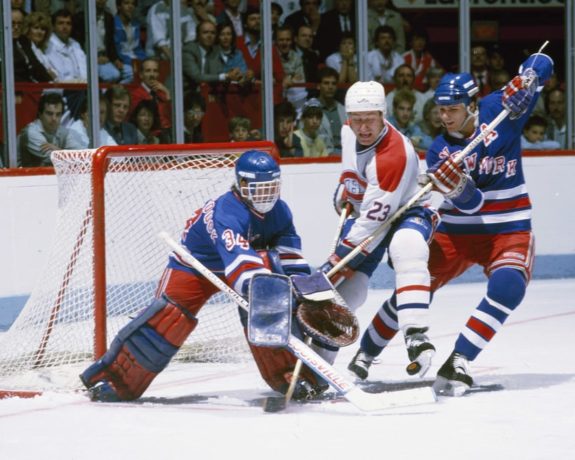
Suzuki is a very different type of player, but the leadership tone is familiar. Gainey’s influence came from discipline, preparation, and trust earned inside the dressing room rather than public displays of emotion. Suzuki has built his reputation in much the same way. His leadership shows up through consistency, composure, and the way he can be relied upon in every situation without his approach ever changing.
The Canadiens captaincy is shaped by the city, the history, and the standard set by those who came before. It is not a role built on personality. Suzuki has taken that on through his example, the steadiness of his game, the offence he produces, and the respect he has earned inside the room.
When Does “Underrated” Stop Applying?
Suzuki is no longer simply a promising young captain on a developing team. He has led Montreal back into the playoffs, with the group now pushing for top spot in the Atlantic Division. He has done so while producing at a better-than-a-point-per-game pace, earning a place on Canada’s Olympic roster, and continuing to deliver in a role that touches every part of the game.
He may not dominate headlines like some superstars, but when the discussion turns to what an NHL captain should be, responsible, composed, productive, and trusted, Suzuki increasingly fits the same description applied to the league’s most respected leaders. Calling him underrated still feels accurate. The more interesting question is how much longer that label will remain in effect.

