
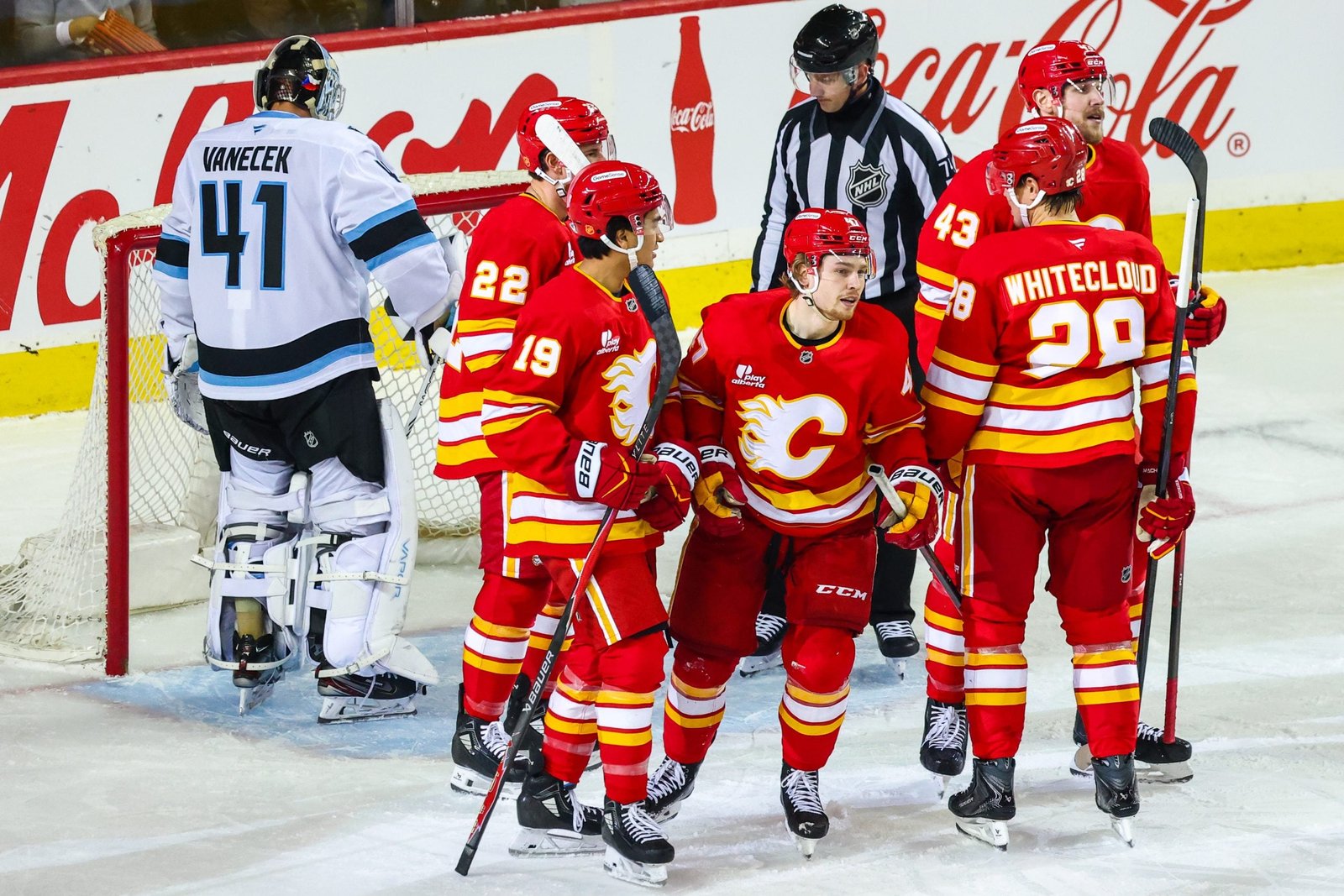
The Calgary Flames 2025-26 season was nothing short of a disaster, missing the playoffs for the fourth straight time and being on pace to finish in the bottom three in the NHL after missing the playoffs via a tiebreaker last season. The two rosters, at least until they played themselves out of playoff contention and traded key pieces, were very comparable.
The finish near the bottom of the league benefits the organization far more than another middling finish or a first-round playoff loss in the long term. It’s justified to ask, ‘What changed?’
Flames’ Biggest Issue in 2025-26
It’s easy to say the Flames don’t have enough offensive talent, even when they had Nazem Kadri, or blame trading away MacKenzie Weegar and Rasmus Andersson on the blue line, or even Dustin Wolf’s underwhelming season after receiving Calder Trophy votes after his stellar rookie campaign.
However, the Flames’ biggest issue from this season to last wasn’t necessarily what those guys brought to the table. The number one problem was not playing fast enough.
If you look at the NHL EDGE data, the Flames rank 31st in max skating speed, 32nd in 22+ mph bursts and 20-22 mph bursts, then 30th in 18-20 mph bursts. The biggest difference compared to their 2024-25 numbers was the max skating speed, which the Flames ranked seventh in last season.
Now, this isn’t to say the Flames need faster players or just need to skate faster to win more games. It’s obviously a much more complex issue, but in the simplest terms, the Flames are struggling to create time and space, which is preventing them from using the speed they showed last season.
This is evidenced by the Flames spending the second-most time in the neutral zone and ranking 23rd in offensive zone time this season, compared to 2024-25, when they ranked 7th in time spent in the neutral and defensive zones and had the eighth-most time in the offensive zone.
This is likely what led to the Flames averaging more shot attempts, unblocked attempts, scoring chances, shots, and slightly more goals per game this season than last, even though they actually averaged more expected goals, high-danger chances, and high-danger shots (via Natural Stat Trick).
An Issue Not Rooted in Talent
To be fair to the 2025-26 Flames, there are a lot of good reasons for this issue to pop up. They dealt with a number of injuries, moved key pieces, and have had several rookies popping in and out of the lineup throughout the season.
They’ve never truly been able to get comfortable with a set nightly lineup, which is also a result of them having a number of good pieces they’re evaluating for the future. But chemistry and puck movement are key to creating the time and space the Flames used last season to catch many teams off guard.
It starts with the defensive zone, where the Flames have not been as clean moving pucks to create odd-man situations in the neutral zone. Part of that is the many younger players who have debuted, learning to win puck battles and move pucks against NHL forechecking. That part will come with time.
Another part of this could be using their speed to recover defensively, create turnovers, and attack while the other team is scrambling. There are so many things you can point to when looking at what it takes to play with speed as a team.
However you want to look at it, and the many things this team can and will improve as the younger players get more experience, it’s undebatable that the Flames’ biggest issue this season was lack of space to make a play with the puck, having it taken away from them more than any other team in the NHL this season (via Money Puck).
Why Improvement Is Needed
When thinking about playing quickly as a team, it’s more about quick decision-making than foot speed. Look at the back-to-back Stanley Cup champion, Florida Panthers; they aren’t the fastest team in the world, ranking in the bottom half of the league in max skating speed in the two seasons they won the Cup. But they were consistently playing at pace, applying pressure or attacking with speed, ranking in the top 10 in 18-20 mph bursts in both of those seasons.
It’s clearly unfair to compare the two teams, but the takeaway is that the blueprint isn’t black-and-white. The top speed I referenced in the beginning, which the Flames used last season, isn’t the only way they can improve their pace to find success, but the comparison also shows improvement is needed in this area as they continue building back into a competitive team.
Related: Flames’ Season Will Be a Complete Waste if They Don’t Land Gavin McKenna
Yes, this team needs more high-end talent before they can compete, but the root of their struggles this season was a lack of time and space, and that’s not necessarily something a single superstar player can change.
This will be at the forefront of what to watch for at the start of next season as we decide whether we will see a much-improved Flames team.

