
The Calgary Flames entered the Winter Olympic break as one of the NHL’s most-watched teams on the trade market. After already making a significant move by shipping Rasmus Andersson to the Vegas Golden Knights, the expectation around the league was that more changes would follow. Three weeks later, the noise has softened — but the Flames remain firmly planted in the center of deadline conversations.
Related: Huberdeau Deserves Flames Fans Respect After Injury Reveal
With the trade deadline approaching and the Olympic spotlight fading, Calgary’s front office appears to be recalibrating its strategy. Some trade chatter has slowed, particularly around Nazem Kadri, while other names are continuing to generate strong interest across the league.
The Flames may not be rushing into another blockbuster — but they still hold several pieces that contenders are circling.
Kadri Market Quieting as Centre Supply Grows
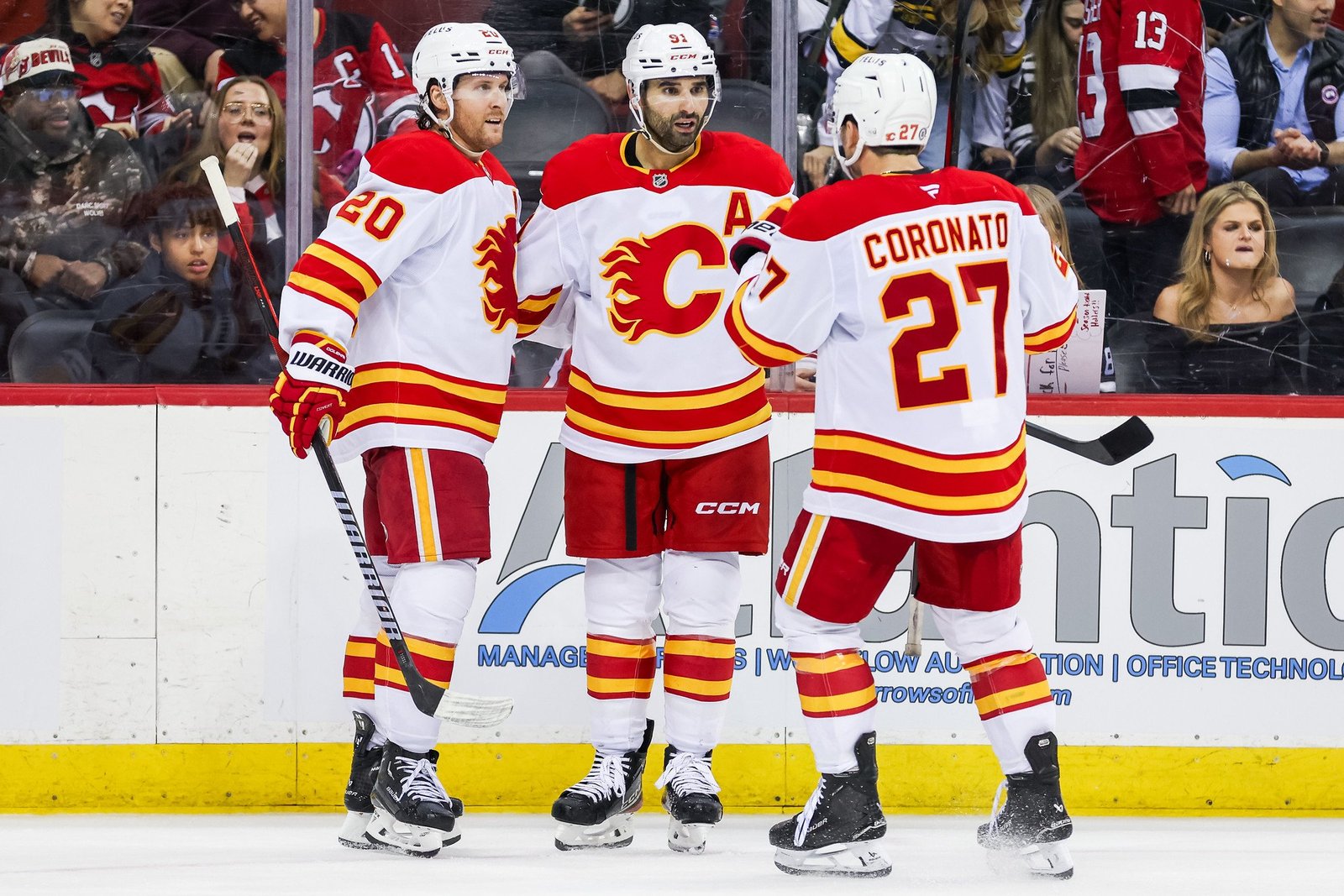
Kadri was once viewed as one of the most likely Flames to move before the deadline. His playoff pedigree, physical edge, and ability to play in high-pressure environments made him a logical target for teams chasing postseason depth. However, recent developments across the league have cooled that market.
That demand has diluted with the availability of other centremen, including New York Rangers forward Vincent Trocheck. Teams seeking a top-six, or high-end middle-six centre, now have options available to them, and that competition has flipped the leverage away from Calgary.
He still carries value, but the contract and age attached to him are a little more complicated than any rental option. To contenders who prize flexibility, he will often be less desirable in favour of short-term additions. That doesn’t mean the Flames are unable to move him, only that the urgency has faded.
A Kadri trade at this stage would probably require a team that views him as more than a rental. It would have to be a hockey move, rather than just a deadline patch.
And those kinds of deals tend to build up over time.
Blake Coleman Drawing Strong Interest
If Kadri’s market has cooled, Blake Coleman’s has done the opposite.
Coleman continues to seeking reliable top-nine depth. His versatility, defensive responsibility, and championship experience make him a classic playoff-style player — the type coaches trust in any situation.
He can play up or down the lineup, kill penalties, and provide energy without sacrificing structure. Teams that believe they’re one or two depth pieces away from a deep run are naturally circling.
Coleman also brings cost certainty and term, which adds value compared to pure rentals. For organizations wanting to add a competitive piece beyond this season, he represents a controlled asset rather than a temporary gamble.
The Flames know this.
That leverage gives Calgary flexibility. They don’t have to move Coleman — but if the right offer appears, he could fetch a meaningful return. For a club still balancing retooling with competitiveness, assets like Coleman are exactly what shape trade deadlines.
Weegar Emerging as a Premium Defensive Option
With Andersson already taken care of, the focus has shifted to MacKenzie Weegar as the next defensive trade piece out of Calgary.
Weegar is not a player expected to be picked up on the cheap. He is a legitimate top-pairing defenseman who can eat minutes in any situation. For some of the contenders who missed out on Andersson or never had a legitimate chance at him, Weegar is one of the few remaining opportunities on the higher-end skill sets on defence.
Several teams stand out as logical fits.
The Carolina Hurricanes are constantly on the lookout to strengthen their defence to aid an aggressive playing style that promotes puck possession. The Detroit Red Wings continue on their path of rebuilding the franchise and may be looking to solidify their back end with a proven commodity. The Pittsburgh Penguins, still looking to lock in their winning window, may be keen on Weegar to solidify their defence.
Each of those teams represents the profile of a buyer who places more importance on experience and trustworthiness.
The Flames, on the other hand, are in a position of power. No pressure exists to sell this player for under value. When Weegar is moved, it will only be if the Flames are offered a package that fits their template for their next iteration; that template consists of top draft picks or NHL-ready players.
Anything less, and he remains a cornerstone piece.
Flames Balancing Present and Future
The most interesting aspect of Calgary’s trade policy is the delicate balance they are attempting to achieve. This is not an entire rebuild. It is not an entire rebuilding effort. They seem to be finding a middle path, reducing the franchise where the value is highest and keeping the team competitive.
That process demands patience.
General manager Craig Conroy appears to be sending a message that the team is not going to trade players to make headlines. They showed their commitment to aggressively trading by dealing Andersson, but only if it fits their market value.
The post-Olympic landscape may ultimately determine how quickly Calgary moves next. As the suitors work to define their needs and the flexibility of their caps is crystallized, the Flames will have opportunities to get involved on favourable terms.
Whether that produces another large transaction or a lower-profile deadline, however, is undetermined at this time.
But the league is watching, and Calgary still has its cards to play.

