
Playoff hockey doesn’t reward aesthetics. It rewards teams that can take a hit, clear a rebound, make the next play under pressure, and do it again shift after shift.
The regular season lets you outskate problems. The postseason makes you solve them.
Recent Stanley Cup champions are not built by accident. Each had a true No. 1 defenceman capable of controlling a game. Each also had support players who were comfortable playing in their own zone when things got tight.
Skill matters. Durability matters more.
That brings the Montreal Canadiens into focus.
Is the top four Lane Hutson, Mike Matheson, Noah Dobson and Kaeden Guhle? Or does Alexandre Carrier step into that spot when the game tightens? Beyond them, can the third pair handle steady, well-defined playoff minutes when the matchups turn demanding?
The talent is evident. The framework is still taking shape. Recent champions began the postseason with a clear No. 1 and a settled top four. Responsibilities did not waver when the series became heavy, and reliable contributors lower in the rotation knew their assignments. Montreal has options. It does not yet have validation.
The comparatives matter. The past five champions offer a template, not in style, but in composition. Size, defined usage, minute distribution, and a defenceman capable of steering a series. Let’s take a closer look.
The Pillars of Recent Champions
Tampa Bay Lightning — Victor Hedman
Colorado Avalanche — Cale Makar
Vegas Golden Knights — Alex Pietrangelo
Florida Panthers — Aaron Ekblad
Different profiles. Same role.
Tampa Bay Lightning
2020
Victor Hedman — 6-foot-6, 230 pounds
Ryan McDonagh — 6-foot-1, 213 pounds
Erik Cernak — 6-foot-3, 230 pounds
Mikhail Sergachev — 6-foot-3, 205 pounds
Kevin Shattenkirk — 5-foot-11, 208 pounds
Zach Bogosian — 6-foot-2, 210 pounds
Average: 6-foot-3, 216 pounds
The 2020 group was built around Hedman’s dominance. He controlled matchups, drove the power play, and settled games when they tilted. McDonagh and Cernak formed the defensive pair trusted against top competition. Shattenkirk handled offensive situations.
Sergachev was the Swiss Army knife. He moved up and down the lineup, played both special teams, and could slide into different roles depending on need. Bogosian filled depth minutes and added physical presence when the series turned heavy.
The group thrived because there were options. If a pairing struggled, adjustments were internal. Nothing felt forced.
2021
Victor Hedman — 6-foot-6, 230 pounds
Ryan McDonagh — 6-foot-1, 213 pounds
Erik Cernak — 6-foot-3, 230 pounds
Mikhail Sergachev — 6-foot-3, 205 pounds
David Savard — 6-foot-2, 233 pounds
Jan Rutta — 6-foot-2, 194 pounds
Average: 6-foot-3, 217 pounds
The 2021 version leaned even harder into defensive reliability. Savard replaced Shattenkirk’s offensive element with more shot blocking and penalty-kill strength. Rutta provided steady depth minutes. Hedman still drove the top power play. McDonagh and Cernak continued to take defensive zone starts and heavy penalty-kill shifts. Sergachev filled the transition role.
Tampa did not need the exact same pieces to win again because the identity remained intact. Defined roles, size on the penalty kill, big minutes from Hedman, and forwards who committed to structure. The supporting cast shifted. The blueprint did not.
Colorado Avalanche (2022)
Cale Makar — 5-foot-11, 187 pounds
Devon Toews — 6-foot-1, 192 pounds
Erik Johnson — 6-foot-4, 232 pounds
Josh Manson — 6-foot-3, 218 pounds
Samuel Girard — 5-foot-10, 170 pounds
Jack Johnson — 6-foot-2, 225 pounds
Average: 6-foot-1, 200 pounds
The Colorado Avalanche won with pace and puck possession, but they were not fragile. Makar was Colorado’s general. He controlled the pace and created offence from the back end without sacrificing defensive responsibility. Toews complemented him with steady positional play and composure.
Erik Johnson paired with Manson provided size and defensive security, especially in tight games. Manson’s addition addressed a need Colorado had identified from previous playoff exits. Girard contributed puck movement. Jack Johnson filled depth minutes.
Makar did not need to be 6-foot-4, because the team around him absorbed the grind.
Vegas Golden Knights (2023)
Alex Pietrangelo — 6-foot-3, 210 pounds
Shea Theodore — 6-foot-2, 195 pounds
Brayden McNabb — 6-foot-4, 213 pounds
Nicolas Hague — 6-foot-6, 245 pounds
Zach Whitecloud — 6-foot-2, 210 pounds
Alec Martinez — 6-foot-1, 213 pounds
Average: 6-foot-3, 214 pounds
Pietrangelo led the Vegas Golden Knights’ back end. He handled top competition and played in every situation. Theodore provided offence and puck movement. McNabb and Whitecloud were trusted in defensive assignments. Hague added size to the rotation. Martinez brought experience and shot blocking in key moments.
With three dependable pairs, there was rarely any panic, no scrambling and no sheltered minutes deep into the playoffs.
Florida Panthers
2024
Aaron Ekblad — 6-foot-4, 220 pounds
Gustav Forsling — 6-foot-1, 198 pounds
Brandon Montour — 6-foot, 199 pounds
Oliver Ekman-Larsson — 6-foot-2, 200 pounds
Niko Mikkola — 6-foot-6, 205 pounds
Dmitri Kulikov — 6-foot-1, 204 pounds
Average: 6-foot-2, 205 pounds
The Florida Panthers’ 2024 group was extremely talented and rugged. Ekblad handled top matchups and played in every situation, including power play and penalty-kill. Forsling logged major penalty-kill minutes and moved the puck cleanly at five-on-five. Montour quarterbacked the power play and added offence from the blue line. Ekman-Larsson provided steady second-unit power play time and reliable even-strength minutes. Mikkola and Kulikov were regulars on the penalty kill, trusted to protect the slot and close out games.
2025
Aaron Ekblad — 6-foot-4, 220 pounds
Gustav Forsling — 6-foot-1, 198 pounds
Seth Jones — 6-foot-4, 220 pounds
Niko Mikkola — 6-foot-6, 205 pounds
Dmitri Kulikov — 6-foot-1, 204 pounds
Nate Schmidt — 6-foot, 198 pounds
Average: 6-foot-2, 208 pounds
Seth Jones effectively stepped into the workload Ekman-Larsson vacated, taking on heavy minutes at even strength, first-unit power play time, and penalty-kill responsibility. Ekblad remained an anchor, although at times Jones and Mikkola logged heavier minutes. Forsling continued to handle the tough defensive assignments and penalty-kill minutes. Kulikov stayed central to the defensive rotation, and Schmidt filled secondary power-play time and timely offence.
The transition from Ekman-Larsson to Jones or Montour to Schmidt did not disrupt the structure because the identity did not change. Florida’s blue line is built around defined roles, accountability, and a clear team culture. Replacing a piece does not require reinvention. It requires the next player to fit the Panthers’ clearly defined template.
Montreal Canadiens Then (2021)
Shea Weber — 6-foot-4, 230 pounds
Ben Chiarot — 6-foot-3, 234 pounds
Joel Edmundson — 6-foot-4, 221 pounds
Jeff Petry — 6-foot-3, 198 pounds
Brett Kulak — 6-foot-2, 192 pounds
Alexander Romanov — 6-foot-1, 209 pounds
Average: 6-foot-2, 214 pounds
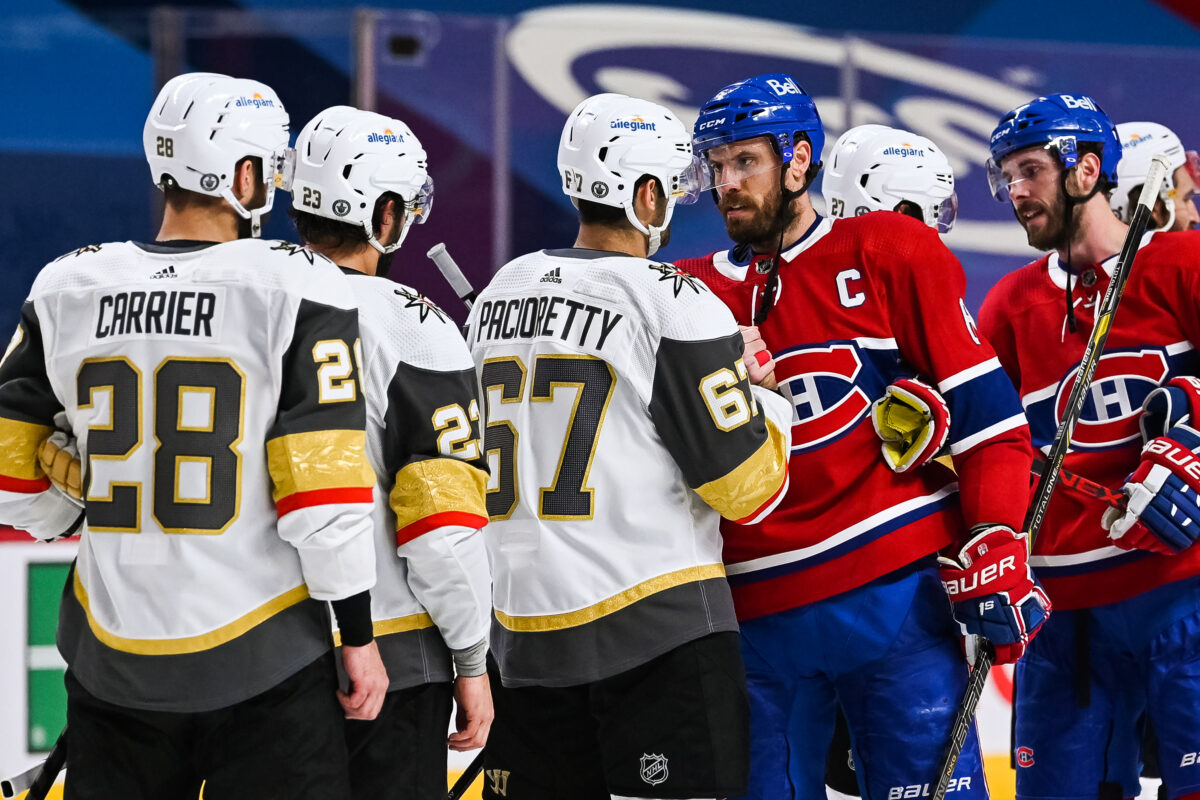
The 2021 Montreal Canadiens were direct and unapologetic. Weber set the tone physically and emotionally. Chiarot and Edmundson were mean, clearing the net front and leaning on opposing forwards. Petry advanced play when lanes opened and logged heavy minutes. Kulak provided mobility in support, and Romanov added energy and edge, albeit in limited minutes.
Related: 3 Defencemen the Canadiens Should Target at the Trade Deadline
They defended low, protected the middle, and relied heavily on Carey Price to erase what slipped through.
The penalty kill ran at 85.8 percent. They killed 28 consecutive penalties across 12 games and scored four shorthanded goals. That is discipline under pressure.
Montreal Canadiens Now
Lane Hutson — 5-foot-10, 170 pounds
Noah Dobson — 6-foot-4, 201 pounds
Kaiden Guhle — 6-foot-3, 203 pounds
Mike Matheson — 6-foot-2, 196 pounds
Arber Xhekaj — 6-foot-4, 240 pounds
Alexandre Carrier — 5-foot-11, 174 pounds
Jaden Struble — 6-foot, 205 pounds
Adam Engström (AHL) — 6-foot-2, 193 pounds
David Reinbacher (AHL) — 6-foot-3, 200 pounds
Average: 6-foot-2, 200 pounds
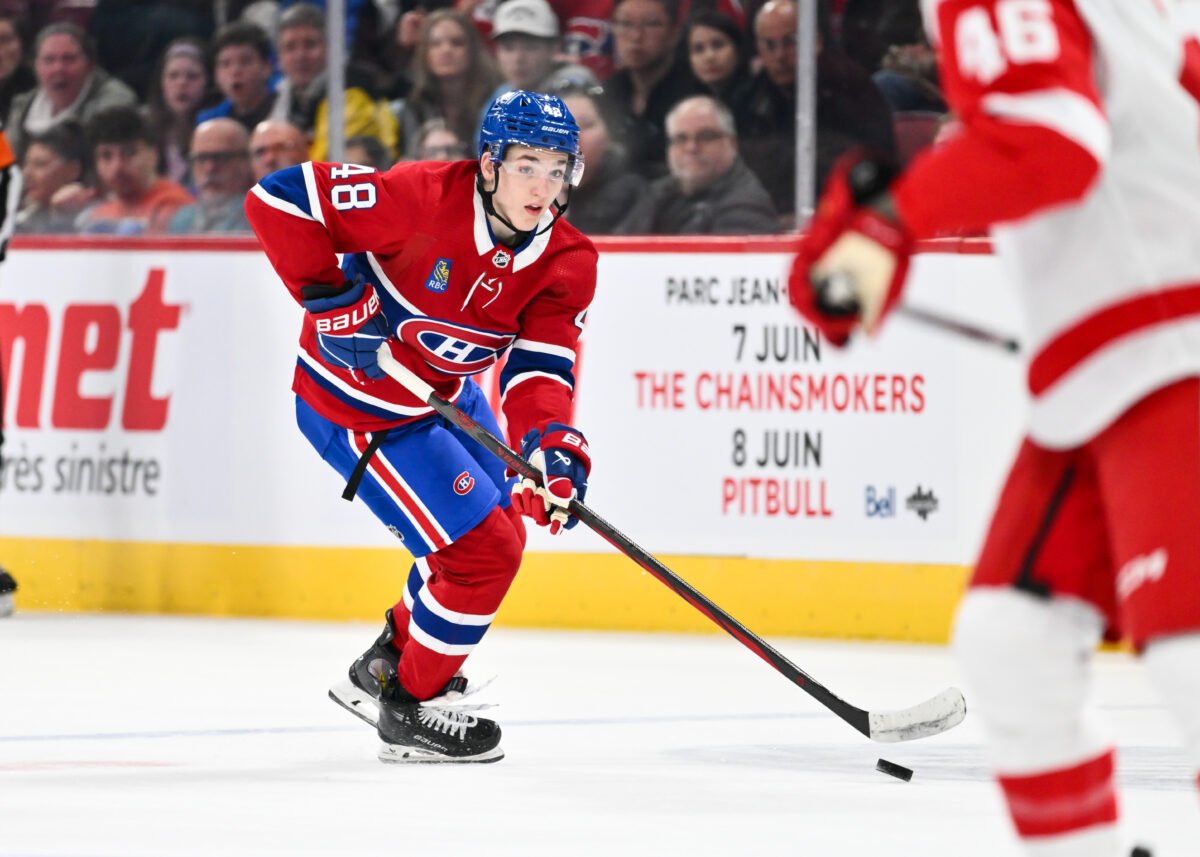
This group is constructed with a different priority.
Hutson is not just a puck mover. He plays like a fourth forward without giving anything back defensively. His vision is rare. He sees plays before they open and manipulates coverage in real time. Very few defencemen in the league can do what he does. He changes how a team attacks.
The only real question is accumulation. One playoff series is manageable. Four rounds is different. Opponents will lean on him every shift. Regular season evidence suggests he can handle pressure. A deep run is a different level of sustained contact and attention.
Matheson is the current stabilizer. He takes top-line matchups, handles the penalty kill, and skates well enough to defend without chasing hits. He is not overly physical, but he is not small either. The concern is workload over multiple rounds. How much can he absorb before fatigue becomes a factor?
Dobson completes the top three. Size, mobility, and puck movement are all there. He still has to prove he can elevate defensively in tight series rather than simply contribute offensively.
After that, the certainty drops.
Guhle can fill out the top four. He skates well, closes quickly, and plays a direct style suited for playoff hockey. Durability is the issue. His game invites contact. Carrier can also handle top-four minutes. He competes and usually absorbs punishment well, though he tends to get crushed at least once a game. He usually pops back up. Last year’s playoffs were the exception when Tom Wilson caught him clean. Maybe Guhle could benefit from learning how Carrier absorbs hits and rolls off contact.
After the top four, uncertainty begins. Xhekaj could play a significant role in a playoff series. He is intimidating and shifts momentum with his physicality. Bottom-pair defencemen are often at their best when they are not noticeable. That standard does not fully apply to him. Montreal needs him to be physical. What it cannot afford is overexuberance, unnecessary penalties, or moments where emotion overrides positioning. Playing hard is required. Playing out of control is not.
Struble competes and brings athleticism, but nothing from the regular season guarantees he can handle sustained, high-leverage playoff minutes. Engström could challenge for that role if needed. The production and skill are evident. NHL playoff experience is not.
Reinbacher is definitely not part of this season’s equation. Injuries have stalled his momentum, and until he proves he can stay healthy, durability and overall ceiling remain open questions.
The Avalanche Question
The Avalanche did not win the first time they looked ready. They lost in the second round three straight years before breaking through. Each loss exposed something. Each offseason corrected something. When Colorado finally won, they did it convincingly. Two series ended in sweeps. The other two ended in six games. The roster had matured. The core had grown through previous exits. Management identified what was missing and added the right pieces at the right time.
That context matters. The Avalanche had elite skill at the top and size and experience layered behind it. There are similarities to what Montreal is building. The difference is timing.
Montreal is still the youngest team in the league. Its best defenceman is just beginning his NHL runway. Its top three are still defining what they are in playoff hockey. The window is not closing. It is opening.
The Canadiens have once again exceeded expectations and are seemingly ahead of schedule. Management has drafted well, developed well, and resisted shortcuts. There is no reason to think they cannot continue building patiently and add what is needed when the time is right.

