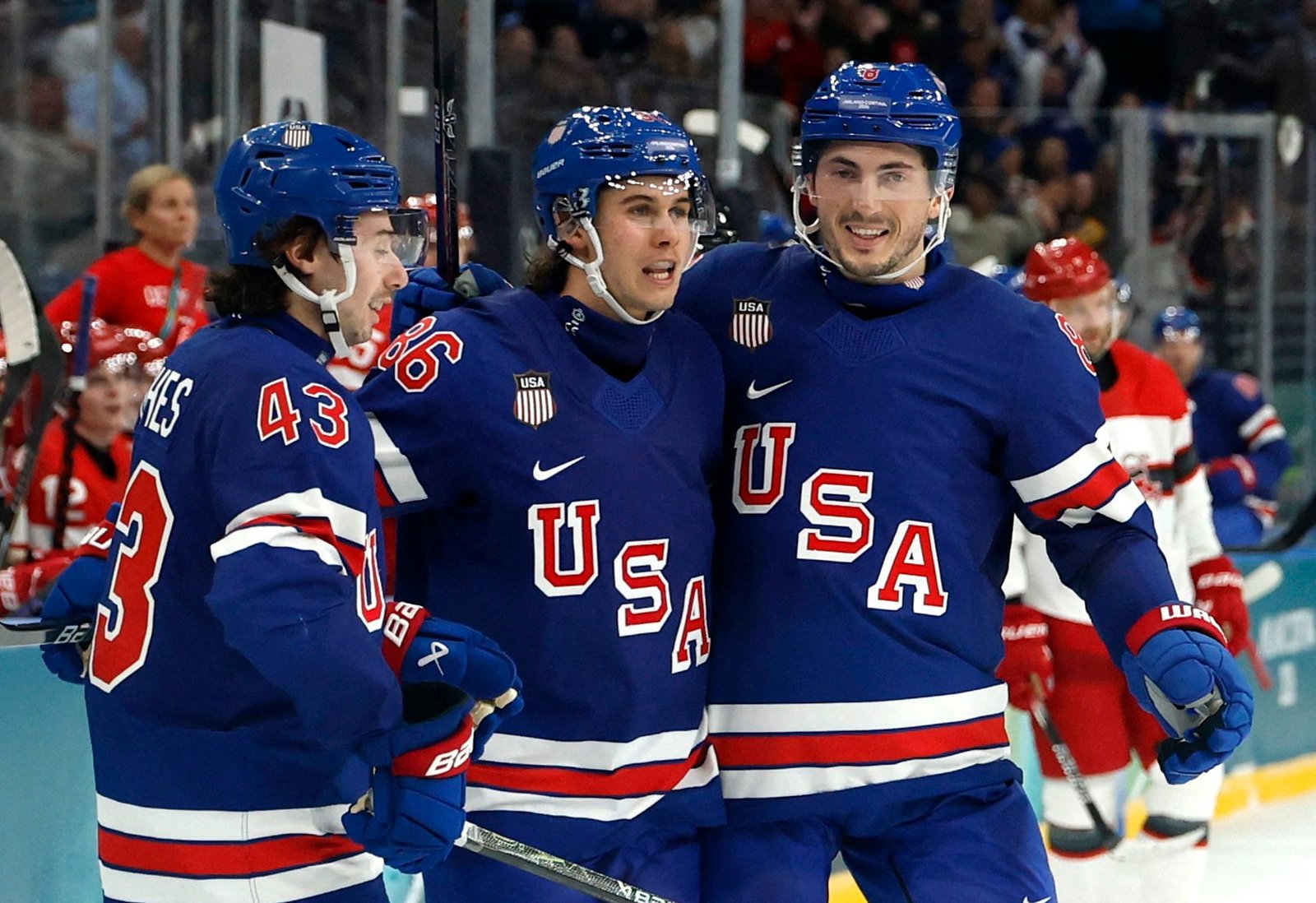
After a long 12 years, National Hockey League (NHL) players have finally returned to the Winter Olympics. Just as we saw at the 4 Nations Face-Off, International Hockey is one of the quickest ways to grow the game.
But in those 12 years, technology — and more specifically content creation, has come a long way. As a result, players, teams and leagues can see exponential growth with attention-grabbing social media posts reaching an audience who would not typically know — or care — about the sport otherwise.
Related: Guide to the 2026 Winter Olympics Men’s Hockey Tournament
IOC’s Stubbornness Stunting Not Just Hockey’s Growth, But the Olympics as a Whole
And that’s where the International Olympic Committee (IOC) hurts not just themselves, but the growth of all winter sports in the 2026 Olympic Games; they’ve prohibited all video clips from the games, whether from broadcast, media or fan, from being posted on social media. Any infringing content is often removed within minutes, if not seconds.
Aside from the Olympics themselves, only entities with Olympic broadcast rights are allowed to post highlights and clips as they wish. Therein lies a few issues:
First, there are typically a handful of Olympic sports going on at once. Thus, it becomes almost impossible for a single outlet to give a full event the social coverage it deserves. Furthermore, all content posted by local rightsholders (ex. NBC, CBC, etc.) is geo-blocked, so fans outside the jurisdiction are barred from seeing it.
Good try, NHL: pic.twitter.com/Yv5g9AJlRg
— Seth Rorabaugh (@SethRorabaugh) February 12, 2026
At this point, you may be thinking: Isn’t it standard practice for an entity to take down clips that were not posted by rightsholders?
Well, yes and no. Let’s preface by saying it’s certainly understandable that the IOC wouldn’t want random people taking their clips, especially if there’s malicious intent or the perpetrator is trying to profit off said footage.
But it’s the gray areas that are stricter for the Olympics. For example, if a fan posts a video at an NHL game, it is very rarely (if ever) taken down. In fact, the NHL has directly promoted fan videos in the past, like when Jack Hughes tossed his stick into the crowd and the league used this fan’s footage in a commercial.
At the end of the day, short clips can bring tons of eyes to the sport. The NHL has seemed to show some apprehension to taking clips like that down, and rightfully so. More eyes equals more attention, which equals higher viewership, more ticket/merchandise sales and most importantly: more money!
Now, with that being said, the NHL and IOC are fully within their rights to (and should!) take down any broadcast/fan clips that undermine their core values or paint the league in a negative way. But here’s the reality: the 4 Nations Face-Off (and other big hockey moments) would have never exploded in popularity if the NHL was as strict as the IOC. TikToks and Instagram Reels during 4 Nations garnered millions of views en route to the U.S. vs. Canada final drawing 16 million+ viewers across North America.
Fundamentally, it makes little sense to take down content that doesn’t negatively impact the IOC in any way. Now, with the global scale of the Olympics, maybe they’re worried they can’t police it well enough — so no footage is better than a potential disaster.
Fine. But here’s the simple solution. At the very least, the Olympics themselves need to have a separate social media account for each sport and post any and every even semi-notable clip. All it takes is one to go viral to cause a sport to explode in popularity.
Not sure who needs to hear this but stop doing this for Olympic sports, whatever tiny amount of revenue you’re going to gain from aggressively protecting the licensing is dwarfed by losing the only chance for people to get interested in your sport in 4 years. pic.twitter.com/txIY9Z1vY5
— RedditCFB (@RedditCFB) February 13, 2026
Furthermore, local broadcasting should do the same. It doesn’t have to be complex; even creating an internship and letting college kids add Olympic coverage to their resume would suffice.
This isn’t an argument to let fans run rampant and illegally rip clips for engagement. But this is an argument to make sure all notable events on the world’s biggest stage are viewable to all. That is how you create fans and continue to grow the prestige of all Olympic sports.
NHL Teams Work Around Strictness
In fact, the IOC is so strict that not even the NHL or its teams can post goal footage. They’re limited to just pictures, which are delayed in timing and struggle to effectively convey a moment as well as a video can.
And furthermore, we live in a video-driven society. It’s near impossible for even the coolest of photos to gain as much traction as the video of said event.
Some NHL teams — and the league itself — have even created funny “workarounds” to show goals. For example, the New York Islanders “recreated” Bo Horvat‘s goal for Team Canada using bobbleheads.
Even NHL teams are banned from showing highlights of their players scoring in the Olympics
Way to grow the game, folks
Hockey, man https://t.co/mofT8clLxj
— Joe Schad (@schadjoe) February 12, 2026
It adds some comedic and informative value, sure, but no non-hockey fan is looking at that clip and going, “Wow! I want to watch a hockey game now!”
Olympic copyright rules are INSANE https://t.co/hLY6HN8Lsr
— Leah Merrall (@leahmerrall) February 12, 2026
Until they revise their practices, the Olympics risk remaining a gated community in an era when the world’s attention is won in open feeds. Hockey’s return to the Winter Games after a long hiatus deserves better than bobbleheads and Microsoft Paint…and the IOC has the power to make that happen.

