
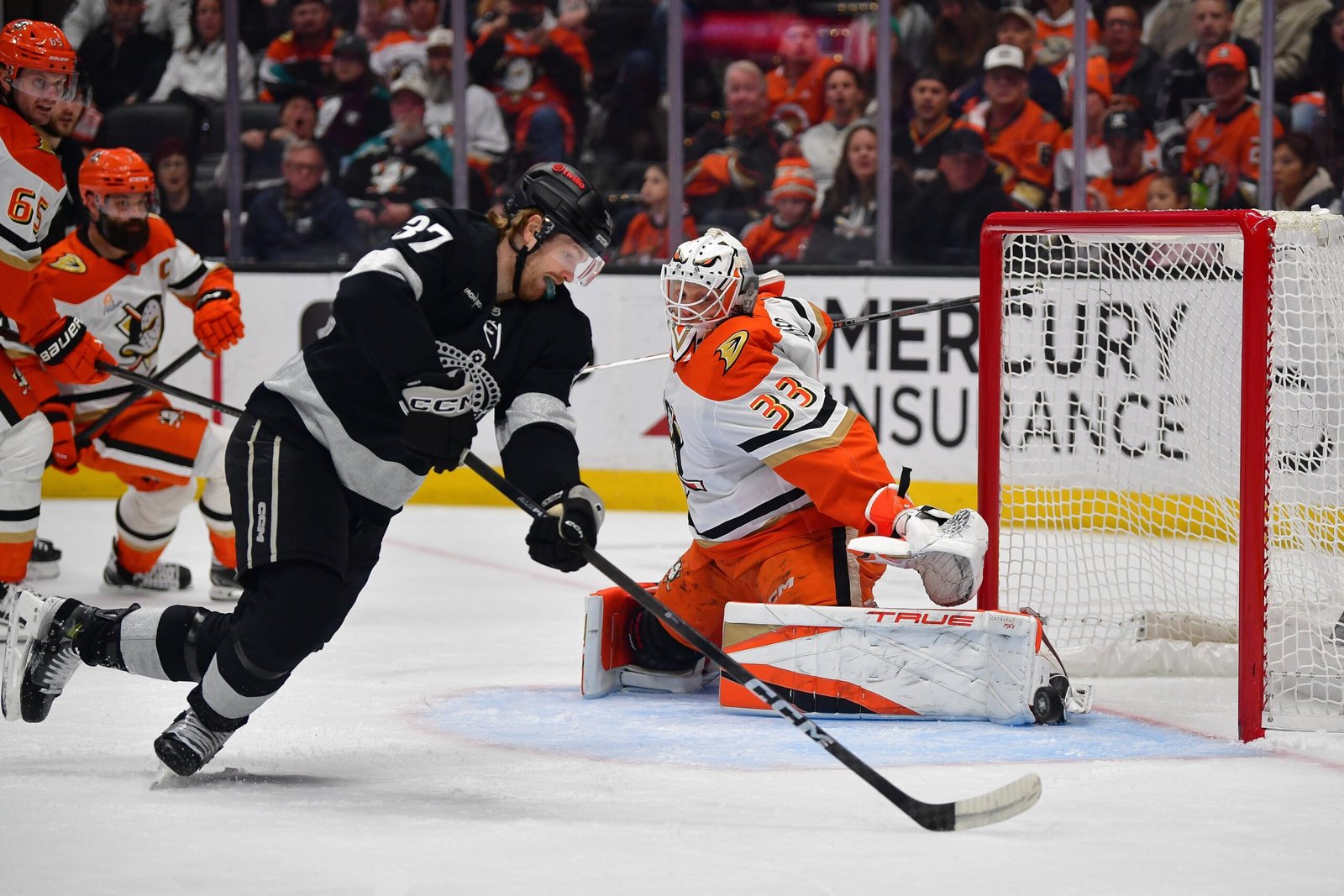
The Los Angeles Kings’ 2025-26 season has felt less like a continuation of a long-term plan and more like an organization in the middle of an identity crisis. On paper, this is a team that should be taking a clear step into a new era: Anže Kopitar is nearing retirement after a successful career, Brandt Clarke and Quinton Byfield are emerging, and the front office has invested heavily in a core that’s supposed to push them forward. Instead, the on‑ice product has been messy, directionless at times, and out of sync with what fans expected from a franchise that used to be defined by structure, discipline, and a clear sense of who it was.
A Franchise in Tradition
At the core of the identity crisis is the fact that the Kings are caught between two timelines. They still lean on franchise icons like Kopitar and Drew Doughty for leadership and stability, yet they are also trying to hand more responsibility to players like Clarke, Byfield, Kevin Fiala, and Adrian Kempe. The result has been a style that doesn’t fully commit to either the heavy, suffocating defensive identity that won Cups a decade ago or the fast‑paced, high‑skill game today’s NHL demands.
This shows up in their night‑to‑night inconsistency. Some games, they look like a modern, aggressive team pushing the pace and creating quality chances. Other nights, they revert to slow, cautious play, getting pinned in their own zone and taking low‑percentage shots from the outside. Without a consistent identity, they don’t have a reliable “default game” to fall back on when things go wrong or messy.
Most Games End in Overtime
One of the clearest statistical reflections of this season is how often the Kings end up in overtime. They’ve played among the most overtime games alongside the Vegas Golden Knights this season, posting a 22-16-13 record through 51 games. Needing extra time so often can mean: A) They can’t close out games when they have the lead. B) They don’t start on time and spend 40 minutes chasing before finally waking up. And C) They lack the hunger instinct and clarity of identity to dictate the pace in regulation.
Good teams occasionally go to overtime; confused teams stay there. The Kings’ overtime mass suggests a group that’s constantly reacting instead of dictating; rarely taking full control. When every night is a guessing game in extra time or a shootout, that’s not a group cemented in identity; it’s an organizational shrug.
Lost Without a Plan
Identity in hockey is built on habits: how you break out, how you defend the crease, how you forecheck, and how you respond after a turnover or a bad shift. The Kings’ biggest problem is that the details that used to define them have vanished. There are too many stick penalties in bad areas, blown coverages in front of their own net, and turnovers at both blue lines that feed the opposing team’s transition.
These aren’t talent issues; they’re simply clarity and standards issues. Some of the players don’t look consistently sure about what’s expected of them in critical moments. When a team knows exactly what it is, its play in close games and intense situations reflects that. For the Kings, those moments often expose confusion more than identity.
Layered on top of the on‑ice struggles are off‑ice rumors that have only deepened fans’ anxiety that management doesn’t fully understand what this team needs. Reports and speculation have linked the Kings to a potential move for Evander Kane, currently with the Canucks, as Vancouver entertains roster changes.
Related: Kings Week Ahead: Schedule & Storylines – Kuemper Day-to-Day, East Coast Road Trip and More
From a strictly hockey standpoint, Kane’s name always comes up because of his ability to score and play a physical game. Teams looking for grit and a secondary scoring presence tend to at least “kick the tires” on that profile. But for a fan base already uneasy about the team’s direction, the idea that the Kings might pursue Kane has not landed well. Many fans see it this way as the team’s core problems are structure, discipline, and a clear plan, not just “one more scorer.” Additionally, Kane carries significant baggage and risk. Adding him can be read as a desperation move rather than a strategic step in a team‑building approach.
Whether the rumors ever transition into real negotiations or not, the mere fact that they’re circulating in a season like this highlights the disconnect. Fans want a clear commitment to a certain kind of Kings hockey; instead, they hear about potential Band‑Aid solutions that don’t address the core crisis of “who are we?”
Solving this isn’t as simple as one trade, one line change, or one speech. The Kings need to understand and define their core style while committing to it (from systems to roster decisions). Align coaching, management, and leadership so that everyone is enforcing the same standards. Most importantly, listen to the fanbase not in terms of making moves to appease them, but in understanding why the current outcome feels so off from what “Kings hockey” is supposed to be.
To create a clear organizational identity, the Kings must focus on leadership, development, and decision-making around a standard of play. Coaches, the general manager, and team captains need to deliver the same message and expectations, reinforcing them through video, meetings, and daily practice habits to reduce repetitive mistakes. The organization should also take seriously why fans feel the current on-ice result no longer resembles “Kings hockey.” Roster decisions, ice time, and defined roles should be based on how well players execute that identity, rather than prioritizing physical build alone.
Until that happens, overtime totals will keep climbing, the rumors will keep churning, and every big-name trade target will look like a shortcut instead of part of a cohesive plan. The talent is there for Los Angeles to be much better than this. What’s missing is not names on the roster, but a shared answer to a simple question: “What kind of team are we?”

