
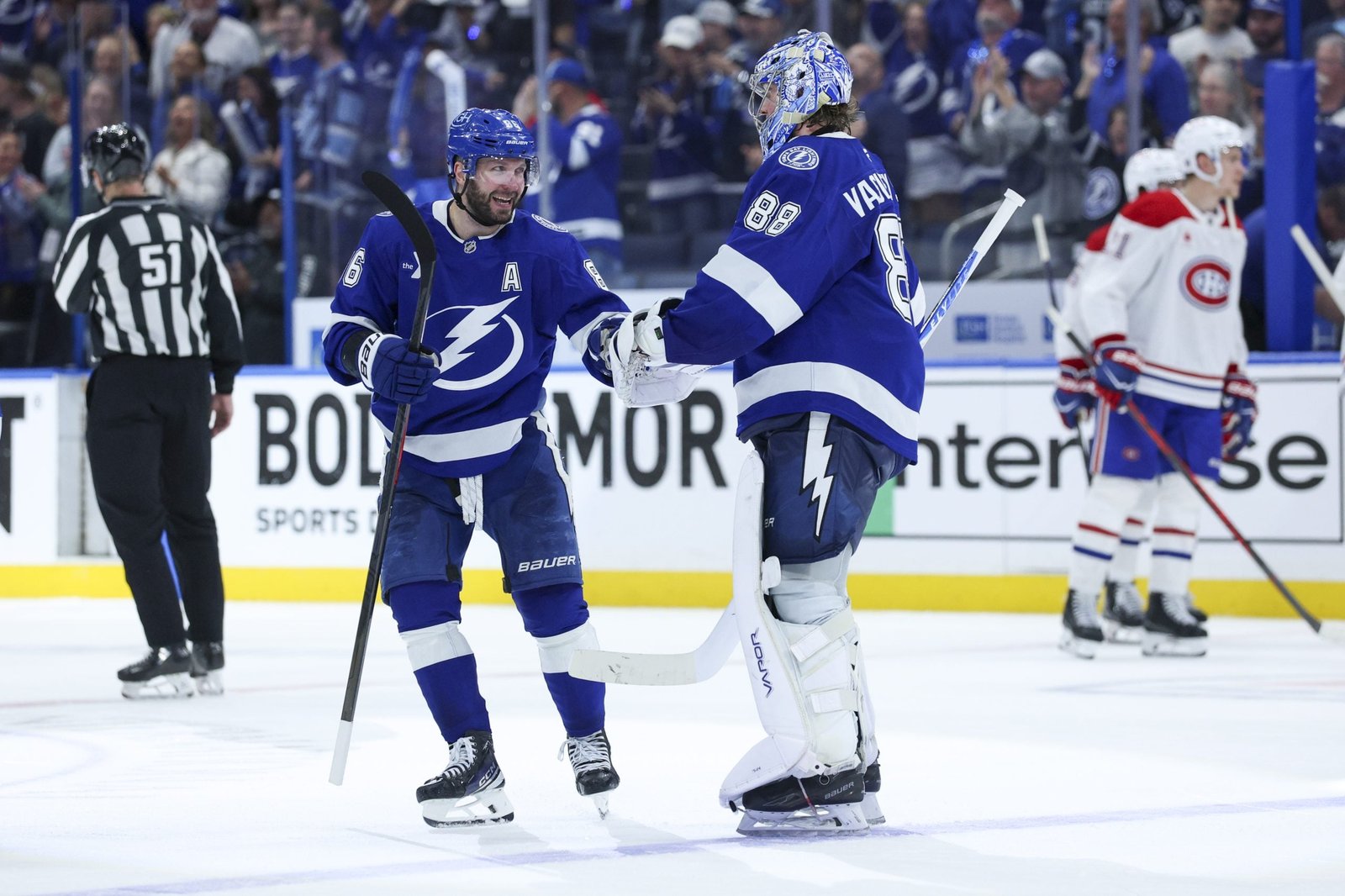
The Tampa Bay Lightning delivered the kind of response expected from a veteran playoff team, defeating the Montreal Canadiens 3-2 in overtime on April 21 to even the series at 1-1.
After letting Game 1 slip away, Tampa Bay came into Game 2 with a more structured, composed approach. While the game remained tight throughout, the Lightning showed patience, leaned on their core players, and ultimately dictated play when it mattered most — especially in overtime.
“That isn’t much of a concern as to how we lost it, if that’s going to be how we keep going then the series won’t be as long as we thought,” stated Jon Cooper when asked about how frustrating it is chasing a series after being down 1-0.
Here are three key takeaways from the Lightning’s Game 2 victory.
Lightning’s Core Leads the Way When It Matters Most
Playoff hockey often comes down to big moments from big players, and the Lightning’s core delivered in all phases of this game.
Brandon Hagel opened the scoring in the first period, continuing his strong postseason. His ability to generate offense off the forecheck and create chaos in the offensive zone has become a consistent theme for Tampa Bay. Hagel isn’t just producing — he’s driving play and setting the tone for the Lightning’s attack. His early goal helped Tampa Bay establish momentum after a shaky start to the series.
Montreal responded later in the period, but Tampa Bay didn’t waver. Instead, they stuck to their structure and waited for their opportunity.
That moment came in the third period, when Nikita Kucherov scored a clutch game-tying goal to make it 2-2. The play itself was a perfect example of Kucherov’s elite offensive instincts — finding space, reading the play, and finishing under pressure. In a tight playoff game where chances are limited, players like Kucherov are the difference-makers.
Then came overtime.
Defenseman J.J. Moser stepped up with the biggest goal of the night, scoring the overtime winner and finishing with a goal and an assist. While not traditionally viewed as one of Tampa Bay’s offensive leaders, Moser’s impact highlighted the importance of contributions throughout the lineup.
That’s what makes Tampa Bay so dangerous in the playoffs. It’s not just their stars — it’s the combination of elite talent and depth stepping up at the right time. When players across the lineup are contributing, it becomes incredibly difficult for opponents to key in on one specific threat.
Andrei Vasilevskiy Proves Once Again Why He’s Elite
If there’s one constant for the Lightning in the playoffs over the years, it’s the reliability of Andrei Vasilevskiy — and Game 2 was no exception.
While the Canadiens generated 27 shots, several of those came in high-danger situations, particularly during moments where Montreal held momentum after taking the lead. Late in the second period, Josh Anderson gave the Canadiens a 2-1 advantage, and it could have easily shifted the game further in Montreal’s favor.
But Vasilevskiy held firm.
He remained calm, controlled rebounds effectively, and made key saves to keep Tampa Bay within striking distance. That composure allowed the Lightning to regroup and eventually tie the game in the third period. What stood out most wasn’t just the saves — it was the timing of them.
In the playoffs, it’s not about how many saves a goalie makes, but when they make them. Vasilevskiy delivered in critical moments, including late in regulation when Montreal pushed for a go-ahead goal. Then came overtime, where the Lightning controlled play, but any mistake could have been costly. Vasilevskiy stayed sharp despite limited action, ready if called upon.
He finished the game with a .926 save percentage, earning second-star honors. On the other side, Jakub Dobes also played well, but Vasilevskiy’s experience and ability to handle pressure situations proved to be the difference.
If Tampa Bay is going to make a deep playoff run, this is exactly the level of performance they need from their goaltender — and it’s something they’ve come to expect.
Lightning’s Patience and Pressure Tilted the Ice
Perhaps the most important takeaway from Game 2 was Tampa Bay’s ability to stay patient and gradually take control of the game. Early on, Montreal dictated the pace, outshooting Tampa Bay 12-6 in the first period. The Canadiens played a physical, structured game, blocking shots and limiting Tampa Bay’s ability to generate sustained offense.
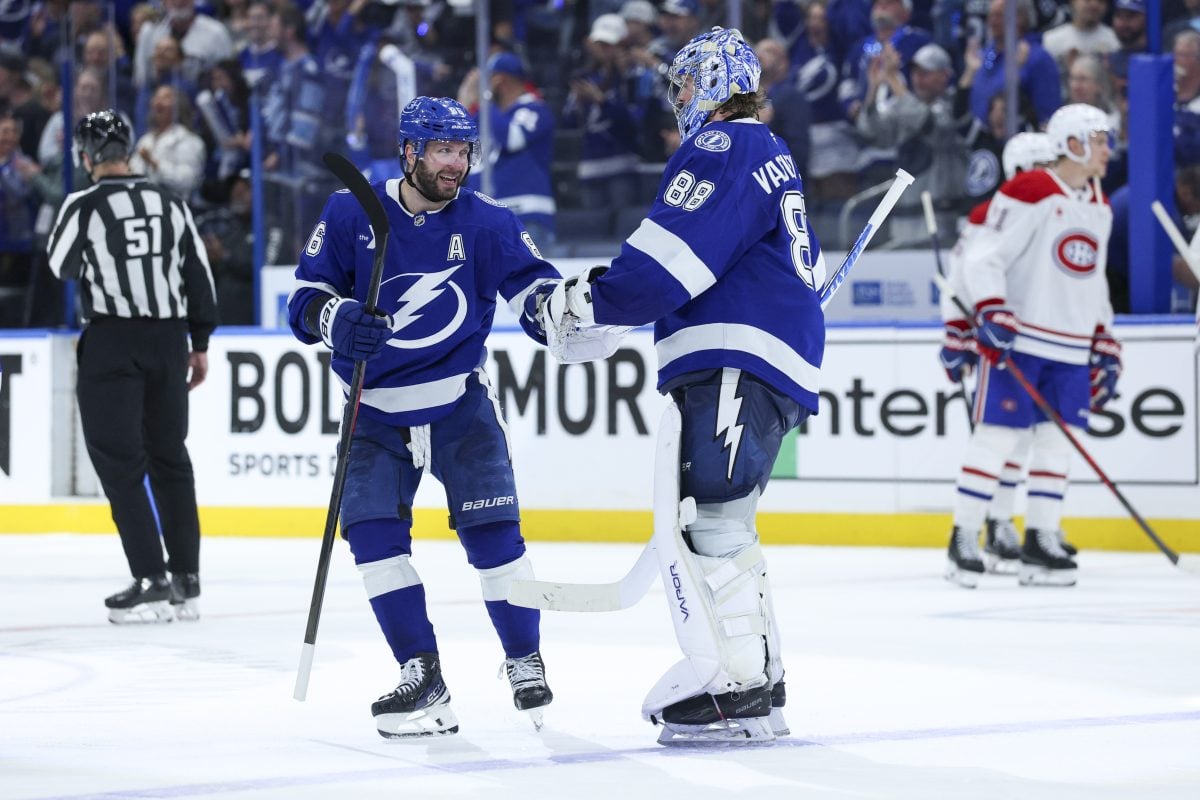
But instead of forcing plays or becoming frustrated, the Lightning adjusted. They began to establish cleaner breakouts, improved their puck management through the neutral zone, and spent more time cycling in the offensive end. By the second period, the shot totals began to even out, and by the third, Tampa Bay had taken control.
They outshot Montreal 34-27 overall, but the more telling stat came in overtime, where the Lightning dominated 9-0 in shots. That level of control doesn’t happen by accident. It’s the result of consistent puck possession, strong support in all three zones, and a commitment to structure. Tampa Bay didn’t try to win the game in one shift — they built toward it over time.
Even when trailing 2-1, there was no panic in their game. The Lightning trusted their system, waited for their chances, and eventually broke through.
Montreal deserves credit for its defensive effort. The Canadiens blocked 25 shots and delivered 43 hits, showing a willingness to sacrifice and play a physical style. But that approach can be difficult to sustain over a full game — especially against a team that thrives on puck movement and offensive pressure.
“Look at the mirror here as a group, come back with a better effort overall,” said Ryan McDonagh postgame when asked about what it will take to win on the road against this Canadiens team.
By the time overtime arrived, it was clear which team had momentum.
And it didn’t take long for that to translate into a result, as Moser capitalized to end the game and even the series.
Looking Ahead
Game 2 was a textbook example of how experienced playoff teams respond to adversity. The Lightning didn’t dominate from start to finish, but they controlled the areas that mattered most. They got timely goals from key players, elite goaltending from Vasilevskiy, and a composed team effort that allowed them to take over as the game progressed.
For Montreal, there are still positives to build on. Their structure, physicality, and willingness to block shots kept them competitive throughout the game. But Tampa Bay showed that over time, their skill and depth can tilt the ice.
With the series now tied, the momentum has shifted back in Tampa Bay’s favor. If the Lightning continue to play with this level of patience and execution, they’ll be in a strong position moving forward.
Free Newsletter
Get Tampa Bay Lightning coverage delivered to your inbox
In-depth analysis, breaking news, and insider takes – free.
