
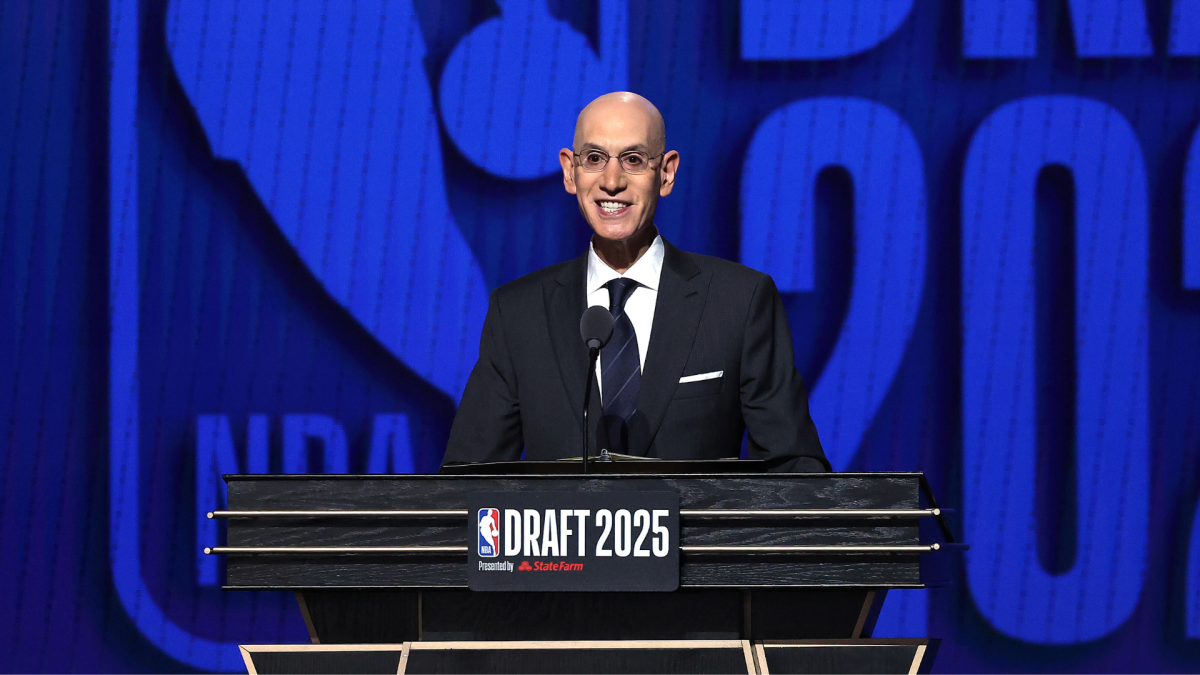
On Thursday, the NBA officially passed lottery reform with a vote from the league’s board of governors. The odds have now been flattened into what the league is calling a “3-2-1” system in which 37 total lottery balls are allocated to 16 teams in a manner that is only minimally tied to regular-season record. You can find a more thorough breakdown of the revised lottery format and who it affects most here, but for now, we’re going to focus on one, key component: the sunset provision.
These changes are not, at least for the time being, permanent. They go into effect for the 2027 NBA Draft, but expire after three drafts have passed. Not coincidentally, the collective bargaining agreement has a mutual opt-out after the 2028-29 season, meaning almost every mechanism for player movement is theoretically subject to change.
Adam Silver once called himself an “incrementalist” when it comes to major reforms, and the changes that just passed, while significant, are ultimately incremental reforms of an existing system. But with this new system expiring entirely in 2029 along with the CBA, the NBA now has three years to evaluate the revised lottery while potentially considering entirely new ways of allocating incoming talent. The 2030 NBA Draft, in other words, could be a complete departure from anything we’ve seen before. According to The Athletic, there’s a very good chance that it will be.
The leading contender to replace the lottery in 2030, according to Vorkunov, is a draft credit system. Such a structure is reportedly favored by a number of team executives. Implementing it on the fly, as the NBA did with these reforms, would have been impractical and defied Silver’s “incrementalist” leanings. But now, the NBA can use the next three years to evaluate the concept before deciding if it wants to move forward with it. So all of this begs the question… what exactly is a “draft credit” system?
How would the draft credit system work?
Broadly, the idea is that teams would be allocated a certain number of credits. Let’s say 100. Those credits would only replenish by some amount annually, and a team’s total would roll over from year to year, so you’d never lose credits unless you spend them. Teams could trade for more credits in much the same way that they trade for draft picks now.
And then, at some point between the end of the regular season and the draft itself, teams would bid those credits for specific slots in the draft. If you want the No. 1 pick badly enough, you’re free to bid all of your credits on it. If you’d prefer to go bargain-hunting later on, you’re free to do so as well. Teams could strategically build multi-year plans, hoarding credits for several years or going all-in on a single draft.
These are, again, the broad strokes. The league would have three years to consider a variety of different proposals. Conveniently, The Ringer’s Zach Lowe got his hands on one, specific proposal made by the Boston Celtics. This is what Lowe shared, directly from that proposal:
- Teams would retain one pick per round in each draft. Those picks would be unattached to specific draft slots, so in theory, a team could trade for someone else’s first-round pick, but where that pick lands would still depend on the credit bidding system.
- In late April, each team would submit a secret credit bid for each of their slots.
- In early May, the league publishes all of the bids on lottery night.
- The top four bidders for the No. 1 pick would be put into a lottery for that selection, meaning teams could not simply bid their way to a guaranteed top slot. The odds of that lottery would be proportional to the amount of credits each of the four teams bid.
- The team that wins that mini lottery gets the No. 1 pick. They pay halfway between their own credit bid and the lowest credit bid for it.
- The fifth-highest bidder is then entered into another mini lottery for the No. 2 pick. The odds are adjusted based on the bids for the No. 2 pick, and the same exercise is applied through the rest of the first round.
- Teams would be docked 20 credits for every playoff series that they win, theoretically giving the worst teams more access to top draft talent.
- Teams could bid zero credits and simply pick at the end of the round.
- The NBA could fine teams by docking them credits if they believe those teams are tanking.
This is, again, an extremely preliminary proposal, and it’s just one of many that could be out there. We’re three years away from anything getting considered officially. But such a system would effectively overhaul the drafting process, so let’s dig into some of the questions and consequences of such a drastic change.
The biggest questions about a draft credit system
Immediately, four major questions come to mind here…
1. How exactly would the bidding be conducted?
Boston’s proposal laid out one method, and it would retain a degree of randomness through those mini lotteries. Teams would probably prefer to eliminate that randomness. It’s difficult to imagine the NBA ever directly allowing teams to bid credits for players, but teams would probably prefer to at least bid directly on picks rather than the right to participate in a lottery for those picks.
Timing here is a critical component as well. Boston’s proposal would set a draft order in early May, much as is the case now. That works out just fine under the current system, where teams have little control over where they’re drafting. However, in a system in which teams are bidding resources on specific slots, you’d imagine that they’d prefer a bit more information about the incoming draft class.
Ideally, that would mean holding the bidding process after the NBA Draft Combine and individual workouts have taken place. If teams fall in love with a prospect during the pre-draft process, they’d likely prefer having a chance to secure that player. At the very least, setting the order should probably come after the deadline for early entrants to pull their names out of the draft pool. Teams may not know who will be available at each slot, but they should at least know who is in the draft pool. With NIL booming, there is real danger of draft classes falling off substantially in the middle of the first round because of players going back to school. Teams need to at least know who’s on the table for them in the draft at large.
How exactly would the NBA approach ties? At the very least, ties at the back of the first round, in which a number of teams in some years are likely to bid zero credits, would be common. Less likely, but certainly plausible, would be tied bids at the top of the draft. Could there be some tiebreaker based on previous draft history? The regular season? Maybe even NBA Cup performance? There’s no good answer without understanding what the rest of the system would look like, but it’s a question that would need to be answered.
2. What would the NBA do about picks that have already been traded?
The danger in drastically changing the draft system on the fly is that draft picks can be traded up to seven years in the future. The NBA is not going to announce a new system and wait seven years to implement it. Therefore, some consideration has to be made for traded picks.
If the NBA moves forward with the Boston proposal, it could argue that traded picks simply manifest as traded slots teams could use their credit allotment to bid with. The teams in question wouldn’t buy that. When you trade for an unprotected pick, as many teams have deep into the future, you do so on the hope that team who sent it to you will fall off of a cliff by then and grant you a no-questions-asked top pick. Merely having the right to bid on such a pick — when teams would already have that right through their own picks — simply wouldn’t fly. These teams would have to be allocated credits out of the pool from the teams they traded with.
How exactly would that work? After all, not all draft picks have equal value. Picks can be protected in a wide variety of ways, and even unprotected picks can vary wildly in value based on where they come from. Pick swaps are even harder to figure out here. The NBA could simply allocate a fixed number of credit based on the conditions of the pick. That’s probably the likeliest approach. It could also created some sort of committee internally to determine the credit-value of each outstanding draft pick in the entire NBA. That’s the fairer answer, but also the more convoluted one.
3. How would the NBA protect teams from themselves?
Under the current draft system, teams are prevented from trading away first-round picks in consecutive years through the Stepien Rule. The idea is to protect teams from themselves. If a team trades away seven first-round picks for a star player and that player gets hurt, they’d have no picks left to rebuild with. Of course, teams are already sidestepping that rule with pick swaps, but that’s a separate issue.
In theory, the NBA wouldn’t need to do anything to amend the Stepien Rule if the basic bidding process included one pick per round per team. Realistically, though, trading first-round picks would become far rarer in this world because the new, primary currency would be credits. The same basic principle applies here. Imagine a team hoarding credits for years, spending all of them on a single prospect, and then that prospect getting hurt or becoming a bust.
The NBA couldn’t set a specific, max credit bid. That would defeat the purpose of hoarding credits and create too many theoretical ties. Maybe teams would be limited to bidding a certain percentage of their overall credit pool? This is the simplest approach, but the NBA could conceive more complicated ones. It’s hard to imagine there wouldn’t be some mechanism to protect teams from their own poor decisions.
4. How would the rookie pay scale be affected, if at all?
The current rookie pay scale is set years in advance and depends entirely on a player’s draft slot. That’s probably not the most effective way to determine how much money an incoming rookie deserves. Victor Wembanyama and Zaccharie Risacher were both No. 1 overall picks. They were not equivalent prospects.
The introduction of a credit-based system offers the chance to completely rethink the rookie pay scale. If we all acknowledge that some drafts have better top prospects than others, why not determine an incoming rookie’s initial salary through the number of credits his team bid on him? It would eliminate some of the enormous surplus value that top rookies generate in a way that would ultimately be fairer. If a team is willing to devote years of credit hoarding to Wembanyama, then he probably deserves to be paid a good deal more than Risacher.
The NBPA would likely initially oppose such a system. The idea of the rookie scale appeals to them because minimizing the pay of incoming rookies, who become union members only after joining the league, leaves more money available to spend on veterans, who are existing union members. However, the NBA could argue that minimizing the surplus value top rookies generate would disincentivize total rebuilds and encourage teams to focus on adding veteran talent. Whether or not the NBPA would agree with that logic is less clear, but think of the postseason we just witnessed. How much did the Spurs and Thunder benefit from having great players on cheap rookie deals? Changing the pay scale for players like Wembanyama and Chet Holmgren could make it easier for the NBA to achieve the parity it has seemingly spent the past few CBA cycles searching for.
What are the pros to a draft credit system?
The immediate benefit of a draft credit system would be how much harder it would become for certain teams to stack top draft picks across multiple years as the Spurs just did. In theory, the top of the draft should look very different every year. The teams that spend the most credits on a top pick one year would presumably have the least credits to spend in future years. Trades would obviously factor into that, but in a far healthier way than lottery luck has.
Such a system would introduce far more strategy into the drafting process and therefore reward the smarter teams rather than the lucky ones. A credit system would theoretically give every team access to almost every prospect in every draft. While the Wembanyama-level prospects would certainly require years worth of hoarding, it would be far easier for, say, a team that reached the second round of the playoffs to secure the No. 8 pick if it falls in love with a prospect in that range. If a team wants to sit out of the top or middle of a draft, it could do so and wait for a better one. The NBA’s goal should be to reward the smartest teams, and a system like this would do so. Scouting and long-term planning would become the bedrocks of sustainable winning.
The players would probably be net beneficiaries as well for a simple reason: they’re far likelier to wind up with the team that wants them the most. In the standard draft system, teams frequently select players because they’re the best player available, not because they’re a player that makes sense for them, specifically. They could trade down, but they can’t control what sort of market they’ll find if they do. With a credit system, teams could simply hold its draft resources for a future year if it is not interested in any of the available prospects. They would never be forced to make a particular pick merely through the lottery results or standings. Players could therefore be far more confident that the team that picks them actually wants them and has a meaningful role prepared for them.
Tanking would almost certainly become a relic with a system like the one Boston proposed. Nobody wants draft credits badly enough to tank a playoff series. With draft picks unattached to specific slots before the bidding process, protected picks would become a thing of the past.
That would do wonders for the trade market. There’s a real “all or nothing” component to trading picks that introduces far more randomness than teams are comfortable with. Trading credits is much more direct. Teams would know exactly what they were getting, and while determining value on bigger trades would take some time, trades for bench player or role players would probably get a lot easier. There’s nothing exciting about, say, trading your starting shooting guard for a pick you expect to come in at No. 19. But trading your starting shooting guard for 10 credits you could use to enhance your bid for the No. 1 pick? That’s a lot more interesting. Essentially, it liquidates draft assets in a way that makes them far easier to trade. Teams would have more flexibility in how they allocate their draft resources, and flexibility is critical for trades.
What are the cons of a draft credit system?
Obviously, the four big questions we posed above all have serious “con” potential depending on the answers. Finding a fair way to account for traded picks, especially, would be difficult. This is why the three-year waiting period is so important. The league needs time to examine every angle of this concept.
Any system that untangles draft position from record carries the risk of trapping some teams at the bottom and creating dynasties at the top. The Boston proposal, which docks credits for each playoff series a team wins, is a strong counterbalance. Nonetheless, a system like this punishes the fans of teams that are poorly run over a long period of time. In the old world, such teams would accumulate talent through sheer volume. That would no longer be the case.
The unfortunate problem with any tanking solution is that they treat all bad teams as if they’re tanking when the reality is that some of them are merely poorly run. Punishing teams for being poorly run is one thing. It’s a tougher pill to swallow for fans who have no control over the decisions that they make.
As with any major reform, the credit system would disproportionally reward teams who got lucky at the end of the previous system. Say a team wins the 2029 lottery and gets a young superstar. If the credit system is introduced in 2030, that team could immediately splurge on yet another top pick and set itself up with two young stars moving forward. Win-now teams would similarly benefit from being able to freely access talent quickly that it otherwise would not have had access to. Over a longer sample, that would obviously balance out. Those first few years would be extremely chaotic. Imagine San Antonio spending all of its credits right away fill a specific need the aprons would have otherwise prevented them from addressing. Things like that would inevitably happen.
A change like this would effectively introduce a new form of currency into the NBA in the form of those credits. That would make it extremely difficult for the NBA to untangle itself from this system if it doesn’t work. Imagine a team trades a star player for huge number of credits. You couldn’t then decide the credit system isn’t working and abandon it with compensating them in some unforeseeable way. Once the NBA does this, it’s committed. That’s probably why Silver took the incrementalist approach.
Still, the pros pretty severely outweigh the cons here, and that’s probably why so many teams are interested in a system like this. It’s complex and potentially messy, but it addresses a lot of the core problems with the existing draft system. If the NBA can work out the kinks, it is by far the best proposal from a league or team source that has reached the public.
require.config({“baseUrl”:”https://sportsfly.cbsistatic.com/fly-643/bundles/sportsmediajs/js-build”,”config”:{“version”:{“fly/components/accordion”:”1.0″,”fly/components/alert”:”1.0″,”fly/components/base”:”1.0″,”fly/components/carousel”:”1.0″,”fly/components/dropdown”:”1.0″,”fly/components/fixate”:”1.0″,”fly/components/form-validate”:”1.0″,”fly/components/image-gallery”:”1.0″,”fly/components/iframe-messenger”:”1.0″,”fly/components/load-more”:”1.0″,”fly/components/load-more-article”:”1.0″,”fly/components/load-more-scroll”:”1.0″,”fly/components/loading”:”1.0″,”fly/components/modal”:”1.0″,”fly/components/modal-iframe”:”1.0″,”fly/components/network-bar”:”1.0″,”fly/components/poll”:”1.0″,”fly/components/search-player”:”1.0″,”fly/components/social-button”:”1.0″,”fly/components/social-counts”:”1.0″,”fly/components/social-links”:”1.0″,”fly/components/tabs”:”1.0″,”fly/components/video”:”1.0″,”fly/libs/easy-xdm”:”2.4.17.1″,”fly/libs/jquery.cookie”:”1.2″,”fly/libs/jquery.throttle-debounce”:”1.1″,”fly/libs/jquery.widget”:”1.9.2″,”fly/libs/omniture.s-code”:”1.0″,”fly/utils/jquery-mobile-init”:”1.0″,”fly/libs/jquery.mobile”:”1.3.2″,”fly/libs/backbone”:”1.0.0″,”fly/libs/underscore”:”1.5.1″,”fly/libs/jquery.easing”:”1.3″,”fly/managers/ad”:”2.0″,”fly/managers/components”:”1.0″,”fly/managers/cookie”:”1.0″,”fly/managers/debug”:”1.0″,”fly/managers/geo”:”1.0″,”fly/managers/gpt”:”4.3″,”fly/managers/history”:”2.0″,”fly/managers/madison”:”1.0″,”fly/managers/social-authentication”:”1.0″,”fly/utils/data-prefix”:”1.0″,”fly/utils/data-selector”:”1.0″,”fly/utils/function-natives”:”1.0″,”fly/utils/guid”:”1.0″,”fly/utils/log”:”1.0″,”fly/utils/object-helper”:”1.0″,”fly/utils/string-helper”:”1.0″,”fly/utils/string-vars”:”1.0″,”fly/utils/url-helper”:”1.0″,”libs/jshashtable”:”2.1″,”libs/select2″:”3.5.1″,”libs/jsonp”:”2.4.0″,”libs/jquery/mobile”:”1.4.5″,”libs/modernizr.custom”:”2.6.2″,”libs/velocity”:”1.2.2″,”libs/dataTables”:”1.10.6″,”libs/dataTables.fixedColumns”:”3.0.4″,”libs/dataTables.fixedHeader”:”2.1.2″,”libs/dateformat”:”1.0.3″,”libs/waypoints/infinite”:”3.1.1″,”libs/waypoints/inview”:”3.1.1″,”libs/waypoints/jquery.waypoints”:”3.1.1″,”libs/waypoints/sticky”:”3.1.1″,”libs/jquery/dotdotdot”:”1.6.1″,”libs/jquery/flexslider”:”2.1″,”libs/jquery/lazyload”:”1.9.3″,”libs/jquery/maskedinput”:”1.3.1″,”libs/jquery/marquee”:”1.3.1″,”libs/jquery/numberformatter”:”1.2.3″,”libs/jquery/placeholder”:”0.2.4″,”libs/jquery/scrollbar”:”0.1.6″,”libs/jquery/tablesorter”:”2.0.5″,”libs/jquery/touchswipe”:”1.6.18″,”libs/jquery/ui/jquery.ui.core”:”1.11.4″,”libs/jquery/ui/jquery.ui.draggable”:”1.11.4″,”libs/jquery/ui/jquery.ui.mouse”:”1.11.4″,”libs/jquery/ui/jquery.ui.position”:”1.11.4″,”libs/jquery/ui/jquery.ui.slider”:”1.11.4″,”libs/jquery/ui/jquery.ui.sortable”:”1.11.4″,”libs/jquery/ui/jquery.ui.touch-punch”:”0.2.3″,”libs/jquery/ui/jquery.ui.autocomplete”:”1.11.4″,”libs/jquery/ui/jquery.ui.accordion”:”1.11.4″,”libs/jquery/ui/jquery.ui.tabs”:”1.11.4″,”libs/jquery/ui/jquery.ui.menu”:”1.11.4″,”libs/jquery/ui/jquery.ui.dialog”:”1.11.4″,”libs/jquery/ui/jquery.ui.resizable”:”1.11.4″,”libs/jquery/ui/jquery.ui.button”:”1.11.4″,”libs/jquery/ui/jquery.ui.tooltip”:”1.11.4″,”libs/jquery/ui/jquery.ui.effects”:”1.11.4″,”libs/jquery/ui/jquery.ui.datepicker”:”1.11.4″}},”shim”:{“liveconnection/managers/connection”:{“deps”:[“liveconnection/libs/sockjs-0.3.4″]},”liveconnection/libs/sockjs-0.3.4”:{“exports”:”SockJS”},”libs/setValueFromArray”:{“exports”:”set”},”libs/getValueFromArray”:{“exports”:”get”},”fly/libs/jquery.mobile-1.3.2″:[“version!fly/utils/jquery-mobile-init”],”libs/backbone.marionette”:{“deps”:[“jquery”,”version!fly/libs/underscore”,”version!fly/libs/backbone”],”exports”:”Marionette”},”fly/libs/underscore-1.5.1″:{“exports”:”_”},”fly/libs/backbone-1.0.0″:{“deps”:[“version!fly/libs/underscore”,”jquery”],”exports”:”Backbone”},”libs/jquery/ui/jquery.ui.tabs-1.11.4″:[“jquery”,”version!libs/jquery/ui/jquery.ui.core”,”version!fly/libs/jquery.widget”],”libs/jquery/flexslider-2.1″:[“jquery”],”libs/dataTables.fixedColumns-3.0.4″:[“jquery”,”version!libs/dataTables”],”libs/dataTables.fixedHeader-2.1.2″:[“jquery”,”version!libs/dataTables”],”https://sports.cbsimg.net/js/CBSi/app/VideoPlayer/AdobePass-min.js”:[“https://sports.cbsimg.net/js/CBSi/util/Utils-min.js”]},”map”:{“*”:{“adobe-pass”:”https://sports.cbsimg.net/js/CBSi/app/VideoPlayer/AdobePass-min.js”,”facebook”:”https://connect.facebook.net/en_US/sdk.js”,”facebook-debug”:”https://connect.facebook.net/en_US/all/debug.js”,”google”:”https://apis.google.com/js/plusone.js”,”google-csa”:”https://www.google.com/adsense/search/async-ads.js”,”google-javascript-api”:”https://www.google.com/jsapi”,”google-client-api”:”https://accounts.google.com/gsi/client”,”gpt”:”https://securepubads.g.doubleclick.net/tag/js/gpt.js”,”hlsjs”:”https://cdnjs.cloudflare.com/ajax/libs/hls.js/1.0.7/hls.js”,”recaptcha”:”https://www.google.com/recaptcha/api.js?onload=loadRecaptcha&render=explicit”,”recaptcha_ajax”:”https://www.google.com/recaptcha/api/js/recaptcha_ajax.js”,”supreme-golf”:”https://sgapps-staging.supremegolf.com/search/assets/js/bundle.js”,”taboola”:”https://cdn.taboola.com/libtrc/cbsinteractive-cbssports/loader.js”,”twitter”:”https://platform.twitter.com/widgets.js”,”video-avia”:”https://sports.cbsimg.net/fly/js/avia-js/2.48.0/player/avia.min.js”,”video-avia-ui”:”https://sports.cbsimg.net/fly/js/avia-js/2.48.0/plugins/ui/avia.ui.min.js”,”video-avia-gam”:”https://sports.cbsimg.net/fly/js/avia-js/2.48.0/plugins/gam/avia.gam.min.js”,”video-avia-hls”:”https://sports.cbsimg.net/fly/js/avia-js/2.48.0/plugins/hls/avia.hls.min.js”,”video-avia-playlist”:”https://sports.cbsimg.net/fly/js/avia-js/2.48.0/plugins/playlist/avia.playlist.min.js”,”video-ima3″:”https://imasdk.googleapis.com/js/sdkloader/ima3.js”,”video-ima3-dai”:”https://imasdk.googleapis.com/js/sdkloader/ima3_dai.js”,”video-utils”:”https://sports.cbsimg.net/js/CBSi/util/Utils-min.js”,”video-vast-tracking”:”https://sports.cbsimg.net/fly/js/sb55/vast-js/vtg-vast-client.js”}},”waitSeconds”:300});
