
The Montreal Canadiens haven’t won a Cup and aren’t guaranteed to win one. But the way they’ve rebuilt with vision, purpose, patience and the right people in the right roles, is a model the Toronto Maple Leafs would be wise to seriously consider.
Let’s begin with a number: 59. That is how many years it has been since the Maple Leafs last lifted the Stanley Cup. The 1967 championship, won before expansion, before free agency, before the modern NHL as we know it, has become less a source of nostalgia and more a persistent burden. Entire generations of Leafs fans have been born, grown up, and grown old without a parade down Bay Street.
Toronto is a significant hockey market, and Rogers and the CBC have a vested interest in the Leafs being relevant come April. Keith Pelley himself came from Rogers, where he helped negotiate the NHL’s previous Canadian broadcast deal, so he understands better than most what a consistently irrelevant Toronto franchise means for the business of hockey in this country. That context makes his stewardship of this moment all the more consequential, and all the more puzzling.
The bigger story is simpler: Toronto is entering a defining stretch without clear alignment, while Montreal has found an approach that is starting to pay off. That contrast should not be ignored.
Pelley Isn’t a Hockey Guy — And It Shows
Pelley is an accomplished sports executive. His background in media rights, broadcast, and the business of sport is not in question. When it comes to hockey, Pelley has openly acknowledged his limits. After firing Brad Treliving, he said, “I’m not here to be a scout. I’m not here to be a coach. I’m not here to be a general manager, and I have no desire on giving any input on who should play left wing.”
The problem is that his actions have repeatedly contradicted those words. Reports from The Athletic detailed how Pelley walked into the Maple Leafs’ trade deadline war room with notes on potential trade returns that staff believed had been generated by AI, peppered scouts with questions, and pushed for more “assets” in trade conversations. The same report described the atmosphere that day as “disorganized and directionless.”
Even more revealing was what Pelley said publicly after firing Brad Treliving. He admitted the organization simply hadn’t anticipated the rise of its divisional rivals, saying the Maple Leafs “definitely didn’t see the train coming” when it came to how competitive both the Buffalo Sabres and the Canadiens had become. The CEO, who was sitting in the war room making trade suggestions, was simultaneously unaware of what was happening in his own division.
Hiring Treliving Was the First Mistake
Before examining the wreckage of the past two seasons, it is worth asking why Treliving was hired in the first place. Treliving was brought in by Brendan Shanahan in May 2023, before Pelley arrived, so the original decision belongs to Shanahan. But Pelley retained Treliving through an entire season and only fired him after the franchise had already cratered, so the consequences belong to the current regime as well.
So what exactly was Treliving’s track record? In nine seasons as GM of the Calgary Flames, his team went 362-265-73, made it past the first round exactly twice, never advanced past the second round, and cycled through five head coaches. He left Calgary in 2023 when his contract expired after the team missed the playoffs.
Calgary’s final years under Treliving were complicated by circumstances partly outside his control. In the summer of 2022 he lost Johnny Gaudreau to free agency, then Matthew Tkachuk informed the organization he wouldn’t sign long-term in Calgary. Treliving was forced to trade Tkachuk, a 24-year-old coming off a 104-point season, with severely limited leverage because Tkachuk had provided a short list of preferred destinations.
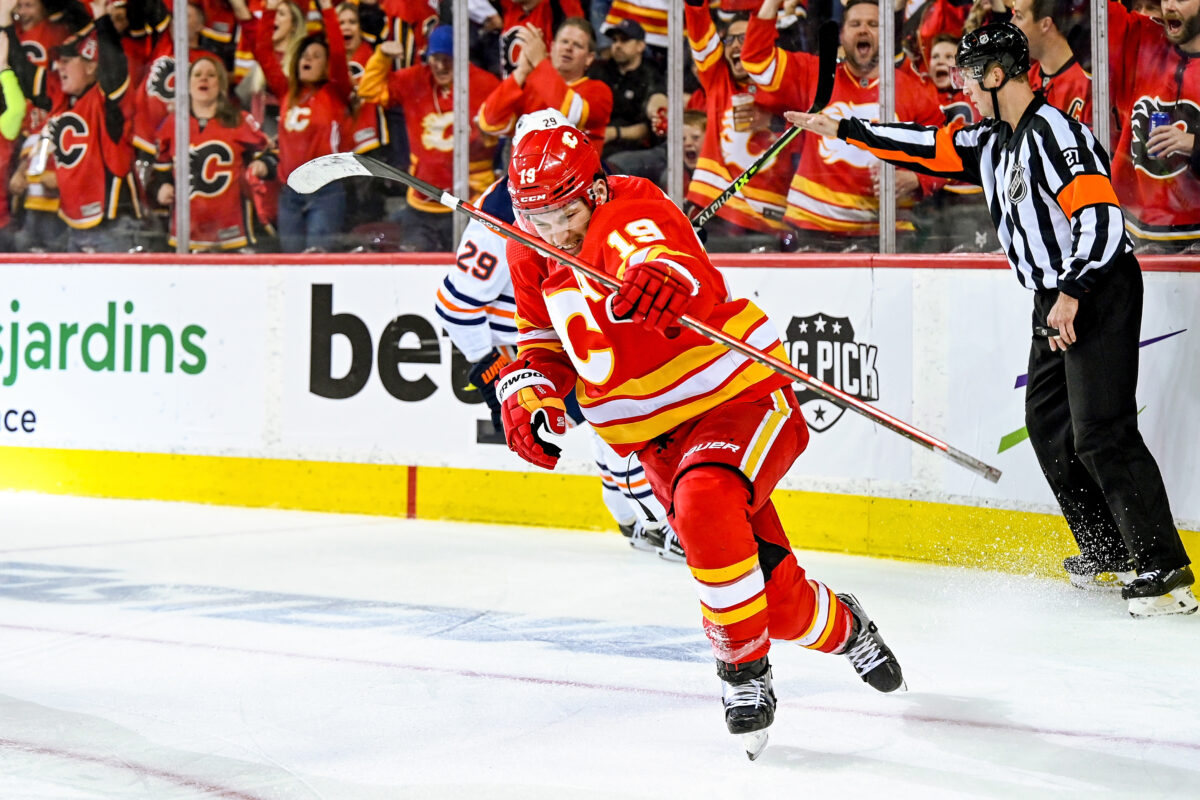
The return of Jonathan Huberdeau and MacKenzie Weegar looked reasonable at the time. Huberdeau had just posted 115 points in Florida, but managed only 55 points in his first season as a Flame, an NHL record for the largest single-season point drop. He was never able to recapture that production while carrying a $10.5 million cap hit. Meanwhile, Tkachuk won two Stanley Cups with Florida and scored the Cup-clinching goal in Game 6 of the 2025 final.
The Tkachuk situation wasn’t entirely Treliving’s fault, but misjudging Huberdeau’s value outside of Florida’s system was a significant error. That is the fairest summary of his career: a competent caretaker of a middle-tier franchise, capable enough to keep a team respectable, but never demonstrating the strategic vision that separates a good GM from a great one. Hiring him without a president of hockey operations above him to provide oversight and direction was the original sin of the current era.
Shanahan and Pelley Share the Same Blind Spot
The Shanahan era and the Pelley era share a common and damaging flaw. Shanahan, for all his early success in rebuilding Toronto’s culture, ultimately did not have an accurate read on where his team actually stood. The extensions, cap commitments, and deadline gambles made under his watch reflected a consistent overestimation of the team’s readiness to win.
Pelley arrived with no hockey background whatsoever and inherited that blind spot, then compounded it with his own. His admission that he hadn’t noticed Montreal’s rise is the clearest possible evidence of that. Both men made consequential hockey decisions without an honest, expert-driven picture of where the franchise actually stood.
Montreal, under Jeff Gorton and Kent Hughes, have never made that mistake. Every move they have made has been grounded in a ruthlessly accurate assessment of where they were in the process and what they actually needed. That discipline is what separates a rebuild that works from one that merely looks like one.
The Wreckage: Two Deadlines, Two Disasters
At the 2025 Trade Deadline, Treliving swung two blockbuster deals on the same afternoon. The Maple Leafs sent prospect Nikita Grebenkin and a conditional 2027 first-round pick to the Philadelphia Flyers for Scott Laughton, a bottom-six center with one year left on his deal. Minutes later, they shipped Fraser Minten and a conditional 2026 first-round pick to the Boston Bruins for defenceman Brandon Carlo. Two first-round picks and two prospects out the door in one afternoon.

The Maple Leafs fell to the Panthers in seven games in the second round, blown out 6-1 in Game 7. Fast forward to the 2026 Deadline. The same Laughton who cost a first-round pick 12 months earlier, and who had managed only 12 points in 43 games, was flipped to the Los Angeles Kings for a conditional third-round pick. A first-round pick in, a third-round pick out, one year apart. This was the deadline at which Pelley himself was allegedly in the war room.
The cumulative damage is severe. Toronto could end up with only one first-round pick over the next three drafts. The pattern is consistent across regimes: short-term thinking, reactive moves, and no one with the authority to say stop.
The Numbers Tell the Story
Last season, the Maple Leafs finished first in the Atlantic Division with 108 points. This season, they finished with 78 points, missing the playoffs for the first time since 2017, a franchise-record 30-point decline in a single season.
Montreal finished last season 40-31-11 for 91 points, sneaking in as the final wild card on the last night of the regular season. This season, they leapt to 48-24-10 for 106 points, third in the Atlantic, and are currently in a tightly contested, first-round playoff series against the Tampa Bay Lightning.
What Montreal Got Right
When Geoff Molson cleaned house in November 2021, he brought in Gorton as executive vice president of hockey operations. Gorton hired Hughes in January 2022, and one of Hughes’ first moves was hiring Martin St. Louis as interim coach on Feb. 9, 2022, before signing him permanently that June. They took Juraj Slafkovský first overall, traded veterans, stockpiled picks, and endured losing with a patience that Canadian markets rarely permit. Molson stayed out of the way.
The conviction extended to the draft, where Montreal protected picks instead of spending them on rentals, leaving the 2025 Draft with four picks in the first three rounds alone. It extended to the salary structure, with young elite players on cost-controlled deals and a locker room culture that understands everyone accepting fair value is the only path to sustained winning.
There is a reason they call the NHL a copycat league. Every summer after a Cup winner is crowned, front offices study what that team did and try to replicate it. The irony is that Toronto doesn’t even need to wait for Montreal to win a championship to start taking notes. The blueprint is already visible, already working, and sitting right down the 401.
Montreal Is Promising But Not Yet Proven
It is important to be honest about what Montreal has and hasn’t accomplished. They have not won a Stanley Cup. They have not yet won a playoff series under Gorton and Hughes, having been eliminated in the first round by the Washington Capitals in five games last season. One year ago, they were the last team to qualify for the playoffs, sneaking in on the final night of the regular season. This is not yet a dynasty.
In 2021-22, they finished last in the entire league with 22 wins and 55 points, setting franchise records for most regulation losses and most goals against. They then finished fifth-last in consecutive seasons, missing the playoffs for three straight years. And now, in year four of the rebuild, they are a legitimate playoff team with an exciting young roster, a deep pipeline, and a salary structure built for sustained competitiveness.
The progression from last in the league to legitimate contender in four years is worth paying attention to, even if the hardware hasn’t arrived yet. Montreal hasn’t proved anything beyond a very promising trajectory. But the approach is sound, and smart organizations don’t wait for the trophy to be handed out before they learn the lesson.
Toronto’s Draft Pipeline Is Bare
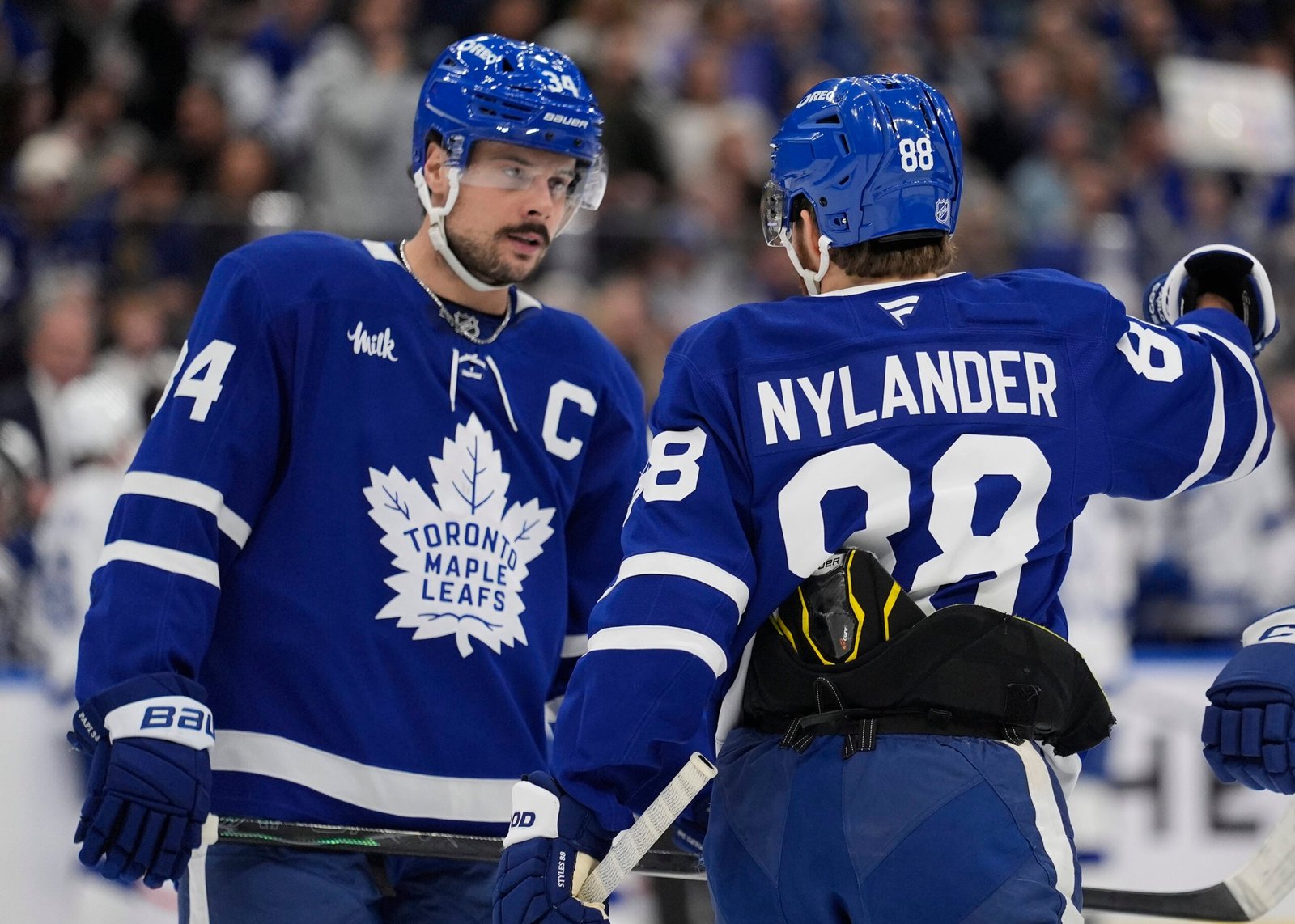
Aside from Austin Matthews, William Nylander, and Morgan Rielly, the only other skaters on the current Toronto roster actually drafted by the organization are Matthew Knies, Nicholas Robertson, Easton Cowan, Joseph Woll, and Dakota Joshua, who was initially traded away but then reacquired recently. That is the entire list.
For a franchise that has been a playoff team for the better part of a decade, this is a deeply troubling return on years of drafting. Montreal, in comparison, has 13 roster players drafted, or 14 if you include Arber Xhekaj, who was signed as an undrafted free agent. They also have prospects in the American Hockey League (AHL) like Owen Beck, Vincez Rohrer, Luck Tuch, Florian Xhekaj, Tyler Thorpe, and Luke Mittelstadt, not to mention Alexander Zharovsky and Michael Hage in the Kontinental Hockey League (KHL) and NCAA, respectively.

Knies is the one genuine bright spot. Drafted 57th overall in the second round of the 2021 Draft, he posted 66 points in 79 games this season, a genuinely impressive return on a second-round pick. Reports have indicated the Maple Leafs are considering trading Knies, despite the fact that he is a young player you would think should be central to any rebuild.
The Culture Problem Won’t Fix Itself
Matthews has not played a full 82-game season since his rookie year in 2016-17. This past season, he suffered a serious knee injury that ended his year in March, the second consecutive season he missed significant time. On exit day, Matthews accepted responsibility, calling the year frustrating and acknowledging the group failed to meet its own standards. But words at locker cleanout day, year after year, begin to ring hollow.
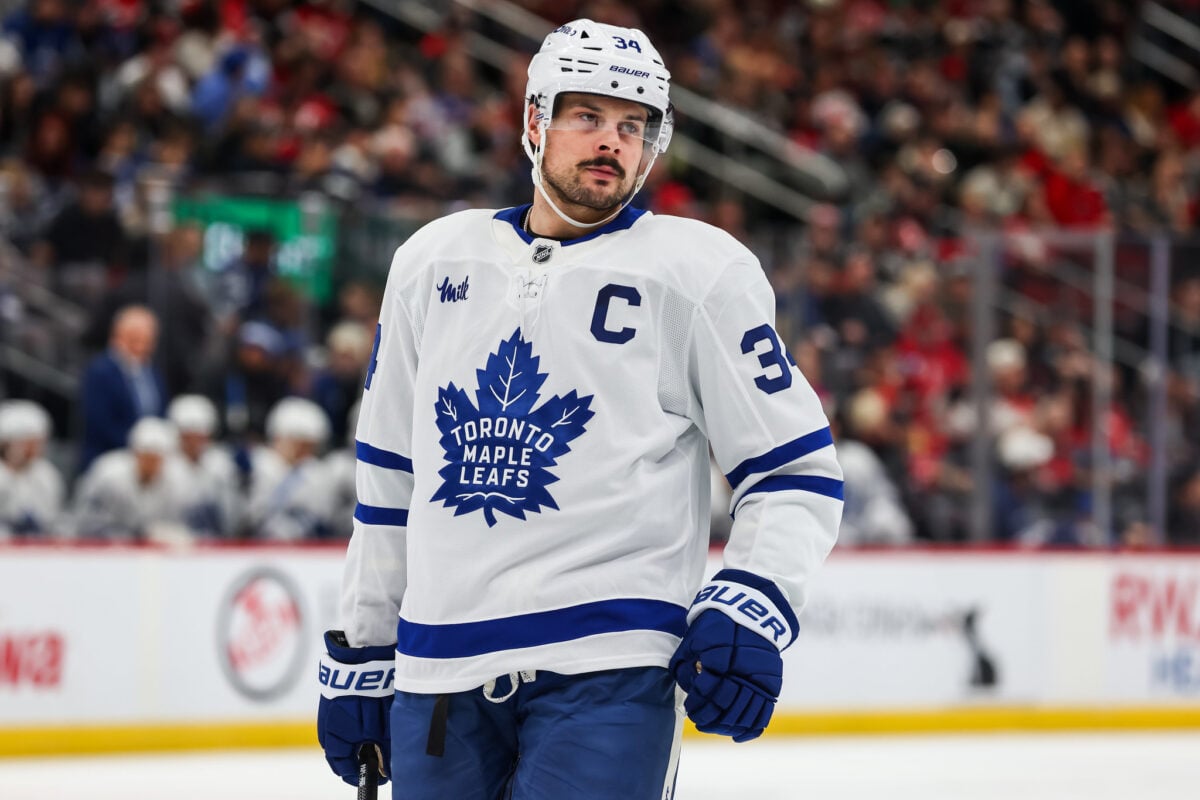
Matthews was also non-committal about his future, saying, “I can’t predict the future. Obviously, there’s steps that kind of have to take place. They’re going to hire new leadership and management and stuff like that, so I don’t really know.”
Nylander has arguably been the most statistically reliable among the core players, with 58 points in 67 career playoff games, nearly a point per game. The knock on Nylander is not his output. It is his disposition, at times detached and self-focused, a stark contrast to what Gorton and Hughes have cultivated in Montreal, where there does not appear to be a single player with a difficult attitude or a misaligned priority.
John Tavares, at 35, is still under contract and still a respected voice in the room, but certainly past his peak and consuming significant cap space on a roster that desperately needs flexibility. With Mitch Marner now in Vegas, the former Core Four has become a core three of Matthews, Nylander, and Tavares: an injured captain of uncertain future, a talented but enigmatic winger, and a veteran winding down his career. That is a group that needs to be honestly assessed, not protected.
The Right Structure Is No Mystery
Montreal’s management team is aligned and operates with what appears to be a precise, long-term vision and strategy, one they have almost never deviated from despite pressure from fans and the media. They are calm and measured, and Molson has clearly given them free rein to make important decisions.

Pelley has said the search for a new head of hockey operations is underway, with a target of having someone in place ahead of the summer draft process. That is the right conversation to be having. But the question is not merely whether Toronto installs the right title. The question is whether Pelley actually cedes the authority required for it to be meaningful. The one somewhat encouraging sign was when Pelley decided to hire an external firm to find their next head of hockey operations.
The Bottom Line
The Maple Leafs need Pelley to do something genuinely difficult for high-functioning executives: get out of the way. Not performatively, not with asterisks, not with war-room visits armed with AI suggestions, but genuinely and completely step back and empower a qualified hockey executive with real authority.
Montreal’s approach is worth studying closely. Gorton and Hughes have taken a team from last in the league to a legitimate playoff contender in four years. They haven’t won a Cup yet, but the direction is clear, and the foundation looks real.
Pelley negotiated the NHL’s Canadian broadcast deal himself. He knows better than most what a Toronto team that matters in April means for this sport in this country. Now he needs to apply that same sharp understanding to the most important decision of his tenure: hire the right hockey executive, hand over the keys, and trust the process.
Maple Leafs fans deserve better than another cycle of mismanagement dressed up as progress. The model exists, and it’s right down the highway. Use it.
Free Newsletter
Get Toronto Maple Leafs coverage delivered to your inbox
In-depth analysis, breaking news, and insider takes – free.
